• Skip to main content
  • Skip to secondary menu
  • Skip to footer

Travel Marketing

Travel and Tourism Trends

  • Sponsored Post
  • Travel Event Calendar
  • Travel Market
  • Travel Magazine
  • About
  • Contact

Lisbon, Between Water and Sky

October 8, 2025 By admin Leave a Comment

Sometimes the most unforgettable travel moments aren’t planned at all—they just happen when you wander a little further, past the well-marked sights, into the half-forgotten edges of a city. That’s how I found myself standing on a crumbling pier along the Tagus in Lisbon, where rust, graffiti, and broken concrete tell stories of an industrial past, and yet the place feels vibrantly alive in the present.
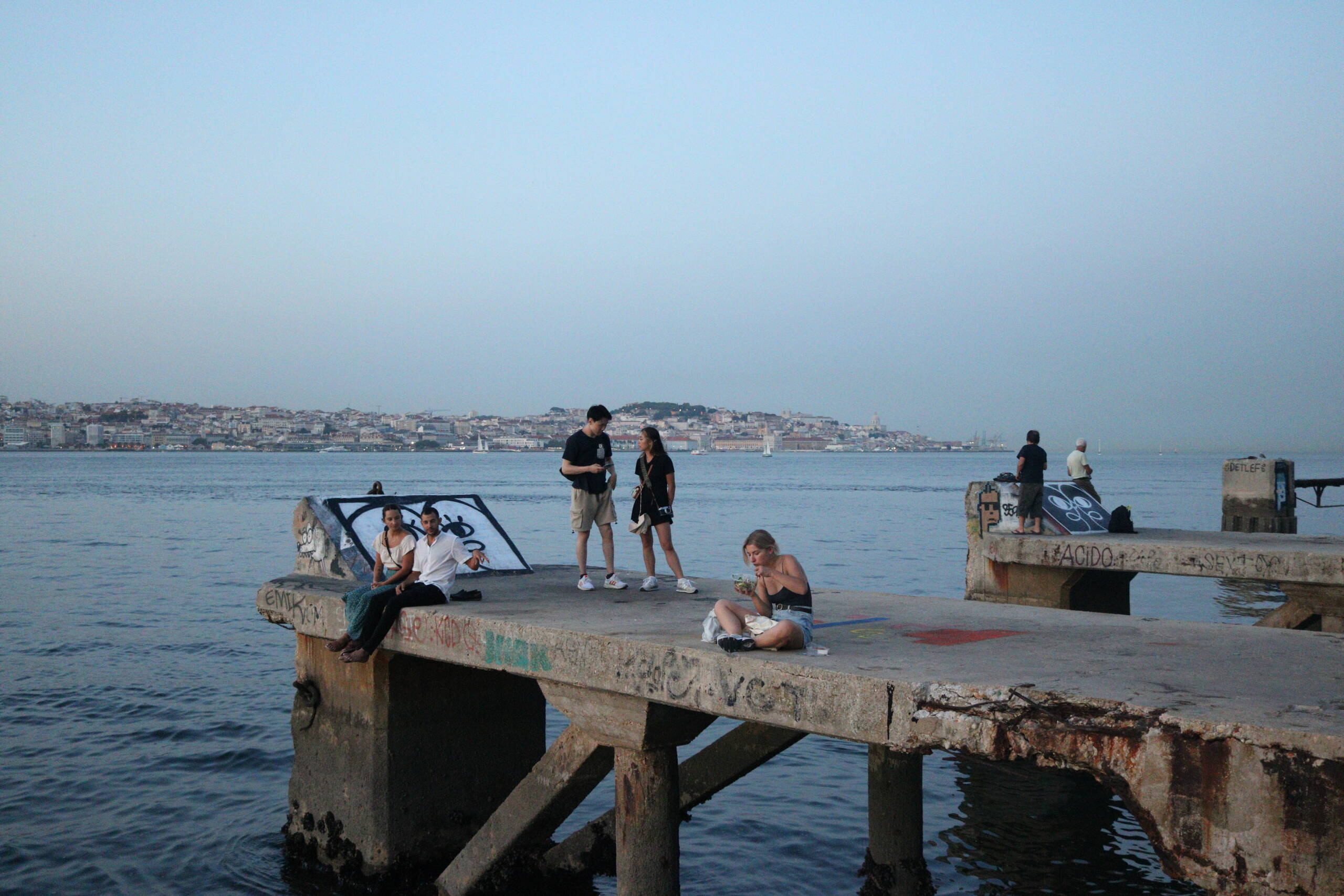
Lisbon, Between Water and Sky

The evening light was soft, brushing the sky with pale blues as the city on the opposite bank turned almost dreamlike. A couple leaned against the edge of the pier, lost in laughter. Two friends stood in easy conversation, neither in a rush to be anywhere else. A girl sat cross-legged with her takeaway box, as if the river and the rooftops were just a casual backdrop. A few others lingered in silence, staring out over the water. Nothing grand was happening, but somehow it was perfect.

Across the river, Lisbon revealed itself like a painting—terracotta rooftops, whitewashed walls, church towers scattered across the hills. Small boats drifted lazily, their sails glowing against the fading light. The city seemed both distant and close, as if it was waiting, reflected in the wide waters of the Tagus. It wasn’t the classic postcard view with yellow trams and tiled facades, but something quieter, something more real.

What made it extraordinary wasn’t the view, but the ordinariness of it all. People eating, talking, simply existing in a space that time had half-abandoned. That mix of decay and life, of ruin and laughter, felt like the essence of travel itself. You’re not there to check a box—you’re there to pause in the thresholds, in the in-between places, where beauty reveals itself without trying.

Lisbon has always belonged to its river, a city shaped by tides, currents, and departures. And this pier, reclaimed by rust and by people seeking a place to just be, felt like a quiet echo of that truth. You sit, you breathe, you watch, and for a moment you become part of the story too.

I realize now this is what I look for when I travel—not just the icons, but the overlooked edges. The places where the city forgets its performance and shows you something raw, something honest. That night on the pier wasn’t in my plans, but it gave me a memory I’ll carry longer than any checklist sight: the reminder that sometimes the most beautiful thing you can do is nothing at all—just sit by the water, with strangers, and let the world pass by.

Filed Under: News

Reader Interactions

Leave a Reply Cancel reply

Your email address will not be published. Required fields are marked *

Footer

Recent Posts

  • Tiny Tourism: Why Travellers Are Choosing Towns Nobody Photographs
  • In Defence of the Hop-On Hop-Off Bus
  • EasyJet Agrees £5.7bn Apollo Takeover: What Changes for Passengers and What Doesn’t
  • Taormina Beach Guide: Mazzarò, Isola Bella, and What Nobody Tells You About the Pebbles
  • Juliet’s Balcony in Verona Was Added in the 1930s and the Crowds Do Not Care
  • St Mark’s Basilica in Venice: The Gold Mosaics Are Dimmer Than the Photographs Suggest
  • China Fines Trip.com $770 Million for Locking Hotels Into Exclusive Deals
  • Château de Monbazillac, Dordogne: A difficult childhood. One château too many.
  • Fora Hits $1 Billion Valuation as AI Transforms the Future of Travel Planning
  • The Open Kitchen Experience: Dining Where You Can Watch the Cooking

Media Partners

  • Virtual Travel Guide
  • Ancient Rome
Venice at Night Is the Version No Access Fee Covers
The 18th-Century Fountain Hidden Inside Bordeaux’s Customs Museum Courtyard
The Bilbao Effect, 500 Years Early: Jerónimos Monastery And The Guggenheim
Bilbao’s Quiet Renaissance: From Industrial Port to Design Destination
Lisbon’s Seven Hills: A Walking Guide That Tells You the Truth
New Orleans: An American City That Plays by Different Rules
Ha Long Bay Without the Cruise Brochure
Istanbul at the Threshold: A City That Has Always Been Two Things at Once
Iceland’s Ring Road: What the Drive Teaches You That No Photograph Can
Marrakech’s Medina: How to Read a City That Was Not Designed for You
Sponsored Post
About
Contact
Roman Concrete in Museum Fragments: What the Cross-Section Actually Shows
Roman Sarcophagi Spent More Time as Fountains and Church Tombs Than as Graves
Aquincum Museum Reconstructs 16 Roman Faces From Skulls Found on Budapest's Danube Frontier
Roman Public Latrines Reveal an Empire That Built Sanitation Without Achieving Hygiene
The Pont du Gard: Rome's Most Perfect Structure
Water Across the Empire: Roman Aqueducts and the Hydraulic Logic of Conquest
Who Cleaned Roman Rome: The Social Economy of Waste

Media Partners

The Immersive Experience in the Museum World
Japan, China, and Taiwan: A New Triangle of Risk — and a Window of Opportunity for Japan
Ghost Kitchens as Infrastructure: The Shift from Restaurants to Intelligent Food Networks
The Zoom Divide Nobody Saw Coming
The Perfect Budget Content-Creator Kit
Reimagining Prague’s Tourism Future Through Immersive Media and VR Museums
Israel’s Urban Paradox: Tel Aviv Moves, the Rest Stand Still
American Express Global Business Travel (GBTG): Understanding the Business and the Investment Case
Why the Canon R8 Paired With the New RF 45mm f/1.2 Lens Quietly Becomes the Content Creator’s Sweet-Spot
The Future of Travel: A $15.5 Trillion Industry

Copyright © 2026 Travel Marketing

Media Partners: Timey · Publishing House · Ancient Rome · Photography · Calendarial · Transportational