I’ve spent a lot of evenings standing on street corners in other people’s cities waiting for the light to do something interesting, and a fair number of those evenings have been interrupted by a red double-decker sliding into the frame. I’ve thought all the things you’re supposed to think about those buses. The recorded commentary in nine languages that manages to say nothing in any of them. The sunburned upper deck. The idea that you can understand a place from a seat, at fourteen kilometres an hour, wearing a paper headset.
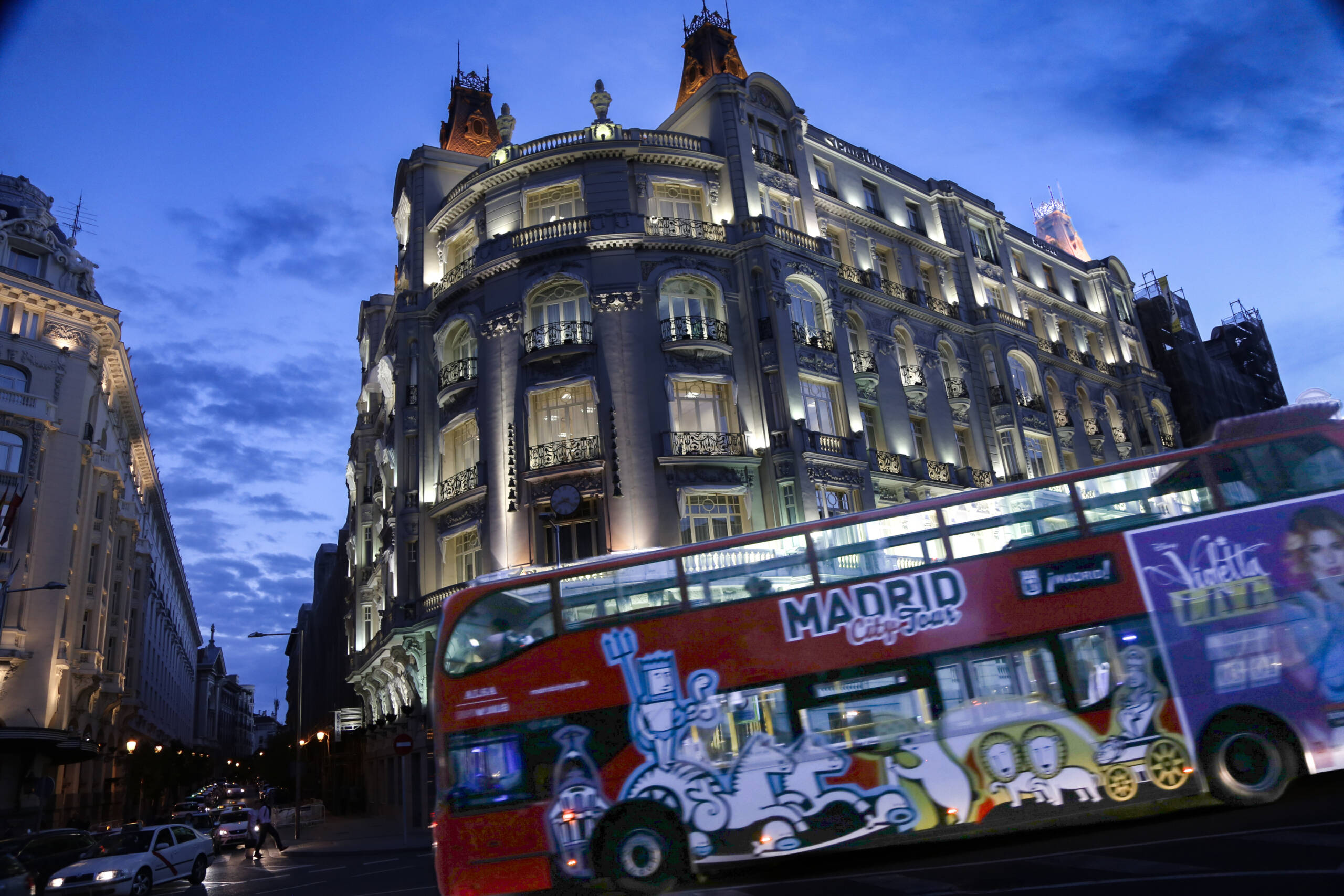
So take the snobbery as read. I’m not going to argue that the tour is good, or that the commentary is worth listening to, or that anybody has ever learned anything from it. I want to defend something narrower and, I think, harder to dismiss: the effect the bus has on the city it drives through.
Not tolerable. Not a necessary evil. Good.
Look at Which Bus People Actually Complain About
Here’s a test that settles more of this than any amount of arguing about authenticity. When residents of a crowded European city organise against tourism, which vehicle do they name?
In Barcelona, in 2024, the answer was the 116. Not the Bus Turístic. The 116 is a twenty-seat neighbourhood minibus in La Salut, the sort of service that exists so that elderly people can get up a hill with their shopping. Because Google Maps had learned that it stops near Park Güell, it filled with visitors carrying backpacks, and residents stopped being able to board it. The council raised the frequency until it was among the most heavily served routes in the city, and it didn’t help. What finally worked was asking Google and Apple to delete the route from their maps. Locals who’d laughed at the idea admitted it worked almost immediately.
Read that again, because the shape of it matters. A city fought overtourism by making a public bus invisible to tourists. Nobody in that fight proposed doing anything about the open-top sightseeing loop, which was running the whole time, a few hundred metres away, carrying exactly the same people to exactly the same park.
The sightseeing bus wasn’t the problem. It was the part of the system that was already working.
The People Who Sneer at the Bus Built the Problem
The contempt for the tour bus doesn’t come from residents. It comes from travel writing, and travel writing has spent forty years giving advice that produces the thing residents actually hate.
Skip the centre. Stay in a real neighbourhood. Eat where the locals eat. Take the local bus. Avoid the tourist traps. Get off the beaten path. Every guidebook with a chapter on travelling like an insider, every hidden-gems listicle, every reel shot in a residential courtyard with the caption telling you it’s the last unspoiled corner of somewhere. That’s the doctrine, and the people who hold it are the same people who find the double-decker embarrassing.
Now run the doctrine at the scale of ten million arrivals a year and look at what you get. Short-let flats in buildings where people live. A queue of strangers outside the bakery on a Tuesday morning. Suitcase wheels on stone stairs at two in the morning. Rents in Gràcia and Lisbon’s Graça and Venice’s Cannaregio set by what a visitor will pay for four nights rather than what a nurse can pay for a year.
The tour bus asks nothing of anybody’s building. It doesn’t outbid a family for a flat. It doesn’t take the last seat on the 116. It drives a fixed loop past monuments that were designed for crowds, staffed for crowds and ticketed for crowds, and then it drives it again.
Concentration Is a Policy, Not an Accident
Cities have exactly two options with visitor volume. Concentrate it or disperse it. Dispersal sounds humane and polls well. It also means pushing strangers into streets with no capacity to absorb them, no infrastructure built for them, and residents who never agreed to host them.
Concentration means putting people where the fortifications already are. The Prado has turnstiles and staff. Gran Vía has pavements four metres wide. Cibeles has traffic police. A residential street in La Salut has a corner shop and a woman of seventy-five trying to get home.
The loop is a containment field with a gift shop attached. It also happens to be the only way a large share of visitors can see a city at all: people who can’t walk six kilometres on cobbles, people travelling with small children, cruise passengers with three hours ashore whose realistic alternative is a coach convoy parked somewhere far worse.
What I Still Won’t Defend
The commentary is genuinely bad and has been for decades, and no operator has ever been punished for it, because nobody buys the ticket for the audio. The pricing is hard to justify against a public transport day pass that goes more places for a fraction of the money. A diesel double-decker crawling a fixed urban loop in high season is close to the worst possible use of an engine, and the operators have been slower to electrify than the municipal fleets they share the road with.
And the concession terms are usually a scandal of inattention. Councils negotiate the route map street by street and then hand over the advertising rights on the flanks as an afterthought, which is how the city’s own coat of arms ends up riding around beside whatever the operator managed to sell that quarter.
Fix all of it. Electrify the fleet, cap the frequency, write a decent script, take a proper cut of the ad revenue. None of that touches the argument, because the argument was never about the quality of the ride.
Let them ride the bus.