Taormina sits on a cliff. The beaches do not. That single fact shapes everything about a beach day here, because the town you booked and the water you came for are separated by about 200 meters of vertical drop and a road that switchbacks down the hillside like it was designed to punish people carrying towels.
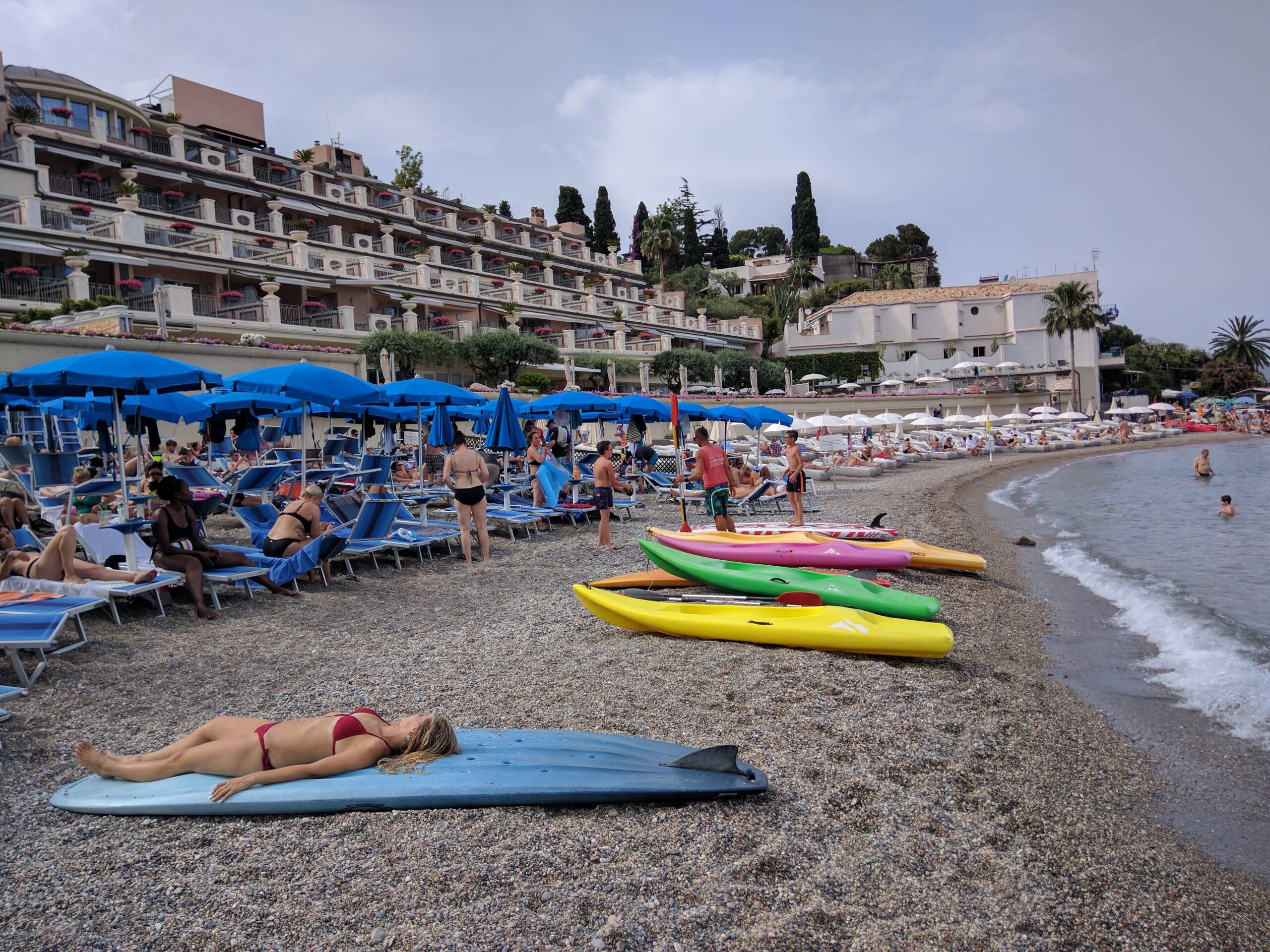
The picture above is Mazzarò bay on a June evening. Blue umbrellas in rows, kayaks and paddleboards stacked at the waterline, a hotel stepped into the slope behind with flowers on every balcony. It looks exactly as good as it looks. It is also completely full by ten in the morning, which is the part the photo does not show.
Get the cable car sorted before anything else
The funivia runs from Via Pirandello in town down to Mazzarò in under three minutes. Buy a return, not a single. People buy singles in the morning thinking they will walk back up, then look at the staircase around four in the afternoon and change their minds, and the queue at the bottom station in the late afternoon is a real thing.
There is a footpath if you want it. It is stone steps, mostly shaded in the lower half, and it takes maybe twenty five minutes going down. Going up is a different conversation. Buses run too, but they run on Sicilian summer timing, which is to say they run.
Bring water shoes. Actually bring them.
These are not sand beaches. Mazzarò is coarse grey shingle, Isola Bella is bigger stones again, and the entry into the water is loose pebble that shifts underfoot. Barefoot works for about four steps. By midday the stones hold heat like a pizza oven floor and you will be doing the little hopping walk that everybody does, and everybody pretends they are not doing.
Upside: the water is startlingly clear because there is almost no sand to stir up. You can see your feet in three meters. Snorkelling straight off the beach is genuinely worth it around the rocks at either end of the bay.
Free beach versus lido, and what you actually pay for
Most of the frontage is run as beach clubs. You pay for a lounger, an umbrella, and a spot in the row, and the price climbs the closer you sit to the water. Peak August at the better clubs gets steep. Shoulder season is roughly half.
There are free strips. They exist at the edges of the bay, they are narrower, and they fill first because everybody knows. If free is the plan, arrive by nine or accept that you are sitting on the stones behind somebody else’s rented row.
What the lido money buys, beyond the chair, is the bathroom and the shower and somewhere to leave your bag while you swim. On a shingle beach with nowhere to dig in, that turns out to matter more than it sounds.
Isola Bella is the postcard, and it behaves like one
The little island south of Mazzarò connects to shore by a spit of pebbles you can walk across, water permitting. It is a nature reserve, there is an entry fee for the island itself, and it is the single most photographed thing in the area after the Greek theatre. Go early or go at the end of the day. Midday in July it is a queue with a view.
The bay around it is small and gets busy fast, and the pebbles are chunkier than Mazzarò. Great swimming, awkward lounging.
Where to go when Mazzarò is full
Spisone, north of the cable car, is quieter and easier to reach by road. Letojanni is fifteen minutes up the coast and is where you go for an actual long beach walk, more restaurants at normal prices, and a much lower ratio of people photographing their aperitivo. Lido Mazzeo continues that stretch further north. Giardini Naxos, south, has the widest beach and the most sand in the area, plus the archaeological park if the day turns cloudy.
None of these have the Taormina skyline behind them. That is the trade.
The best hour is the one everybody misses
Around six in the evening the day crowd leaves for showers and dinner reservations, the light goes gold on the hotel terraces, the water flattens out, and the stones give back their heat while the air cools. Half the loungers sit empty. The kayak rentals start pulling boats up the beach. That is the hour worth staying for, and it is the hour most visitors spend queuing for the cable car.
Stay in the water. Go up at eight. Eat late, like everyone else here does.