Year in Review
Twelve months, two cameras, roughly four hundred keepers. These are the five that kept nagging.
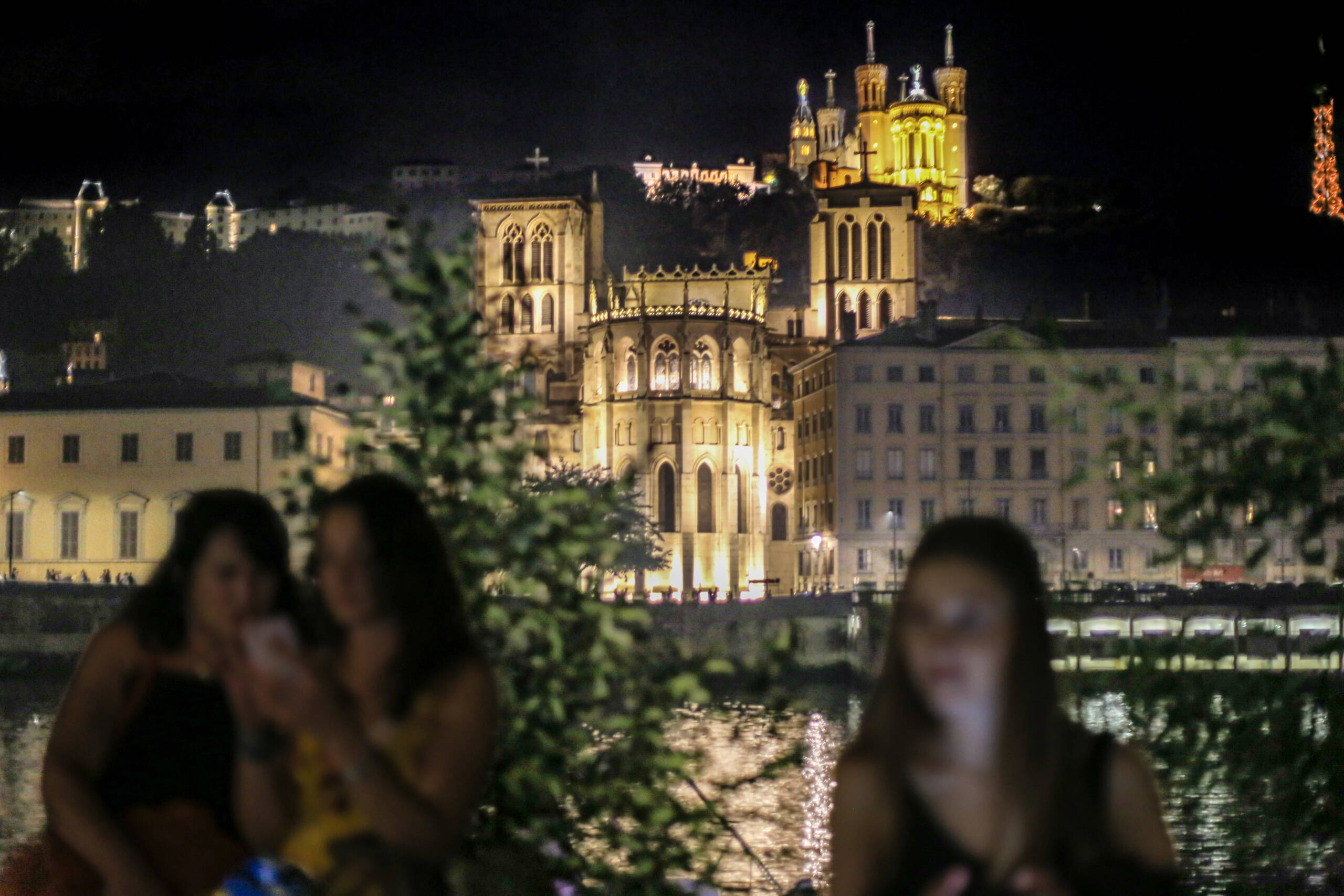
Frame 01 · Lyon, the Saône at night
I do my year in review in August. Nobody asked me to, and the calendar disagrees, but by August the folders are heavy enough to tell the truth and December is too close to the eggnog for honest work.
That picture up there is Lyon on a warm night. Fourvière burning gold on the hill, Saint-Jean glowing underneath it, the Saône doing that thing where it turns every lamp into a smear of gold leaf. Behind the lens I was very pleased with myself. Then I looked at the frame properly and realised the actual subject was three women on a bench, out of focus, faces lit from below by their phones, with roughly two thousand years of architectural ambition going completely unwatched over their shoulders. I could write the cranky version of this. Everybody has read the cranky version. Here’s the thing that stopped me: I only saw the picture because I was also looking at a screen. Mine had a shutter button on it. The difference between us is a lens mount and about nine hundred euros.The Year Everyone Stopped Pretending
If there was one shift I felt on the ground this year, it’s that the performance dropped. For a decade the phone was a guilty object on a trip. People hid it, apologised for it, made little jokes about digital detoxes they never took. That’s over. The phone is the map, the ticket, the translator, the restaurant booking, the thing that tells you the cathedral shuts at six. Nobody is embarrassed anymore. They’re just using the tool. What changed underneath is subtler, and it’s worth naming if you sell travel for a living. The screen has stopped competing with the destination and started mediating it. People arrive already knowing what the view looks like. They’ve seen the reel. They come to confirm, not to discover, and confirmation takes about ninety seconds. Then they sit down and look at their phones, because the thing they came for has already been collected. That woman on the right of my frame had her back to Fourvière. She was there. She’d walked to the river to be there. She just didn’t need to look at it for very long.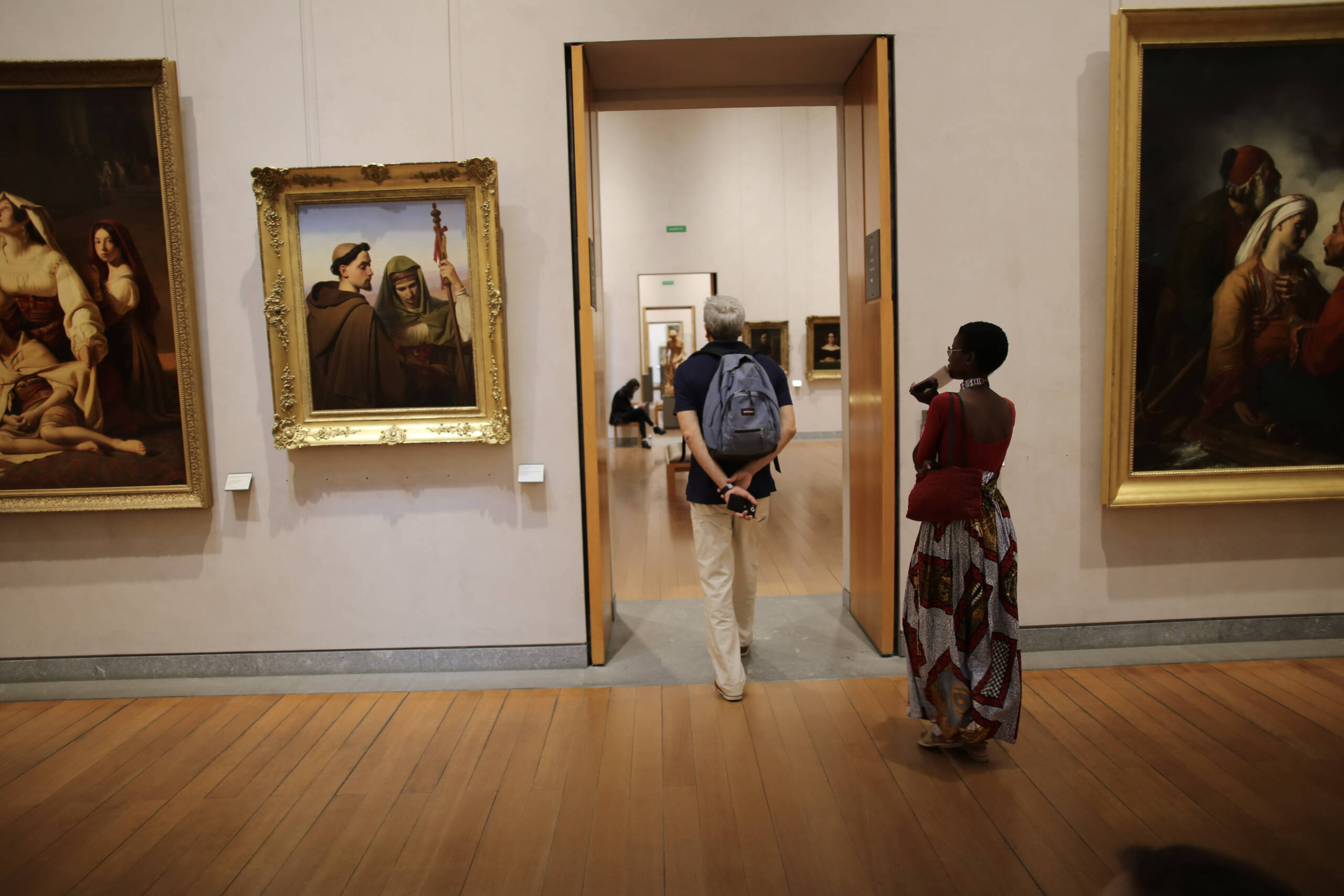
Frame 02
Twelve Seconds in Front of a Painting
Same instinct, different building. I like museums in the middle of a weekday when the light in the rooms goes soft and everything smells faintly of floor wax and radiator. This one had that beautiful enfilade, doorway inside doorway inside doorway, receding into more rooms full of more paintings that nobody was going to look at either. The man is walking through. Hands behind his back, backpack on, phone in his fist, moving. The woman on the right has stopped. Genuinely stopped. She’s doing the thing the whole building was constructed for, which is standing still in front of a rectangle and letting it work on her.The only advice in this post
Go into a big museum with a plan to see four things. Four. Write them down. See them, sit with them, then leave and go get a drink.
You’ll remember more of that museum in ten years than someone who ground through every wing on a timed ticket and came out with wet socks and a headache. The completionist habit is a school habit. It has nothing to do with looking.
November Is the New July, Which Means November Is Now July
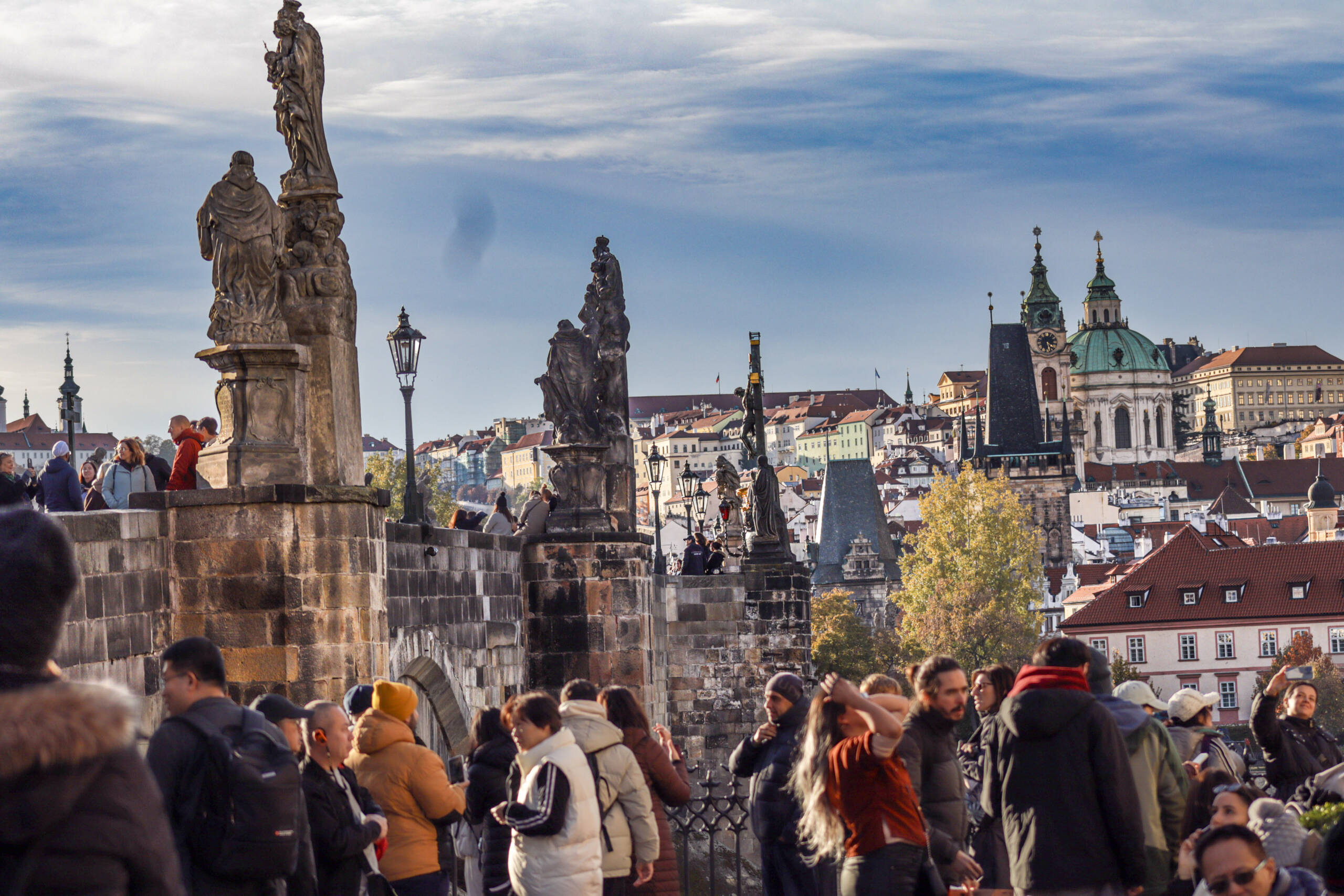
Look at the coats. Puffers, beanies, scarves, a woman in the middle in a cream jacket that has clearly already been through one Prague winter. It’s cold. The light is low and gold and gorgeous. And it is packed. This is the trend that actually happened in 2026, the one that showed up in my photos before it showed up in my thinking. The shoulder season has been eaten. Everyone got told the same clever thing at the same time, that summer in Europe has become an endurance event and the smart traveller goes in October or April instead, and everyone acted on it, and now October and April look like this. The reward for outsmarting the crowd is arriving at the same time as everyone else who outsmarted the crowd, but in worse weather. I’m not complaining about the crowd, by the way. I photograph crowds on purpose. A bridge with nobody on it is a postcard and postcards are boring. What I’m noting is that the advice has curdled. Off-season is a real strategy right up until the moment it becomes the strategy, and this was the year it tipped in Prague, in Lisbon, in half of Italy. If you want thin crowds now you need genuinely inconvenient dates, or genuinely unfashionable towns, and most people want neither.You’re trading solitude for beauty. That’s a fair trade and I’d make it again. Frame 03, on why cold light beats an empty bridge
Frame 04
Dinner Under Fluorescent Light, and It Was Excellent
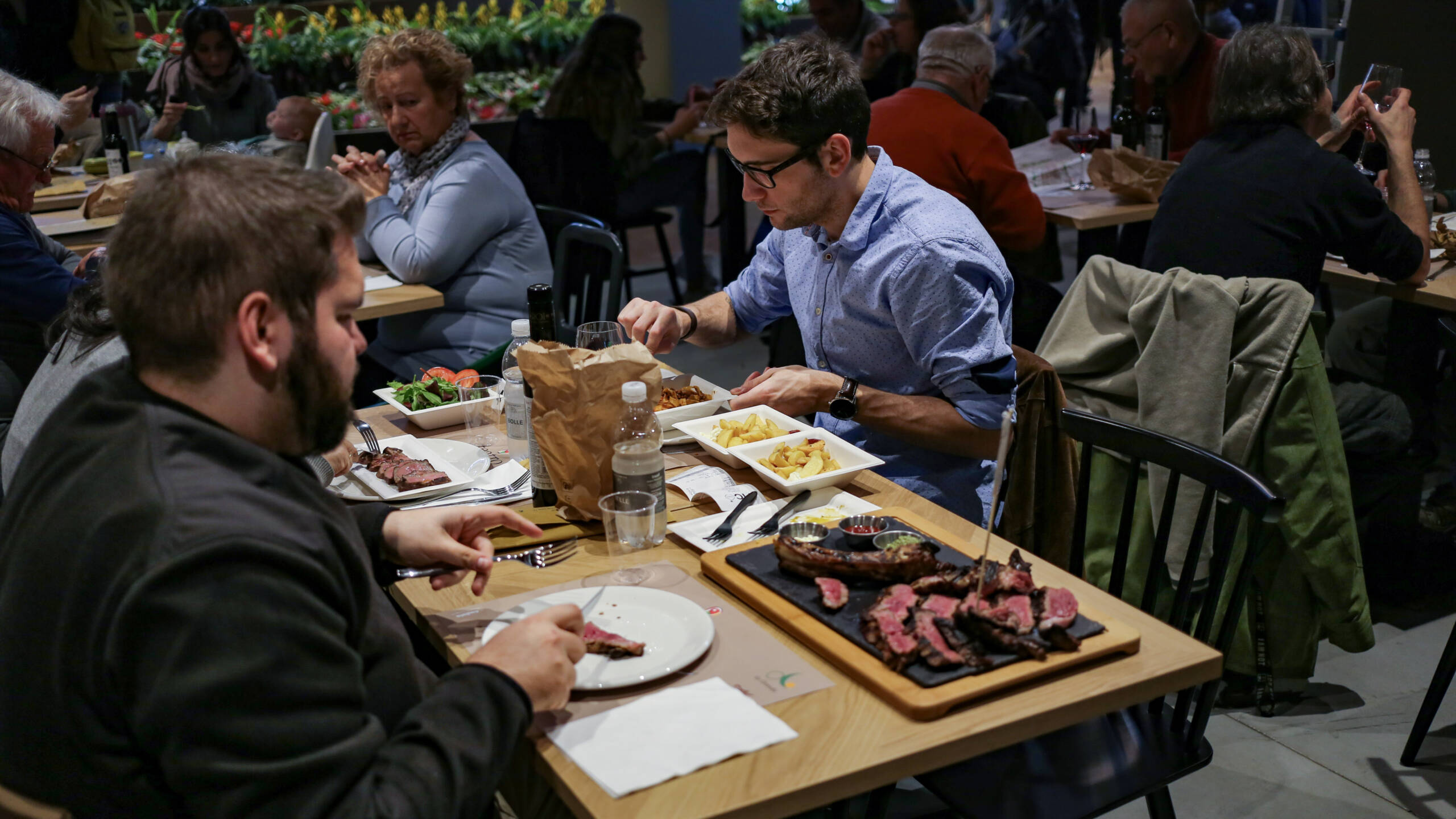
This is the frame I’d defend hardest. It’s not pretty. Fluorescent overheads, plastic cups, a receipt curling on the table, a paper bag of bread doing nothing decorative whatsoever, strangers eating three feet away in every direction. Somewhere off to the left there’s a fridge full of raw meat with a queue in front of it.And the food on that slate board was better than most of the tablecloth meals I ate all year.
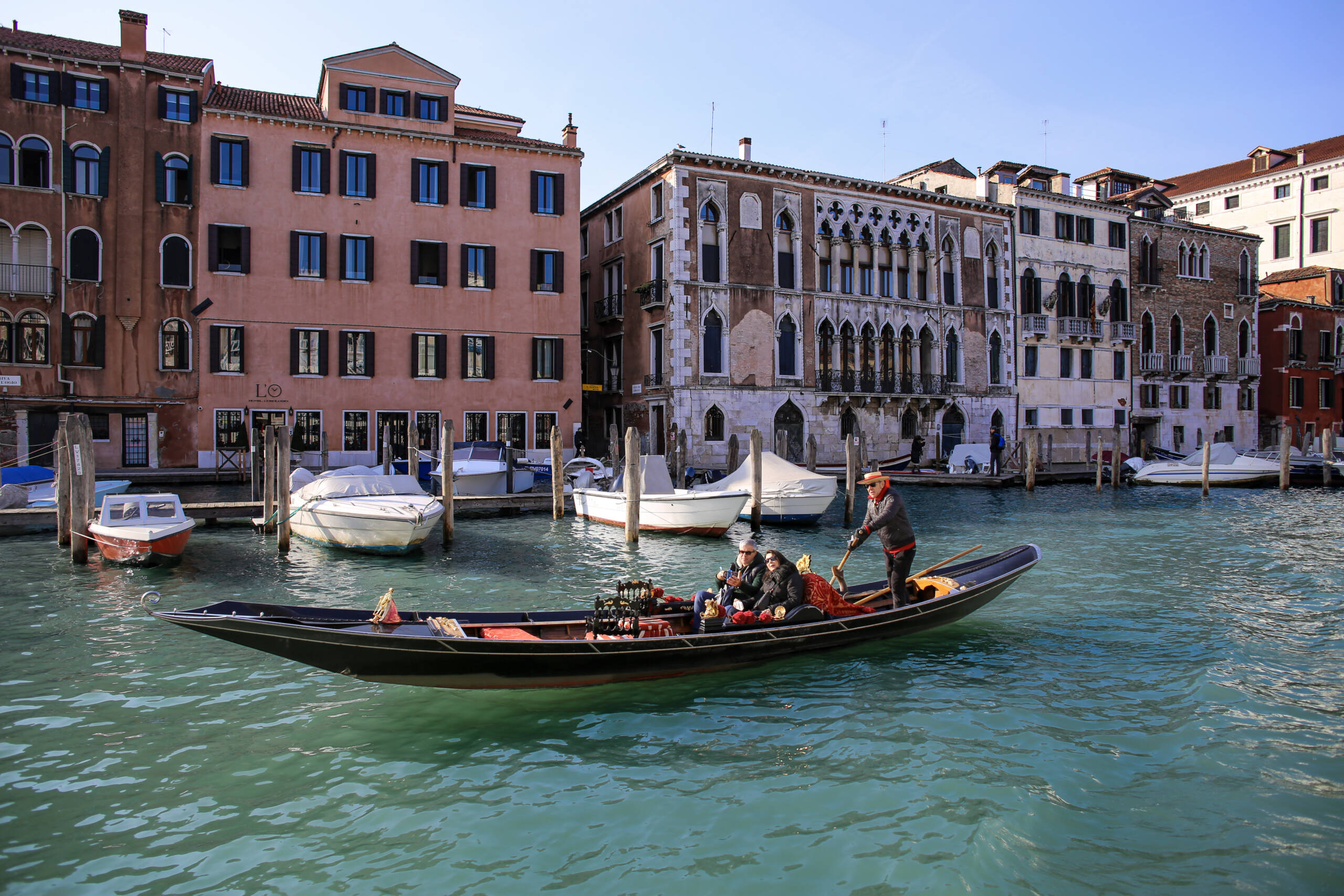
The Cliché Was Right the Whole Time
Last one. Venice, winter, sky like a swimming pool, canal water gone that impossible mineral green it only does when it’s cold. A gondola. Two passengers wrapped up in coats. A gondolier in a straw hat in February, which is either professionalism or stubbornness and I choose to believe it’s both. I have been snobbish about gondolas. I’ve written the line about tourist traps. I’ve walked past the queue at the Rialto feeling superior with a camera around my neck, which is not a look that survives self-examination. Then I watched this one go past, in the cold, on a Tuesday, with the whole canal empty around it, and I understood that the couple in that boat were having a better morning than I was. The cliché is a cliché because it works. That’s what a cliché is. The move isn’t to avoid the famous thing, it’s to take the famous thing at a time when it can breathe. Same gondola in August is a bumper-boat experience in a queue of forty. Same gondola in February is nearly private, the water is quiet, and the palazzi across the way have that beautiful ruined look that summer haze always softens into a postcard.The year, compressed
01. The phones won and it’s fine
The screen stopped competing with the view and started mediating it. People come to confirm what they already saw. Confirmation is quick.
02. Stopping is free
Almost nobody stops in front of the painting. The ones who do have a completely different day, and it costs nothing.
03. The shoulder season got found
October and April now look like July with better light. The real off-season moved further out and got colder.
04. Eat under the strip light
Market halls solve the one problem you can’t solve as a stranger. You can see the produce, watch it cook, read the price off a board.
05. Take the cliché, change the month
The famous thing is famous for a reason. Show up when it can breathe and it stops being a queue and starts being the thing itself.
Five pictures. Twelve months. I’ll go back to all of them.