• Skip to main content
  • Skip to secondary menu
  • Skip to footer

Travel Marketing

Travel and Tourism Trends

  • Sponsored Post
  • Travel Event Calendar
  • Travel Market
  • Travel Magazine
  • About
  • Contact

Château de Monbazillac, Dordogne: A difficult childhood. One château too many.

July 19, 2026 By admin Leave a Comment

There’s a particular kind of exhaustion that sets in around the fourth château of a Dordogne road trip, and it doesn’t discriminate by age. Ask any parent who has dragged children through the region’s stone-walled wine estates: somewhere between the second turret and the third gift shop, enthusiasm collapses into a kid folded up on a low wall, knees to chest, waiting out the visit rather than joining it.
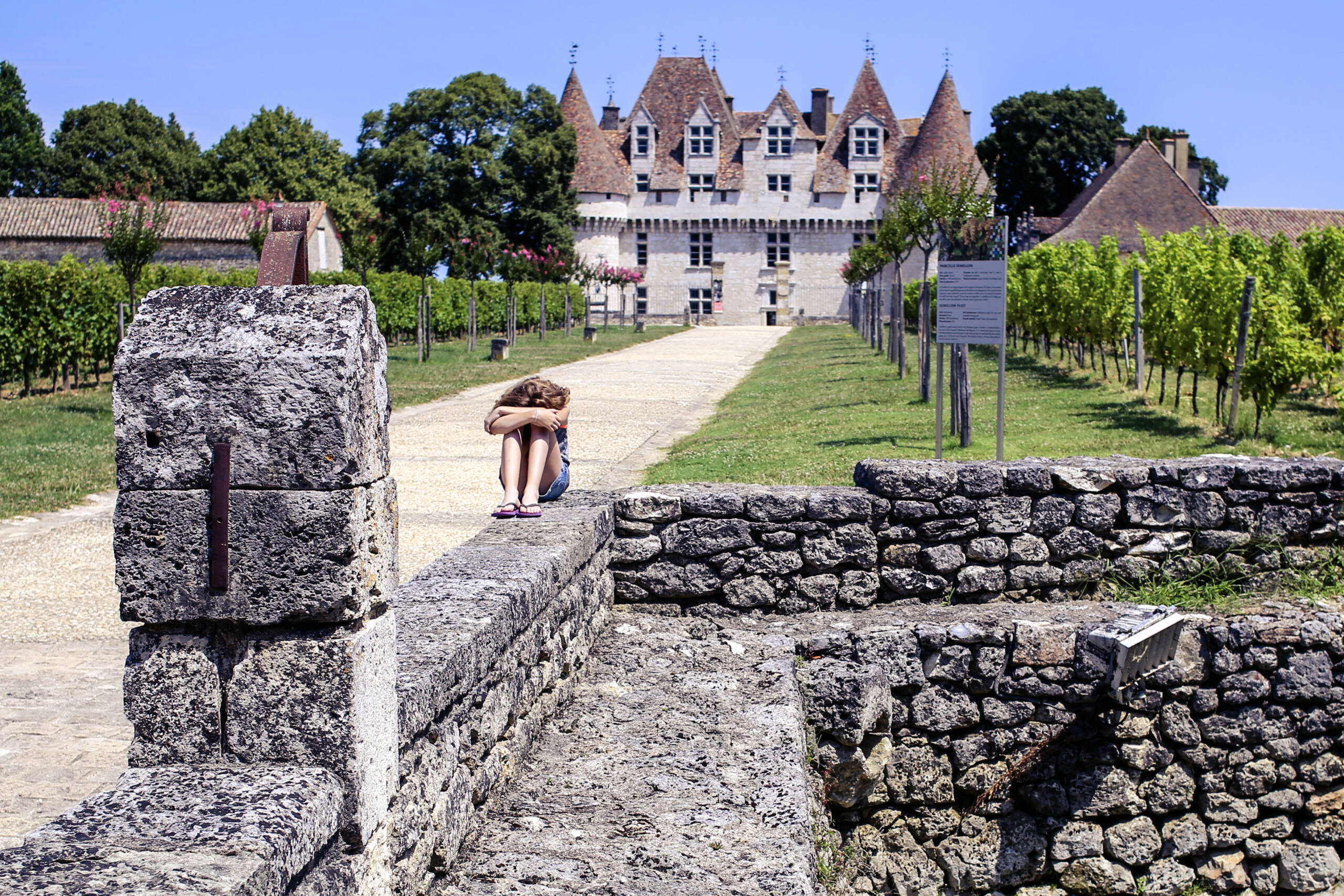
Château de Monbazillac, Dordogne: A difficult childhood. One château too many.

The château in question here deserves better press than “one too many.” Monbazillac sits on a ridge above Bergerac, its silhouette of pointed towers and steep slate roofs visible for miles across its own vineyards before you even reach the gravel path leading up to it. The building is a study in contradictions: a 16th-century fortress silhouette wrapped around a Renaissance interior, built for defense and then furnished for comfort once the defending stopped mattering.

The vines that surround it aren’t decorative. Monbazillac is an appellation in its own right, carved out in 1936 for the sweet white wines the region has made since the 14th century. Sémillon does most of the work here, with Sauvignon Blanc and Muscadelle rounding things out, and all three depend on the same quiet trick: noble rot. Botrytis cinerea settles onto the grapes in late-autumn humidity and concentrates their sugars, turning what would be spoiled fruit anywhere else into the base for a wine that once rivaled Sauternes in reputation. Dutch traders discovered it in the 17th century, when Huguenot exiles carried a taste for it north, and the region never quite let go of that early fame.

The château itself has belonged to the local wine cooperative since 1960, which means a visit here isn’t just architecture. Inside are 16th-century vaulted kitchens, a wine museum tracing the history of the appellation, and a cellar wall stacked with thousands of bottles of the golden wine that gives the place its name. A tasting caps most visits, which is either the reward for the walk up or the reason the kids were made to wait outside on a stone wall in the first place.

Whichever it is, the view from that wall isn’t a bad consolation prize. Formal parterres, tidy rows of vines, and a château that looks like it was built by someone who’d never heard the word restraint — worth the sulk, even if nobody under fifteen will admit it at the time.

Filed Under: News

Reader Interactions

Leave a Reply Cancel reply

Your email address will not be published. Required fields are marked *

Footer

Recent Posts

  • Château de Monbazillac, Dordogne: A difficult childhood. One château too many.
  • Fora Hits $1 Billion Valuation as AI Transforms the Future of Travel Planning
  • The Open Kitchen Experience: Dining Where You Can Watch the Cooking
  • Holland America Line Adds Flåm and Hellesylt to Five 2027 Norway Fjord Cruises
  • La Cité du Vin, Bordeaux: The Building That Looks Like Wine in a Glass
  • EU Border Delays: ETIAS Pre-Travel Authorization Pushed to Late 2026 as EES Chaos Continues
  • Toledo’s Old Town: A Mudéjar Watchtower Hiding an Antiques Shop
  • Piazza del Duomo, Catania: Where a Black Lava Elephant Guards Sicily’s Baroque Heart
  • Château de Fougères: Inside Europe’s Largest Medieval Fortress
  • Château de Vitré: The Medieval Fortress Guarding Brittany’s Eastern Gate

Media Partners

  • Virtual Travel Guide
  • Ancient Rome
Lisbon’s Seven Hills: A Walking Guide That Tells You the Truth
New Orleans: An American City That Plays by Different Rules
Ha Long Bay Without the Cruise Brochure
Istanbul at the Threshold: A City That Has Always Been Two Things at Once
Iceland’s Ring Road: What the Drive Teaches You That No Photograph Can
Marrakech’s Medina: How to Read a City That Was Not Designed for You
Torres del Paine: What You Are Actually Getting Into
Kyoto in Autumn: What the City Looks Like When the Maples Turn
Disneyland Paris Rewrites Its Script With World of Frozen and Disney Adventure World
Wallace Fountain: Carrying Water, Carrying Values
Water Across the Empire: Roman Aqueducts and the Hydraulic Logic of Conquest
The Oath of the Horatii: David's Roman Republic in Paint
Jean-Léon Gérôme: The Victorian Gaze on Rome
Ostia: The Port That Fed Rome
Roman Naval Warfare: The Sea They Called Their Own
The Roman Grain Ship: How Rome Fed Itself Across the Sea
Trajan's Column: Rome's Greatest Comic Strip
Caesarea Maritima: A Roman City Built from Nothing
Damnatio Memoriae: Rome's War on Memory
Faustina the Younger: The Woman Behind the Philosopher Emperor

Media Partners

The Immersive Experience in the Museum World
Japan, China, and Taiwan: A New Triangle of Risk — and a Window of Opportunity for Japan
Ghost Kitchens as Infrastructure: The Shift from Restaurants to Intelligent Food Networks
The Zoom Divide Nobody Saw Coming
The Perfect Budget Content-Creator Kit
Reimagining Prague’s Tourism Future Through Immersive Media and VR Museums
Israel’s Urban Paradox: Tel Aviv Moves, the Rest Stand Still
American Express Global Business Travel (GBTG): Understanding the Business and the Investment Case
Why the Canon R8 Paired With the New RF 45mm f/1.2 Lens Quietly Becomes the Content Creator’s Sweet-Spot
The Future of Travel: A $15.5 Trillion Industry

Copyright © 2026 Travel Marketing

Media Partners: Timey · Publishing House · Ancient Rome · Photography · Calendarial · Transportational