Caesarea Maritima sits on Israel’s Mediterranean coast between Tel Aviv and Haifa, and it rewards attention in a way that few archaeological sites in the region do. Herod the Great built it from scratch in the first century BCE — a deep-water port city named in honor of Augustus Caesar, engineered on a coastline that offered no natural harbor. The Romans turned ambition into concrete, literally: they used hydraulic concrete to construct the harbor infrastructure, a technology that wouldn’t be widely replicated in the Mediterranean for centuries. What you walk through today is the sediment of that audacity.

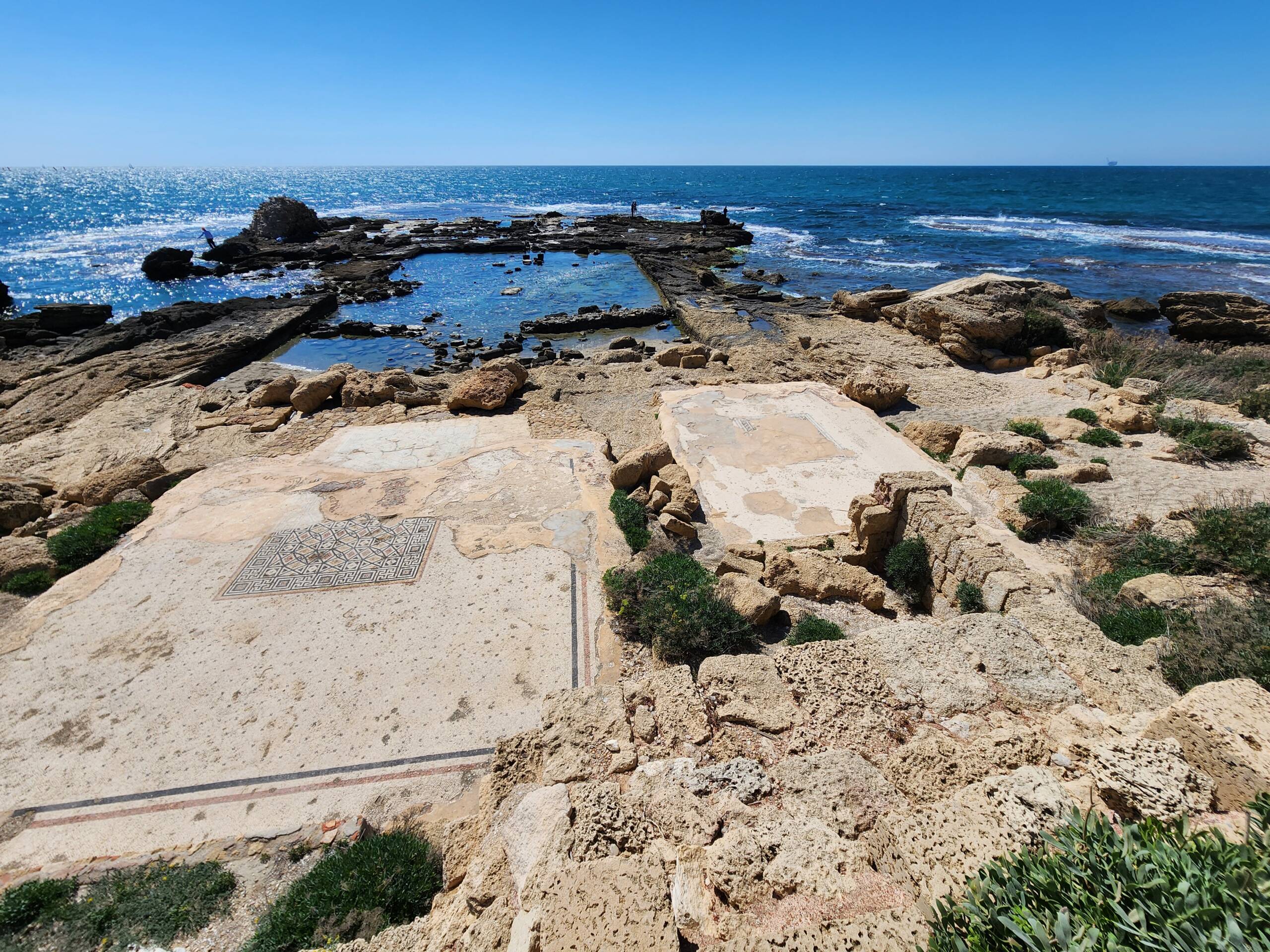
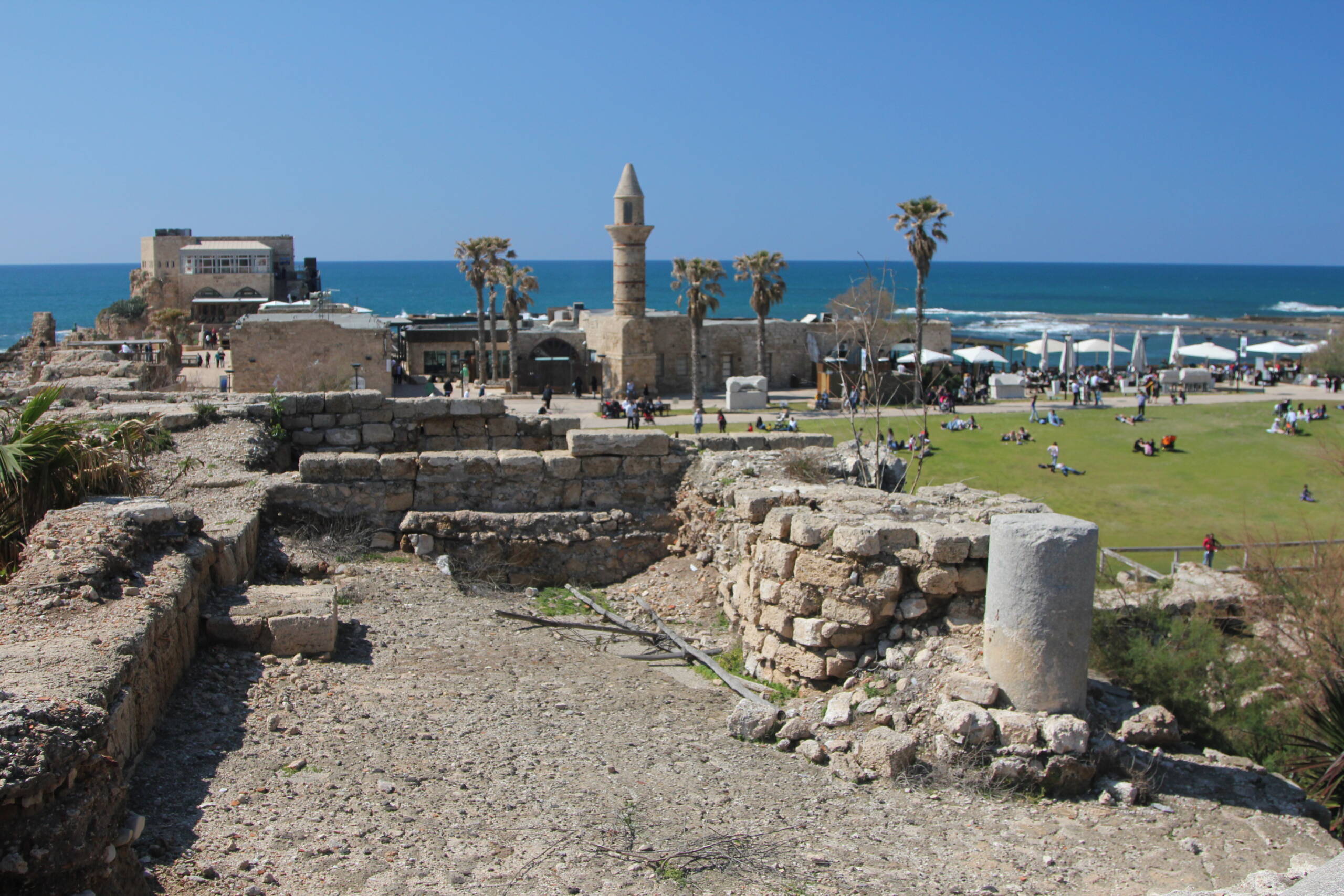
The sea at the harbor’s edge is an immediate argument for coming. The water runs clear green into deeper turquoise, the kind of color that belongs in the Aegean rather than the Levant. Submerged ruins extend into the bay — column drums and harbor walls visible through the surface — and the coastline still holds the shape Herod’s engineers imposed on it. A restaurant terrace sits above the old seawall, and the contrast between the ancient stonework and the linen-covered lunch tables is not as jarring as it should be. Caesarea has always been a place where money and history coexist without embarrassment.

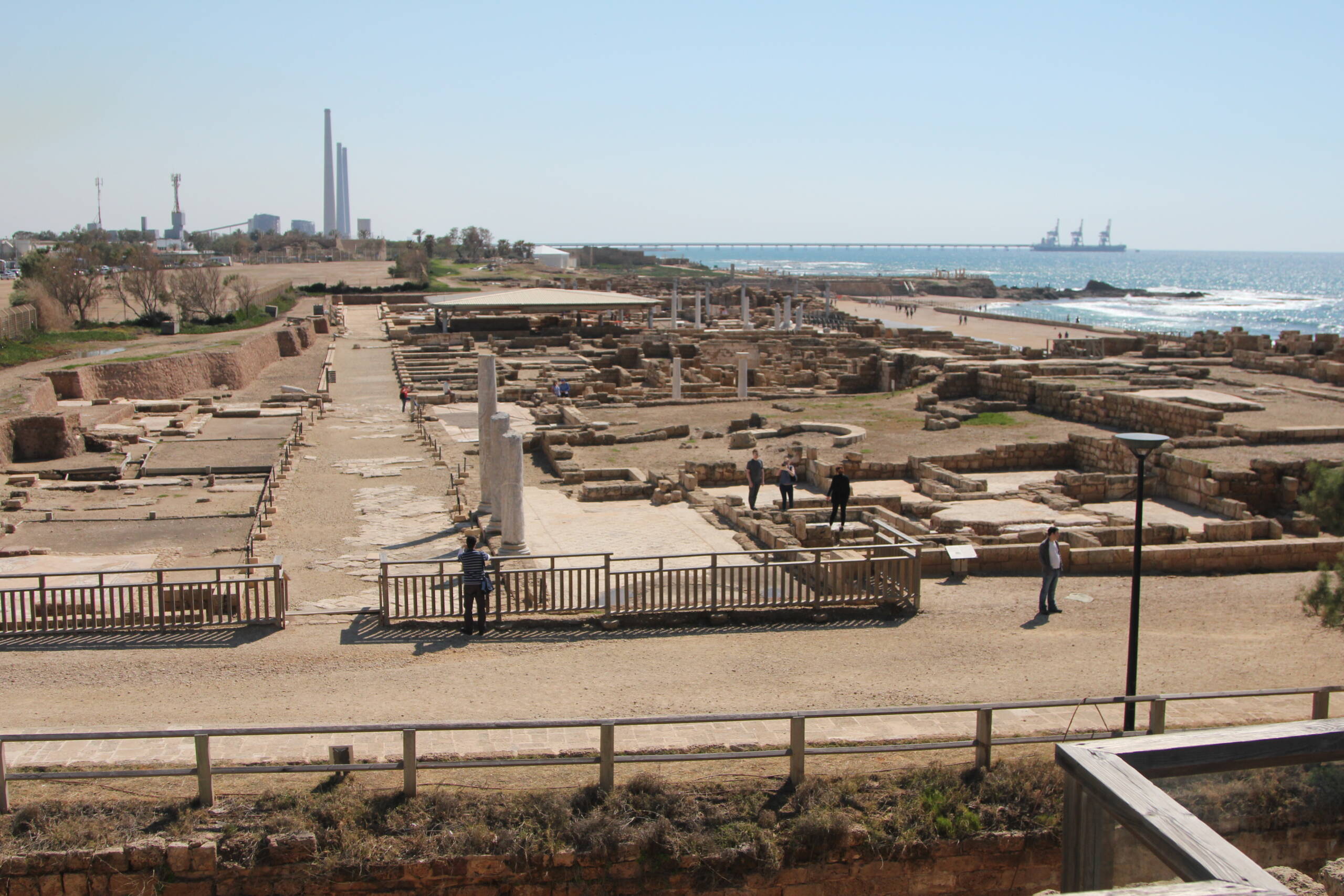
The hippodrome is the least-restored major structure on the site, which makes it the most honest. The track where chariot races were run — capacity estimates range up to 20,000 spectators — is now a long sandy expanse flanked by eroded limestone bleachers. A contemporary steel sculpture of a chariot and horses has been placed at one end, an interpretive gesture that works better than most. The power plant chimneys visible on the northern horizon are a different kind of monument: Caesarea’s position as an industrial and logistical hub did not end with the Romans. Behind the sculpture, the tiered ruins of the seating banks rise in irregular steps, partially excavated, partially just worn down. The site has not been over-restored, and that restraint is the right call.

The theater is the best-preserved structure and the one that most clearly demonstrates the Roman instinct for permanence. Built in the late first century BCE, restored and expanded under later emperors, it still holds concerts and performances today — the blue plastic seats installed on the ancient stone steps are a reasonable compromise between archaeological preservation and continued use. The view from the upper tiers takes in both the stage and, behind it, the Mediterranean. Herod understood acoustics and spectacle as political instruments. The theater was not entertainment in the modern sense; it was a demonstration that this city belonged to the civilized world. Standing in the orchestra level, looking back at the semicircular sweep of limestone seating, that message still lands.
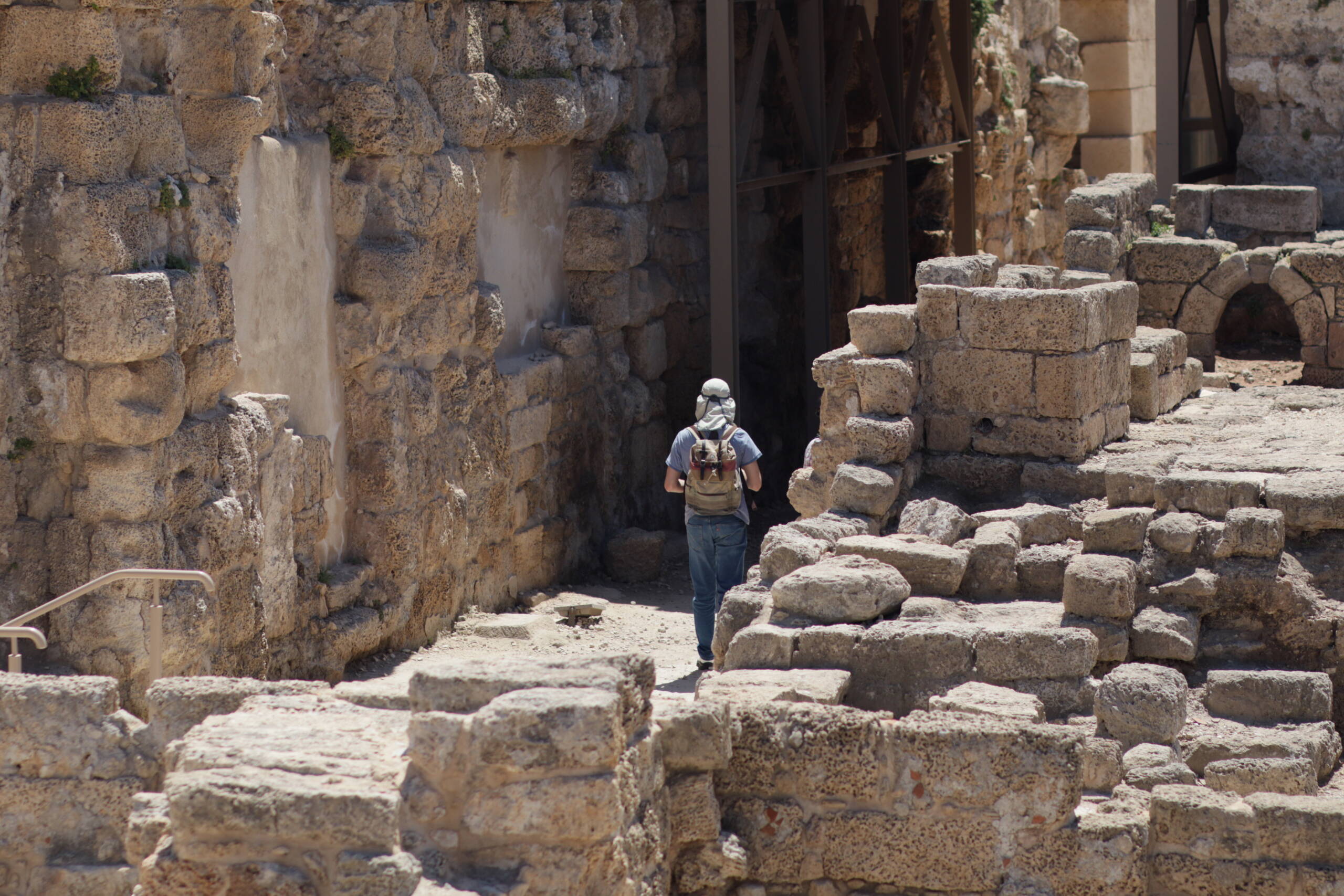
The corridors and vaulted passages beneath and between the structures are where the scale of the original city becomes physical. The stone is the same warm limestone throughout — quarried locally, cut to consistent dimensions, laid without mortar in many sections and still standing after two thousand years. Walking through these passages, with the heat of the day blocked by the mass of the walls and the light coming in at angles through collapsed sections, you get the clearest sense of what Caesarea actually was: not a ruin, but a city that happened to stop. The National Park manages the site well — the pathways are maintained, the signage is adequate without being intrusive, and the crowds, even in peak season, thin out quickly once you move away from the harbor.
Caesarea Maritima is roughly 45 minutes north of Tel Aviv by car, accessible via Route 2 and clearly signed. The national park entrance fee covers the hippodrome, theater, harbor ruins, and the broader archaeological zone. Budget a half-day minimum; a full day if the weather is good and you intend to use the beach.