Crowds, Colors, and Quiet Corners at MoMA
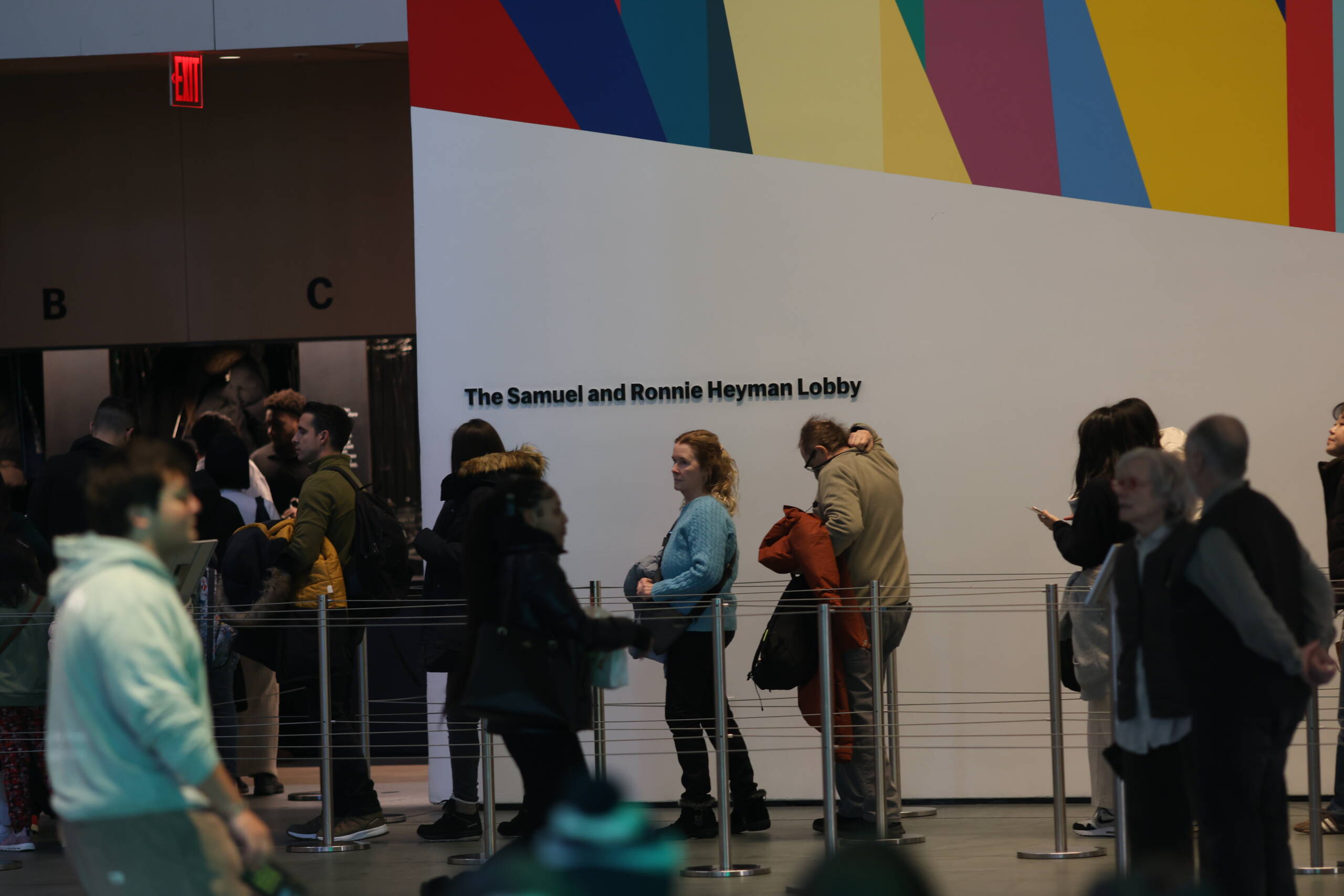
What you’re looking at is the Samuel and Ronnie Heyman Lobby, which places this squarely inside the Museum of Modern Art in Manhattan. The giveaway isn’t just the clean typography on the wall—black sans-serif letters floating on white—but the whole spatial attitude of the scene. The lobby opens up with that characteristic MoMA calm: wide, uncluttered planes, a sense of controlled flow, and those subtle queue barriers that guide people without ever feeling bossy about it. Above, the angled bands of saturated color—yellow, blue, red, teal—slice across the upper wall like a restrained nod to modernist abstraction, almost as if the building itself is quietly participating in the exhibition. The crowd feels very MoMA too: winter coats slung over arms, backpacks half-unzipped, people glancing at phones or staring into space while waiting, that particular mix of tourists, students, locals, and art-world regulars who all look like they’ve agreed to be patient for the sake of seeing something important. Even the lighting plays its role, soft and neutral, flattening nothing, dramatizing nothing—just enough illumination to let people and architecture coexist without competing. It’s one of those transitional spaces that doesn’t shout “museum” but instead eases you into the idea that you’re already inside modern art, before you’ve even seen a single artwork.
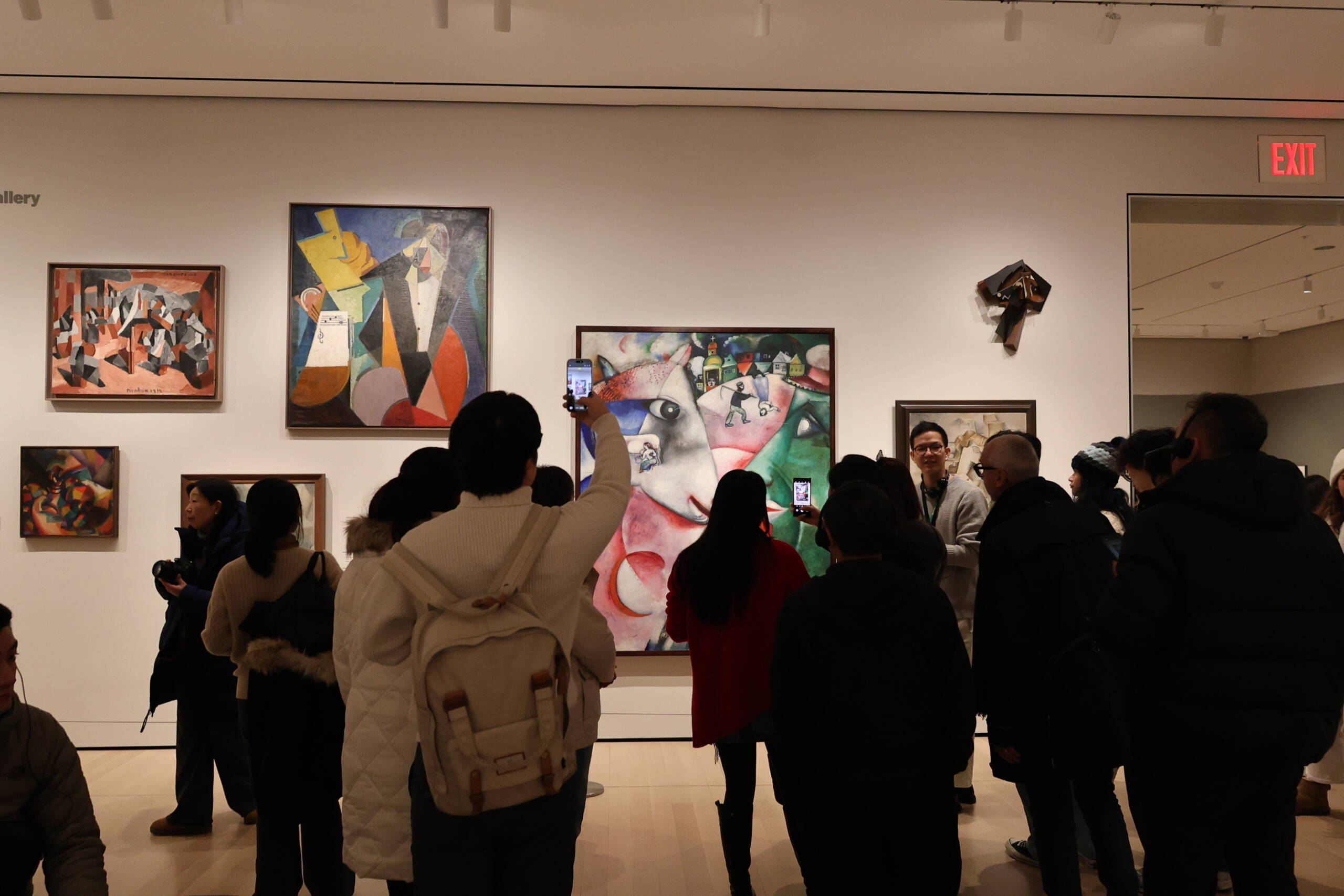
Walking into the galleries of the Museum of Modern Art feels less like entering a building and more like stepping into a living organism that breathes at its own pace. In the first scene, the room is dense with people, a soft murmur rising as phones lift into the air, screens glowing as if the paintings themselves are being retranslated into digital souvenirs. A large, vivid canvas anchors the wall, its fractured faces, floating figures, and jewel-like colors pulling the crowd inward. You can almost feel the collective pause—visitors shoulder to shoulder, winter coats brushing, backpacks shifting—everyone negotiating for a clear line of sight. The paintings around it form a constellation: angular compositions, bold planes of color, and surreal hints of villages and animals that invite interpretation without ever settling into one meaning. Overhead lighting stays politely neutral, doing its job without drama, while an EXIT sign glows red in the corner, a reminder that even in a room full of masterpieces, movement never fully stops. It’s crowded, yes, but not chaotic; more like a quiet choreography of looking, photographing, and drifting.
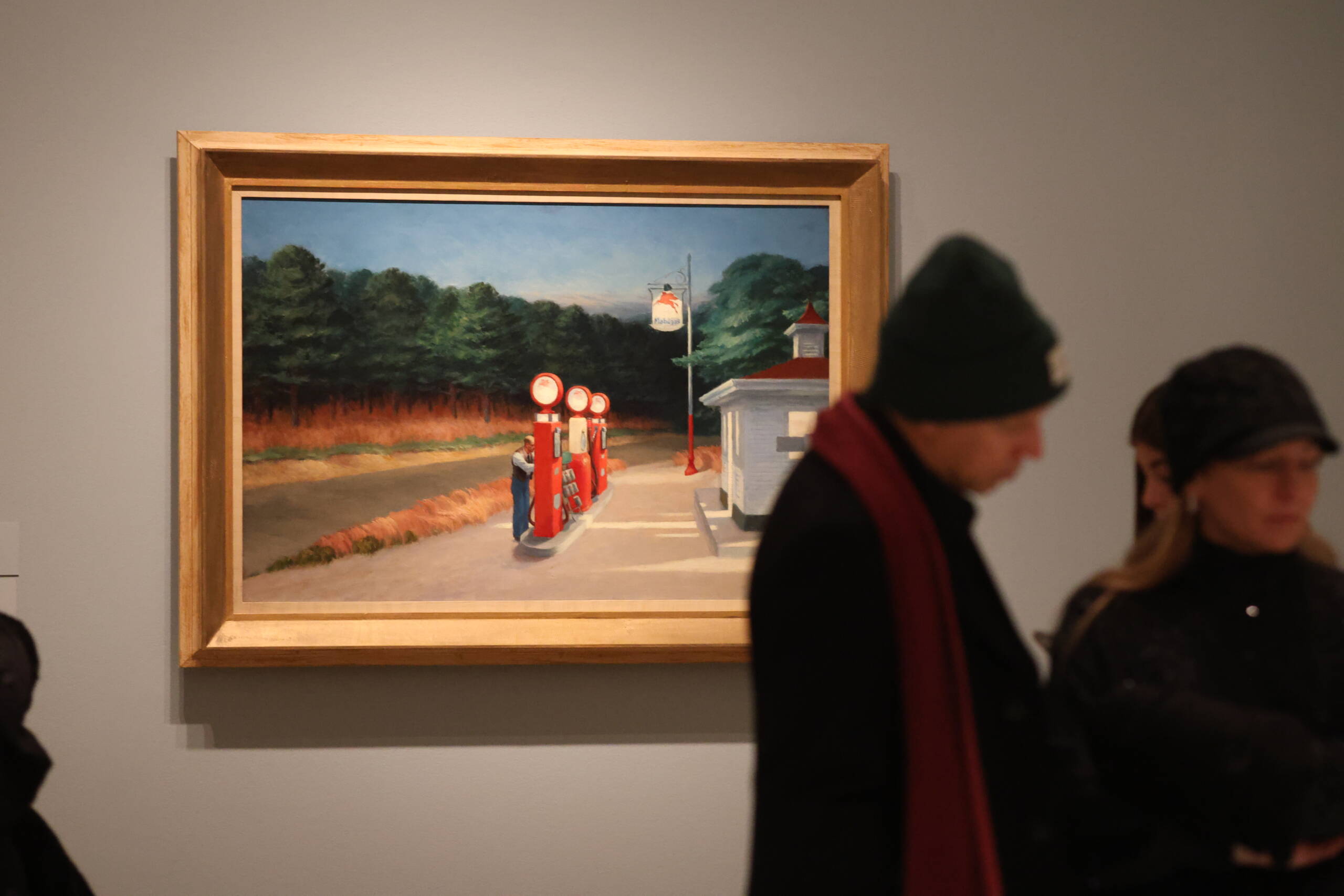
Then the mood shifts. A few steps away, the noise thins, and suddenly a single painting holds the space with surprising calm. Edward Hopper’s Gas hangs there like a held breath, framed in warm wood, depicting a lonely roadside gas station at dusk. The reds of the pumps stand out against the deepening greens of the trees, while the sky fades gently, neither day nor night, just that uneasy in-between moment Hopper understood so well. People pass in front of it—hats pulled low, scarves hanging loose—but the painting seems untouched by their motion, sealed in its own quiet narrative. The solitary attendant feels both present and distant, as if he’s part of a memory you almost recognize but can’t quite place. This is the strange magic of MoMA: one room buzzing with collective attention, the next offering a pocket of solitude, even when you’re not alone at all.
Together, these moments capture why this museum stays with you long after you leave. It isn’t only about the famous names on the walls or the sheer density of art history compressed into a few floors. It’s about contrast—crowds and stillness, color and restraint, immediacy and distance. You move from the social ritual of art-viewing, phones raised and conversations half-whispered, into an encounter that feels almost private, even sacred. And somewhere between those two experiences, walking slowly on pale wooden floors, you realize you’re not just looking at modern art—you’re watching how people live with it, right now, in real time.