SALAMANCA, SPAIN
A city built out of sandstone and documents, and it never quite stopped writing itself.
Photo essay · Five frames from the sandstone city
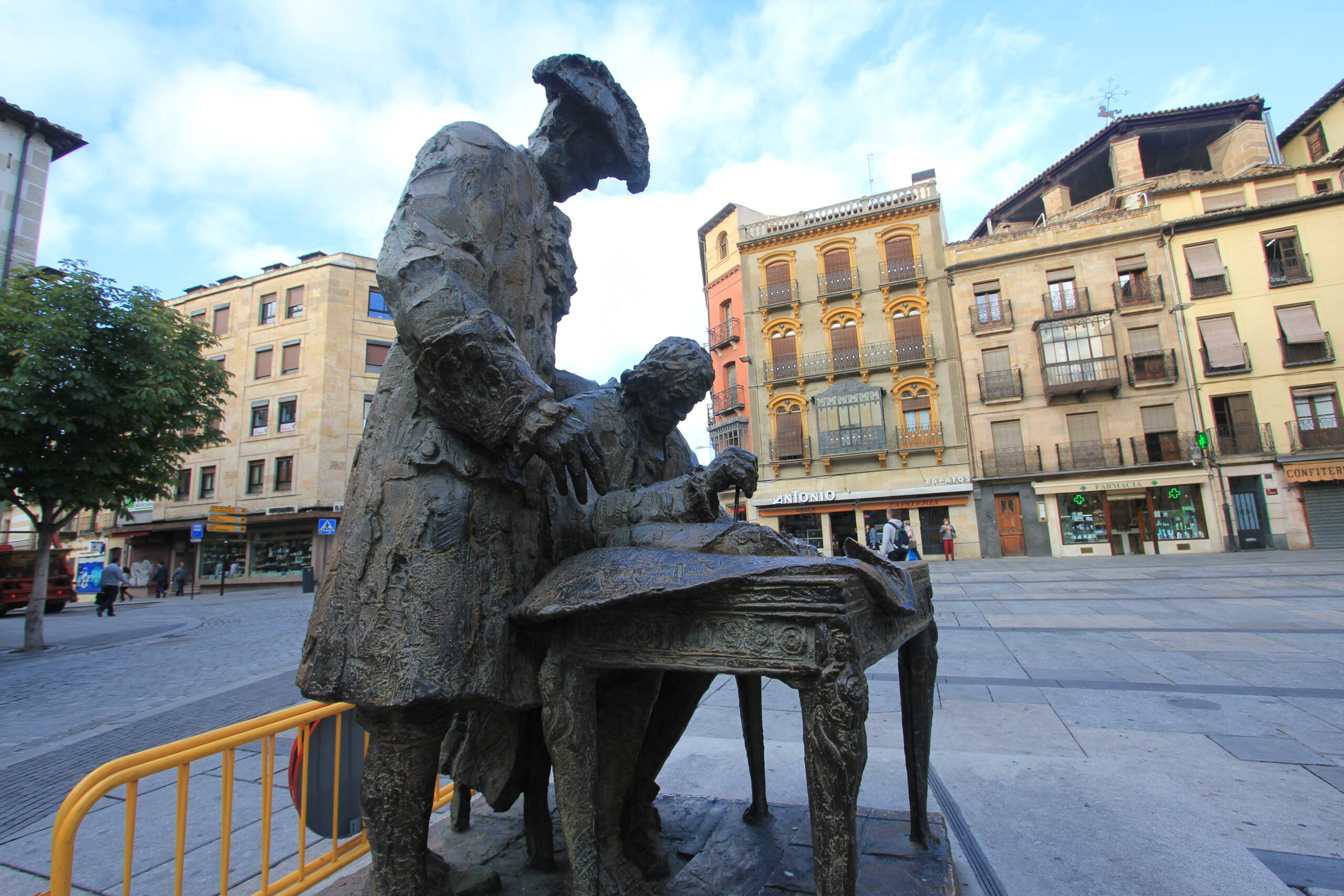
Salamanca turns gold at the end of the day, when the sandstone quarried from the Villamayor hills catches low light and holds onto it for longer than seems fair. Stand in the Patio de Escuelas long enough and you’ll find Fray Luis de León standing there too, cast in bronze, book open on his lap, looking mildly unbothered. He taught theology here in the 1570s until the Inquisition arrested him for translating the Song of Songs into Spanish. Four years in a cell in Valladolid. When he finally came back to lecture, the story goes, he opened with “As we were saying yesterday,” as if nothing had happened in between. Salamanca remembers the line better than it remembers the charge against him.
That’s the kind of city this is. The university opened in 1218, one of the oldest in Europe, and everything downstream of that decision still measures itself against it somehow. The churches, the colleges, the print shops that used to sit two streets from campus. Words outlast the people who wrote them here, and the walls keep receipts.
FRAME 01
The façade that won’t stop talking
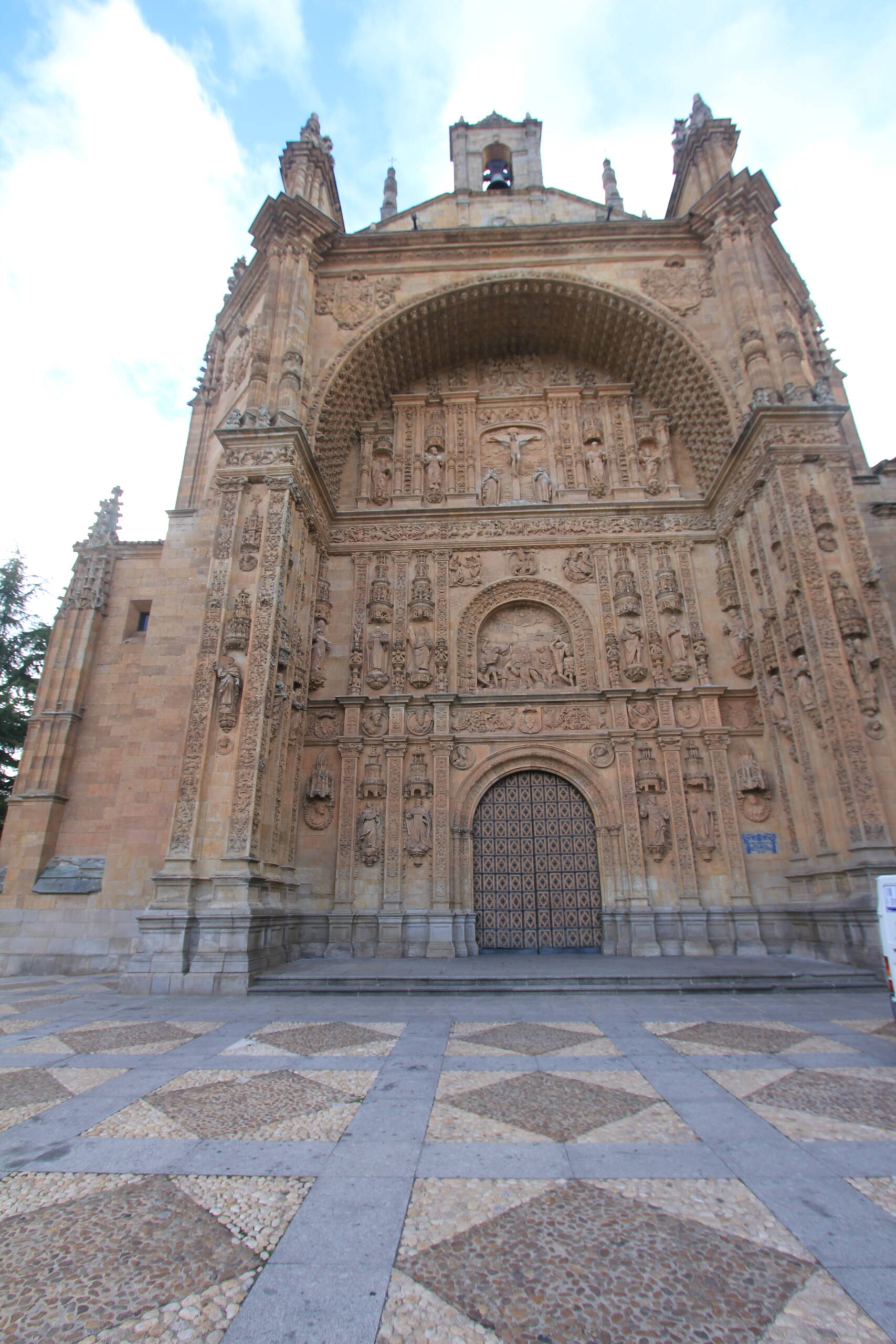
Walk up to the University façade and the carving works like a wall of footnotes. Coats of arms, medallions, saints, a couple of mythological figures nobody fully agrees on anymore. Somewhere in the stonework there’s a small carved frog, and finding it is supposed to bring luck for exams, or a wedding, depending on who’s telling you the legend that week.
The masons who carved all of it didn’t sign their names. The building kept the message and dropped the messenger, which feels about right for a city this obsessed with text.
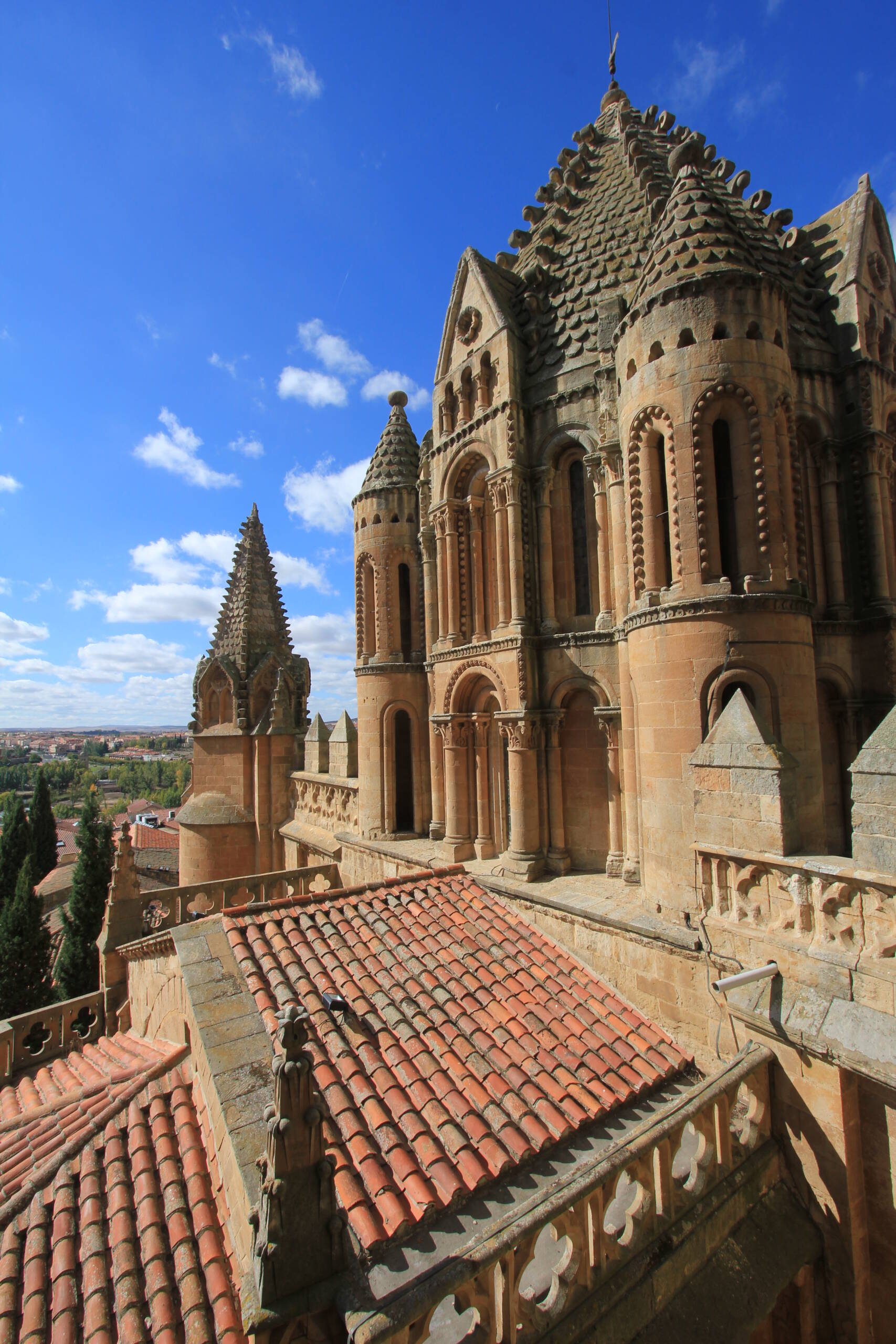
Two cathedrals sit on the same plot here, more or less stacked on top of each other. The Old Cathedral came first, Romanesque, thick-walled, built for a city that still needed to double as a fortress. The New Cathedral grew up right against it starting in 1513, and building dragged on for two centuries, which means one wall can walk you from Gothic vaulting into full Baroque without a door in between. Nobody tore the old one down to make room. They just kept building next to it, which is very on brand.
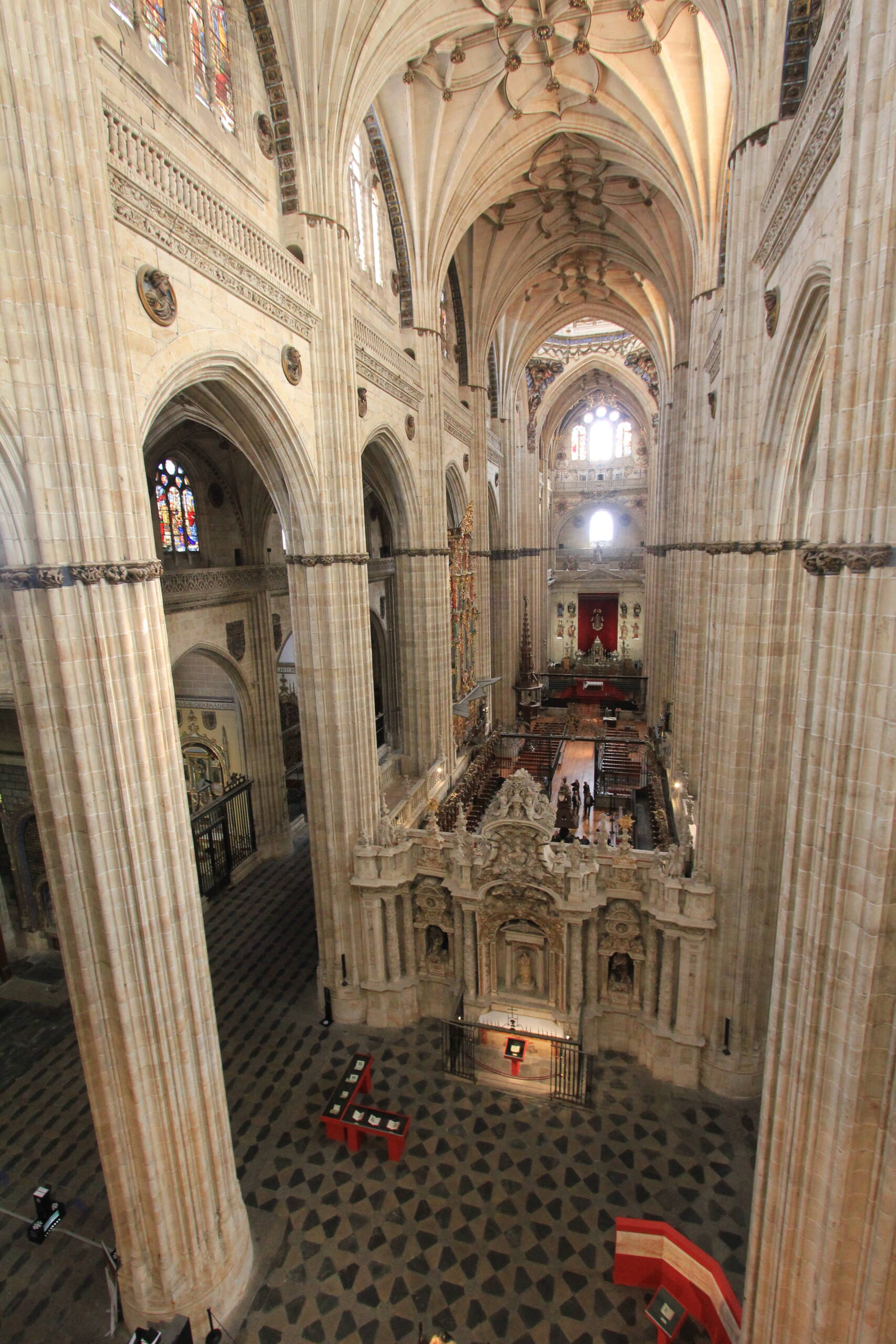
Building the New Cathedral took from 1513 to 1733. Nobody involved in the first stone lived to see the last one laid. Every generation of masons just inherited someone else’s unfinished argument about God and kept going.
FRAME 02
Moorish echoes in a Christian church
Look up inside the Old Cathedral and the dome ribs scallop out like something borrowed from a mosque, because it was. Mudejar craftsmen, Muslim artisans working under Christian kings, built a lot of what’s held together in this region, and their fingerprints are still on the ceiling whether the guidebooks mention it or not.
Salamanca likes to present itself as a monument to one tradition. Stand under this dome and that story gets a lot more complicated, in a good way.
The city was never finished. It only changed who was doing the carving.
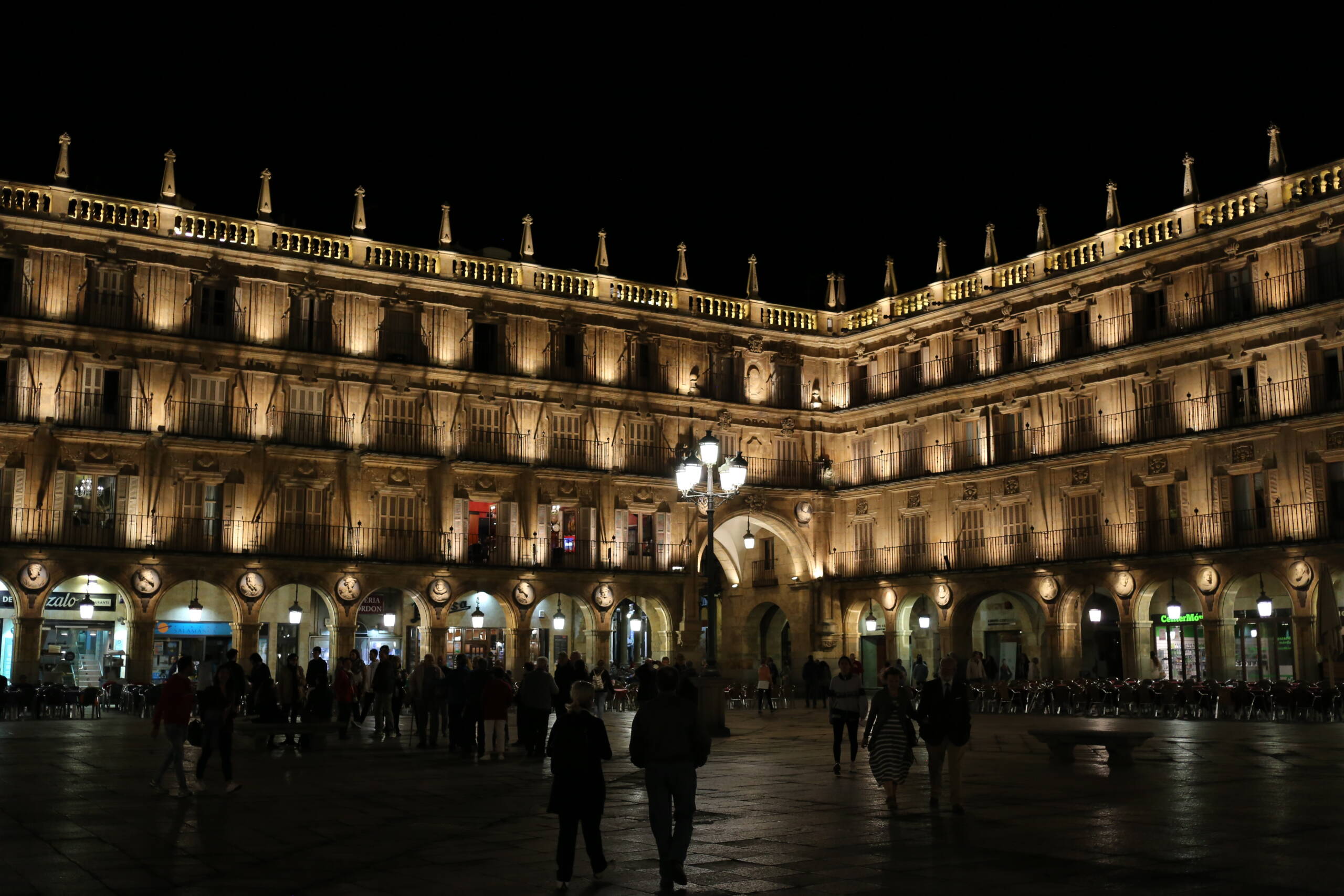
Plaza Mayor went up in the 1730s, designed by the Churriguera family, and it’s the one part of Salamanca that never really acts like a monument. Students cross it on the way to class. Old men argue about football under the arcades. Someone is always eating something at a table pushed too close to someone else’s. The cathedrals ask you to look up and think about centuries. The plaza just wants you to sit down.
Roughly 35,000 students live in a city of under 150,000 people. On any given night, the plaza belongs to them more than it belongs to the eight centuries of history underneath it. That balance is basically the whole city in one sentence.
The stone remembers
Every façade, dome, and column here was carved by someone whose name didn’t make it into the record. The buildings outlived the builders on purpose.
The university set the terms
Founded in 1218, it decided early on that this would be a city organized around reading, writing, and arguing about both.
Two traditions, one dome
Mudejar craftsmanship sits inside a Christian cathedral without apology. The influence never needed permission.
The plaza keeps it honest
Whatever the churches ask you to feel about the past, Plaza Mayor at night reminds you the city is still lived in, not just visited.
Salamanca doesn’t perform its history. It just keeps living inside it.