• Skip to main content
  • Skip to secondary menu
  • Skip to footer

Travel Marketing

Travel and Tourism Trends

  • Sponsored Post
  • Travel Event Calendar
  • Travel Market
  • Travel Magazine
  • About
  • Contact

The Mona Lisa Queue Is Everything Wrong With How We Visit Museums

May 16, 2026 By admin Leave a Comment

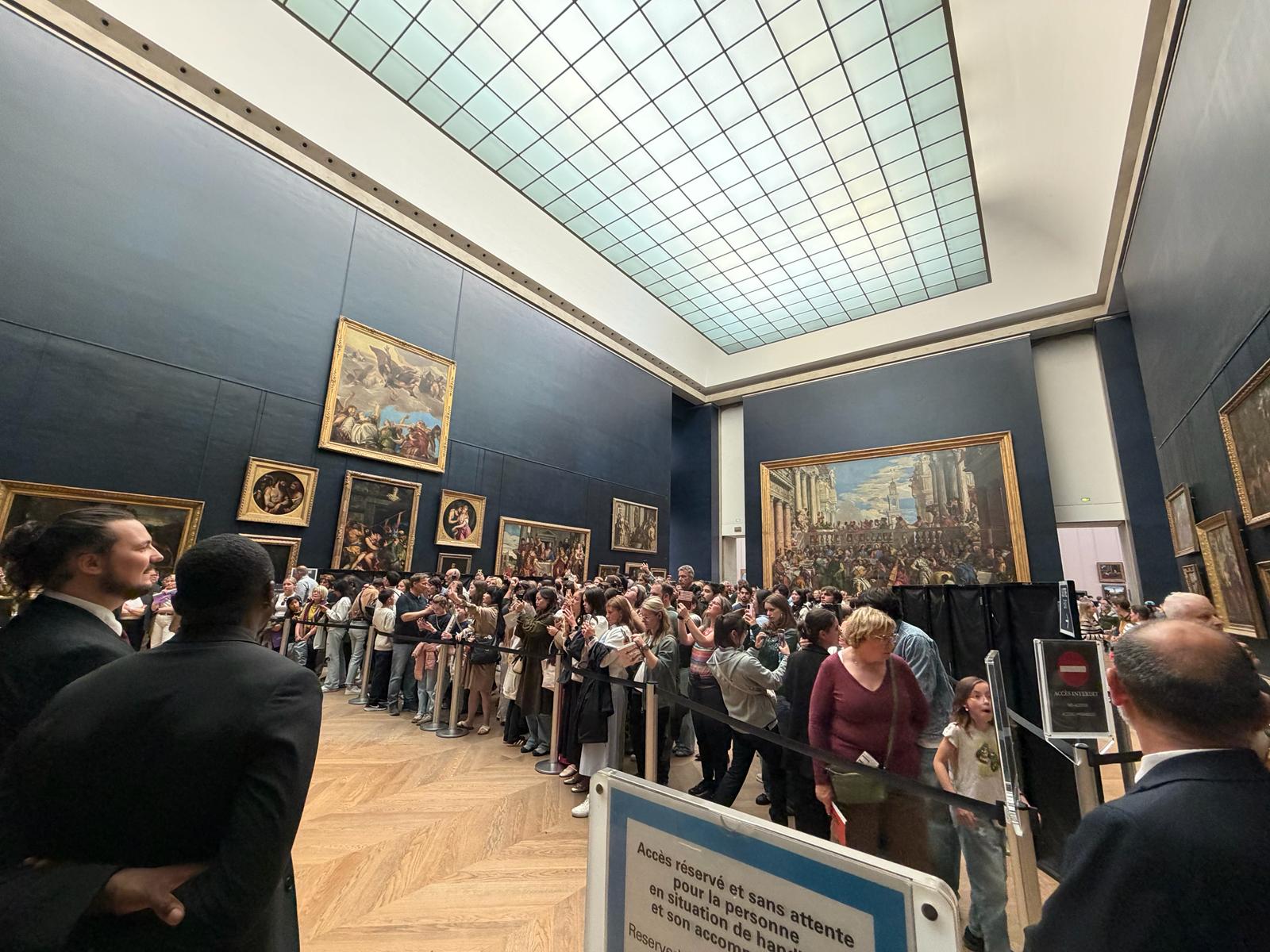
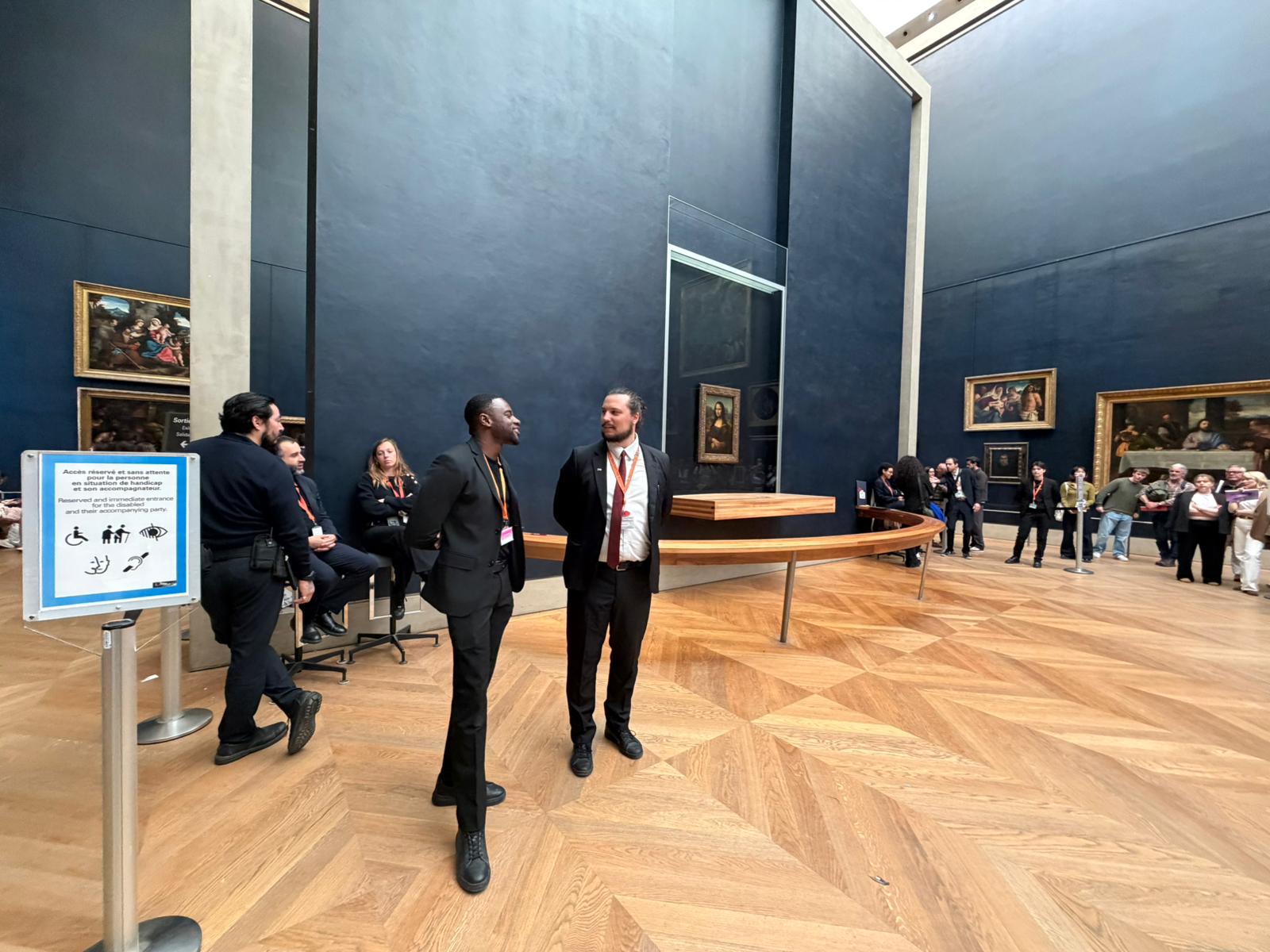
This is the Salle des États at the Louvre. The crowd is queuing behind stanchions, phones raised, shuffling forward in a managed line supervised by security staff in black suits. The sign at the front reads “Accès réservé et sans attente pour la personne en situation de han-” — the disability access lane, one of the few ways to approach the thing without joining the cattle run. Everyone else waits. For this.
The Mona Lisa Queue Is Everything Wrong With How We Visit Museums

The Mona Lisa is 77 by 53 centimeters. It hangs on the far wall behind bulletproof glass, behind a barrier, across a room that holds several hundred people at any given moment. What you see from the queue is a small dark rectangle at considerable distance, surrounded by a frame, surrounded by people photographing it on phones that will produce images inferior in every respect to the ones freely available on Wikipedia. The experience of seeing the Mona Lisa in person, for most visitors, is the experience of photographing a crowd photographing a painting.
The Mona Lisa Queue Is Everything Wrong With How We Visit Museums

Now turn around. The painting covering the entire opposite wall — the one nobody is queuing for, the one visible in the background of every Mona Lisa crowd photo ever taken — is Veronese’s Wedding at Cana, completed in 1563. It is roughly ten meters wide and six meters tall. It contains over 130 figures, architectural detail of extraordinary precision, a color palette that has survived four and a half centuries in better condition than it has any right to, and a compositional intelligence that rewards sustained looking in a way that a 53-centimeter portrait behind glass simply cannot. It is one of the largest and most accomplished paintings in the Western canon. On a normal day at the Louvre, you can stand directly in front of it, alone, for as long as you want.

The Louvre has approximately 35,000 works. The tourist infrastructure of central Paris — the queues, the timed tickets, the guided group tours, the selfie sticks — funnels the majority of visitors toward perhaps a dozen of them. The rest of the museum operates at a pace and a scale that is genuinely pleasurable. The Dutch and Flemish rooms are quiet. The Mesopotamian antiquities are nearly empty. The Richelieu wing on a weekday afternoon is what museums are supposed to feel like.

Skip the Mona Lisa. You have already seen it. Everyone has already seen it. Go find something you haven’t.
Filed Under: News

Reader Interactions

Leave a Reply Cancel reply

Your email address will not be published. Required fields are marked *

Footer

Recent Posts

  • Expedia Group Turns 30 and Pushes Travel Into the AI Era with New Partnerships and a Sustainability Push
  • The Mona Lisa Queue Is Everything Wrong With How We Visit Museums
  • Why You Should Order the Steak at a Paris Pizzeria
  • Palais de Justice, Paris: The Courthouse on the Island Where the City Began
  • Inside the Petit Palais: The Courtyard Garden Nobody Expects
  • Petit Palais, Paris: The Free Museum Most Visitors Walk Past
  • Notre-Dame Under Scaffolding Is Still Notre-Dame
  • Global Traveler Rhine River Cruise, Oct. 29–Nov. 5, Europe
  • Ambassador’s Ambition Sealed in Bordeaux After Onboard Death and Mass Gastrointestinal Illness
  • The Manta Resort Unveils Third-Generation Underwater Room off Pemba Island

Media Partners

Lisbon’s Seven Hills: A Walking Guide That Tells You the Truth
New Orleans: An American City That Plays by Different Rules
Ha Long Bay Without the Cruise Brochure
Istanbul at the Threshold: A City That Has Always Been Two Things at Once
Iceland’s Ring Road: What the Drive Teaches You That No Photograph Can
Marrakech’s Medina: How to Read a City That Was Not Designed for You
Torres del Paine: What You Are Actually Getting Into
Kyoto in Autumn: What the City Looks Like When the Maples Turn
Disneyland Paris Rewrites Its Script With World of Frozen and Disney Adventure World
Wallace Fountain: Carrying Water, Carrying Values

Media Partners

The Immersive Experience in the Museum World
Japan, China, and Taiwan: A New Triangle of Risk — and a Window of Opportunity for Japan
Ghost Kitchens as Infrastructure: The Shift from Restaurants to Intelligent Food Networks
The Zoom Divide Nobody Saw Coming
The Perfect Budget Content-Creator Kit
Reimagining Prague’s Tourism Future Through Immersive Media and VR Museums
Israel’s Urban Paradox: Tel Aviv Moves, the Rest Stand Still
American Express Global Business Travel (GBTG): Understanding the Business and the Investment Case
Why the Canon R8 Paired With the New RF 45mm f/1.2 Lens Quietly Becomes the Content Creator’s Sweet-Spot
The Future of Travel: A $15.5 Trillion Industry

Copyright © 2026 Travel Marketing

Media Partners: Timey · Publishing House · Ancient Rome · Photography · Calendarial · Transportational