The cranes are part of the composition now. You stand on the parvis, construction fencing at your knees, a red hydraulic lift blocking the left portal, and the west façade still stops you cold. Eight centuries of Gothic precision, and it doesn’t need your sympathy.
Notre-Dame de Paris reopened in December 2024 after five years of post-fire reconstruction — one of the fastest cathedral restorations in modern history, and arguably the most watched. What tourists encounter today is a building in its final stages of interior and exterior finishing work: the shell intact, the spire back, the stone face of the kings of Judah cleaned to a brightness that photographs almost artificially white against a Paris sky.
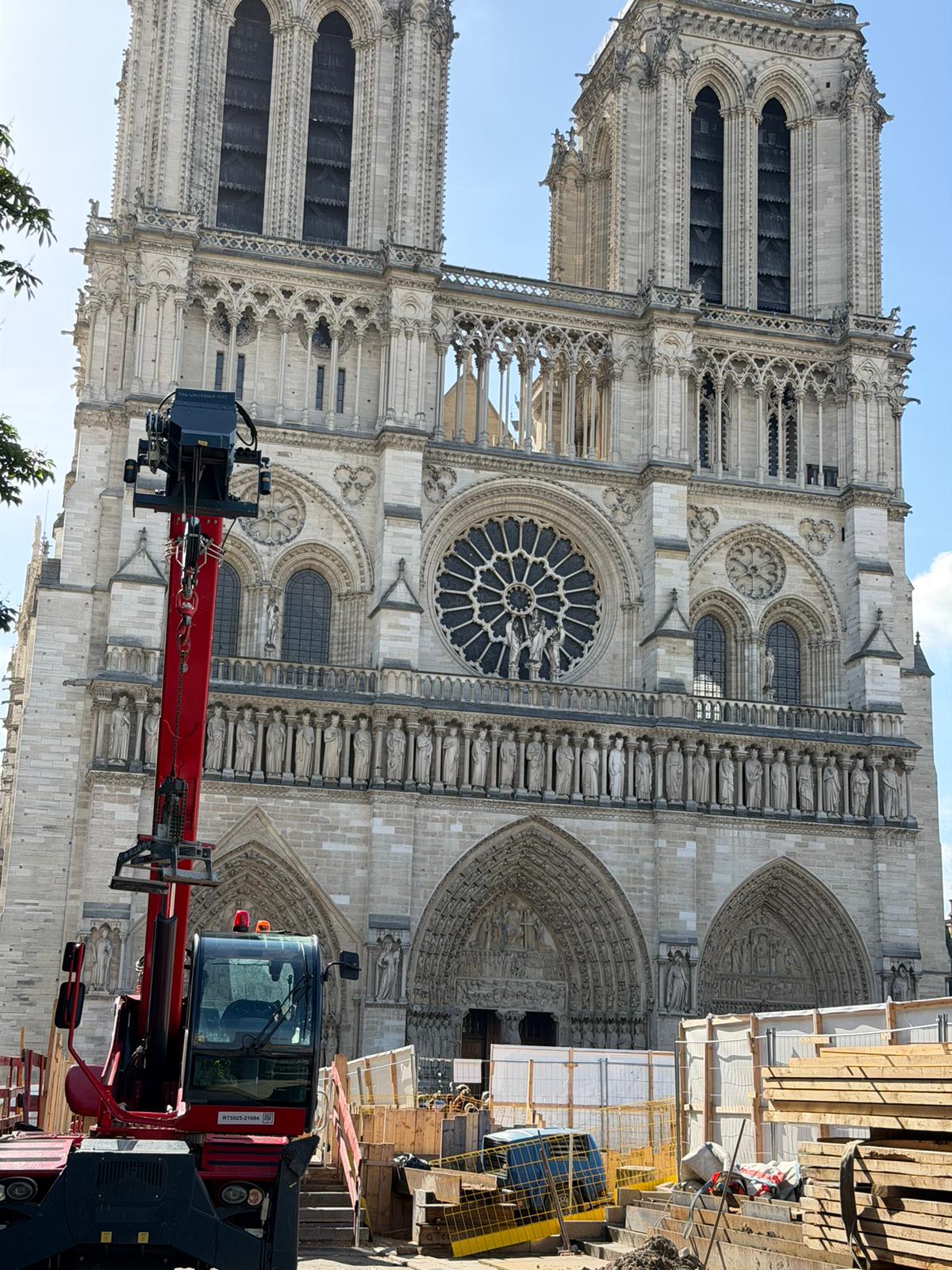
The construction zone is not a deterrent. It is, if you’re paying attention, the subject. The same energy that built this place — the logistics of cut stone, the problem of height, the accumulated labor of anonymous craftsmen — is visible again in the equipment, the stacked lumber, the crane operators navigating a medieval footprint. Travel writing usually asks you to look past the scaffolding. Don’t.
Book interior visits in advance. Exterior access to the parvis is free and unrestricted. Come at midday when the light hits the rose window straight and the stone glows without drama. The portal sculpture is sharper now than it has been in living memory. That is worth the detour.