Taiwan is making its cruise ambitions explicit. At Seatrade Cruise Global 2026 in Miami, the Taiwan Tourism Administration is presenting the island not merely as a port of call but as the structural anchor of Asia’s next generation of cruise itineraries — a positioning that reflects both geographic reality and a deliberate long-term infrastructure play.
The booth design alone signals intent. TTA constructed its pavilion in the shape of 門, the Chinese character for “door” or “gateway,” a visual argument that Taiwan is not trying to compete for footnote status on regional cruise maps but is instead claiming the organizing role: the point through which Asia-Pacific cruise business flows. It is a bold frame for a destination that has historically been overshadowed in the cruise conversation by ports in Japan, Singapore, and Hong Kong, and it suggests that TTA is no longer content to market Taiwan as one option among many.
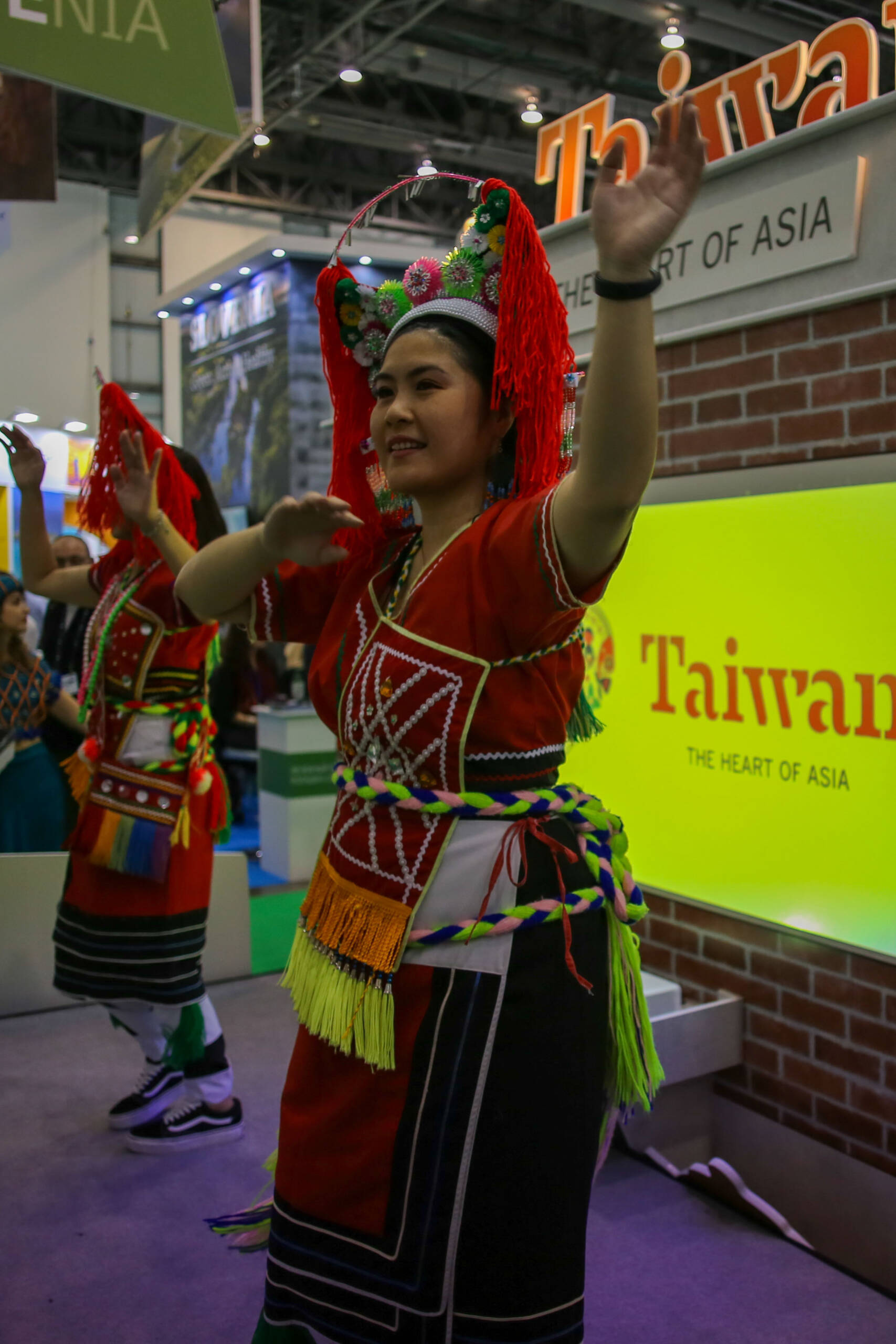
The geographic case is legitimate. Taiwan sits near the center of the East and Southeast Asia arc, within striking distance of Japan, South Korea, the Philippines, Vietnam, and southern China. For cruise lines designing multi-port regional itineraries, Taiwan offers something most of its neighbors cannot combine in a single port: central positioning, modern port infrastructure built to international standards, and exceptional air connectivity. TTA reports more than 180 direct weekly flights between North America and Taiwan, a figure that makes the island unusually viable for fly-cruise programs targeting long-haul travelers who want to join or depart a regional itinerary without routing through a secondary hub.
Yu-Hsuan Su, Secretary of International Marketing at TTA’s International Affairs Division, articulated the pitch at Seatrade: Taiwan offers cruise partners a practical platform, not just a scenic one. The distinction matters in the cruise industry, where operational efficiency — turnaround time, passenger flow, port logistics, air-sea coordination — is often weighted as heavily as destination appeal when lines build itineraries. TTA is clearly aware of this calculus and is speaking the language of cruise operations rather than pure tourism promotion.
The financial incentive structure reinforces that seriousness. International cruise lines bringing overseas passengers to Taiwan can qualify for subsidies of up to US$15,000 per ship call for port stays exceeding 12 hours, and up to US$7,500 for shorter calls. On the fly-cruise side, TTA is offering up to US$10 per international passenger arriving in Taiwan as part of a fly-cruise itinerary. These are not token gestures. At scale, across multiple sailings and thousands of passengers per season, the subsidy framework represents meaningful route development support — the kind that shifts itinerary planning conversations from aspirational to operational.
The incentive architecture also reveals TTA’s strategic priorities. The tiered port call structure, with the larger subsidy tied to stays over 12 hours, is designed to encourage overnight or extended port calls rather than quick turnarounds. Longer port stays translate into greater passenger spending ashore, deeper engagement with local experiences, and stronger word-of-mouth — outcomes that serve both the destination’s tourism economy and the cruise line’s shore excursion revenue. The fly-cruise per-passenger incentive is a direct investment in building Taiwan as a homeport and embarkation point rather than simply a transit stop, which is the more durable and economically significant role for any cruise destination to secure.
Underpinning all of this is TTA’s broader brand evolution. The “Taiwan — Waves of Wonder” platform, launched in 2024, is the umbrella under which Taiwan’s international tourism identity is being consolidated. At Seatrade, TTA is introducing “Taiwan 100 Ways” as the experiential translation of that brand — a framework designed to move beyond single-attraction marketing and instead communicate the range and depth of what the island offers. The concept is organized around Taiwan’s perceived strengths in lifestyle and diversity, with thematic clusters covering local everyday culture, cuisine, nature, wellness, shopping, and romance.
The “100 Ways” framework is a strategic answer to a real marketing problem. Taiwan’s challenge has never been a shortage of compelling experiences — it has been the difficulty of communicating a coherent identity when those experiences span indigenous mountain culture in Taroko Gorge, hypermodern street food culture in Taipei’s night markets, surf towns on the east coast, hot spring resort towns on the north coast, and historic temple districts across the south. A single defining image has proven elusive because Taiwan genuinely defies reduction. “Taiwan 100 Ways” sidesteps the problem by making multiplicity the argument: the destination’s breadth is the brand, not a liability to be managed.
For cruise travelers specifically, this is well-targeted messaging. Cruise passengers are by definition multi-destination travelers who have already self-selected into a mode of travel built on variety and successive discovery. A destination that leads with range rather than a single hero attraction speaks directly to how cruise itineraries are chosen and how shore excursion portfolios are built. TTA is positioning Taiwan as a port that can satisfy a dozen different passenger profiles within the same ship call — the cultural explorer, the food traveler, the nature seeker, the shopper, the wellness tourist — without any single group feeling underserved.
The ribbon-cutting ceremony at the Taiwan pavilion brought together a notably international roster of participants, including Yung-Hui Chou, Chairperson of Taiwan International Ports Corporation, Milton Potter, Speaker of the Legislature of the U.S. Virgin Islands, and senior TTA officials. The presence of a Caribbean legislative figure at a Taiwan cruise pavilion opening is a small but telling detail — it suggests Taiwan is actively cultivating relationships across the cruise ecosystem, including with destinations that understand port development from the inside.
Taiwan’s push to establish itself as Asia’s cruise gateway is not without competition. Japan has aggressively developed its cruise infrastructure and continues to draw enormous interest from global lines. Singapore remains the dominant homeport for Southeast Asia operations. But Taiwan’s combination of central positioning, air connectivity, incentive funding, and an increasingly coherent tourism identity gives it a differentiated case to make. The question is whether cruise lines, in their itinerary planning cycles, will treat that case as compelling enough to shift capacity and route structures in Taiwan’s direction.
What Seatrade Cruise Global 2026 makes clear is that Taiwan is no longer waiting to be discovered by the cruise industry. It is making a structured, incentivized, and brand-coherent argument for a specific role in the regional cruise architecture. That is a different posture than destination marketing, and it is the posture that gets itineraries built.