Few artifacts stop you cold the way this one does.
Standing in the open air at Caesarea Maritima, Israel, the so-called “Drinking Contest” Sarcophagus is a Roman-era marble tomb dating to the second or third century CE — unearthed from the sands of Caesarea and left, wisely, right where history placed it. Exposed to Mediterranean light, its carved reliefs remain startlingly vivid nearly two millennia after they were made.
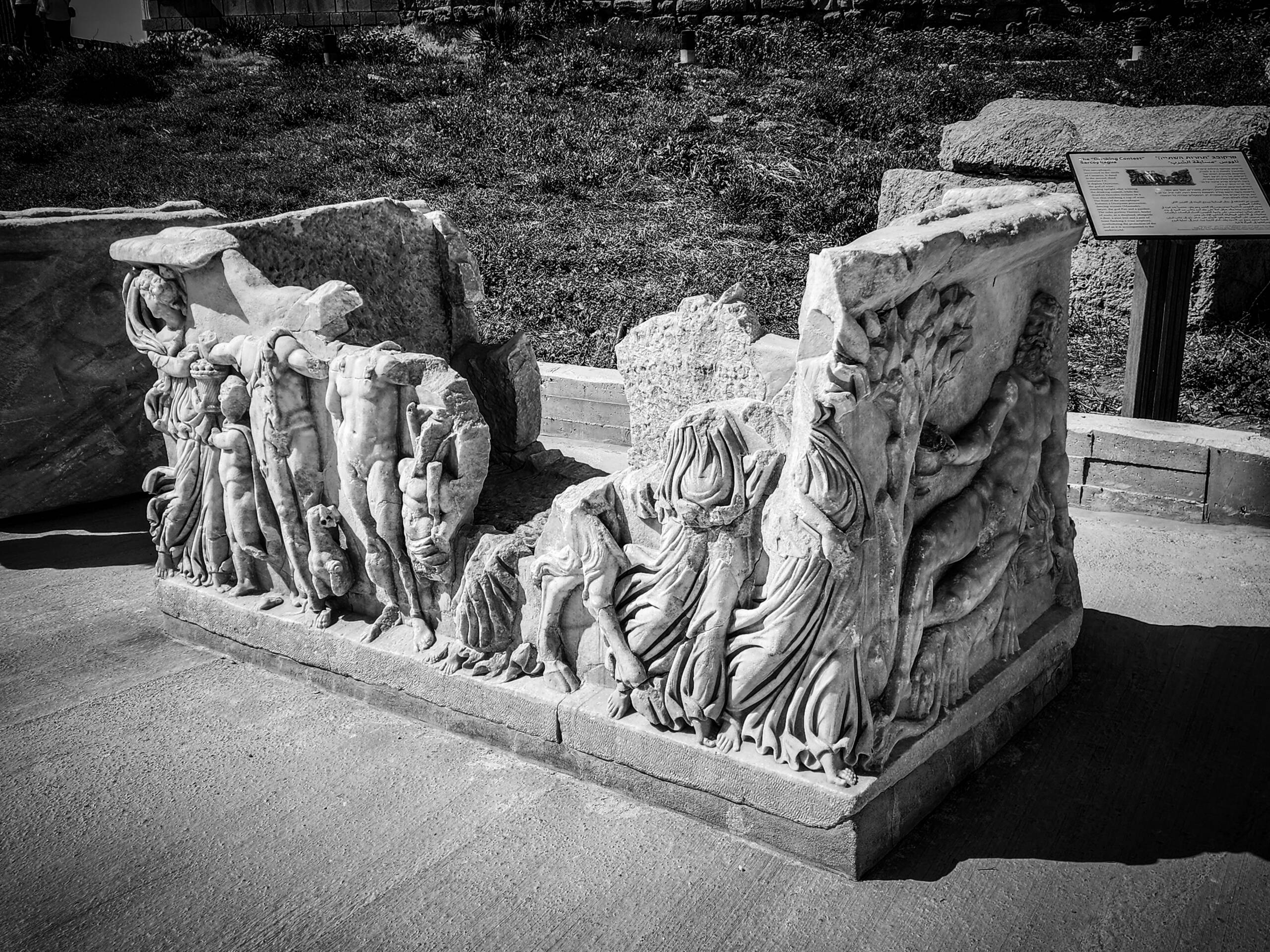
The central scene on the front face is a Dionysian procession — dancing Maenads, satyrs, the god Pan, and a panther. But the drama centers on Dionysus himself, the god of wine, standing upright and triumphant after winning a drinking contest, while a very drunk Hercules slumps onto a lion skin, clutching his cup in defeat. It’s a scene that manages to be both mythologically serious and quietly comic.
The side panels shift the tone. Hermes appears as a shepherd of souls — leading the dead toward the underworld alongside a deer, a pine tree, and a pair of lions flanking a wine amphora. The imagery is not just decorative. It’s a complete theological statement: wine, pleasure, death, and passage to the next world, carved into the vessel meant to hold a body.
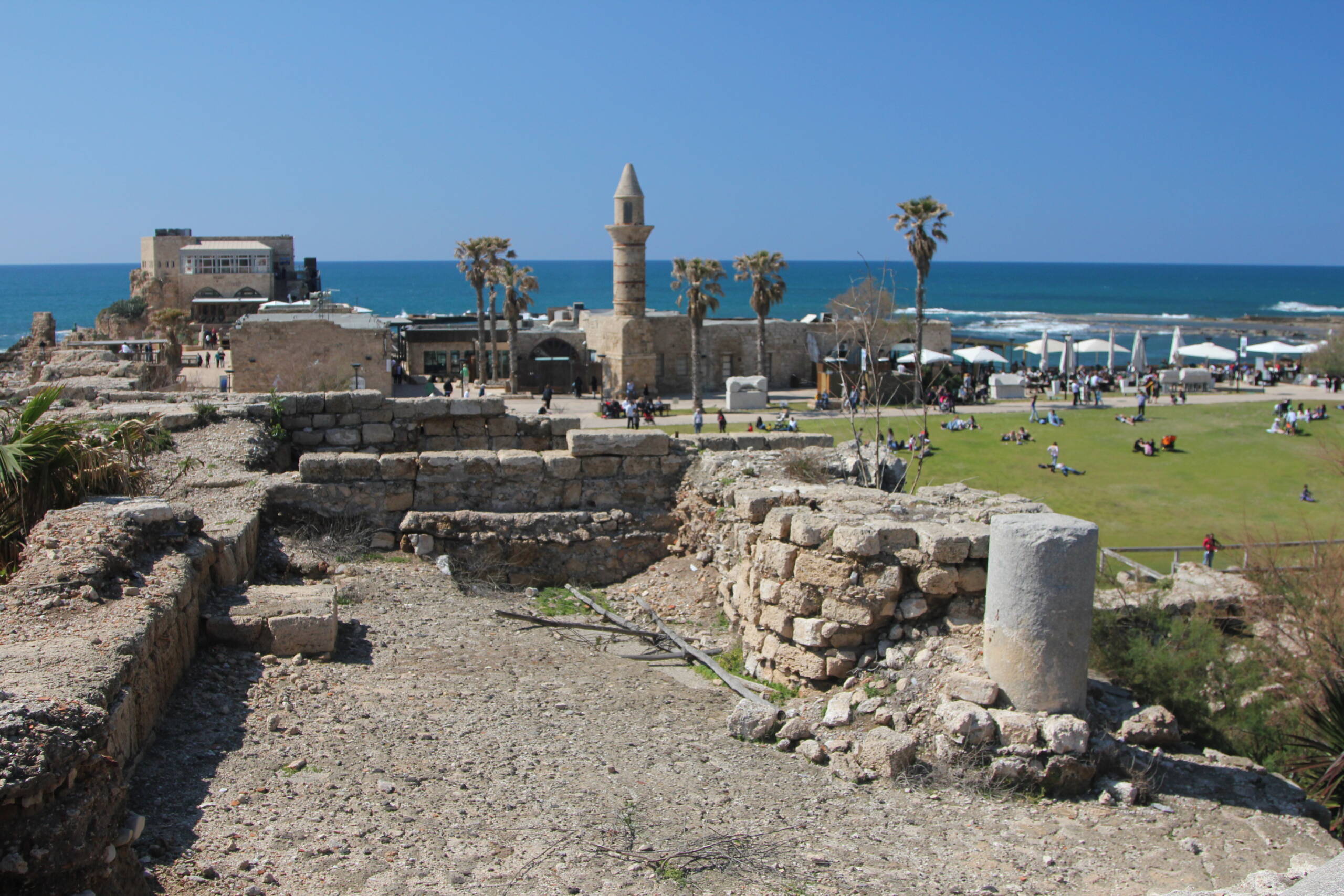
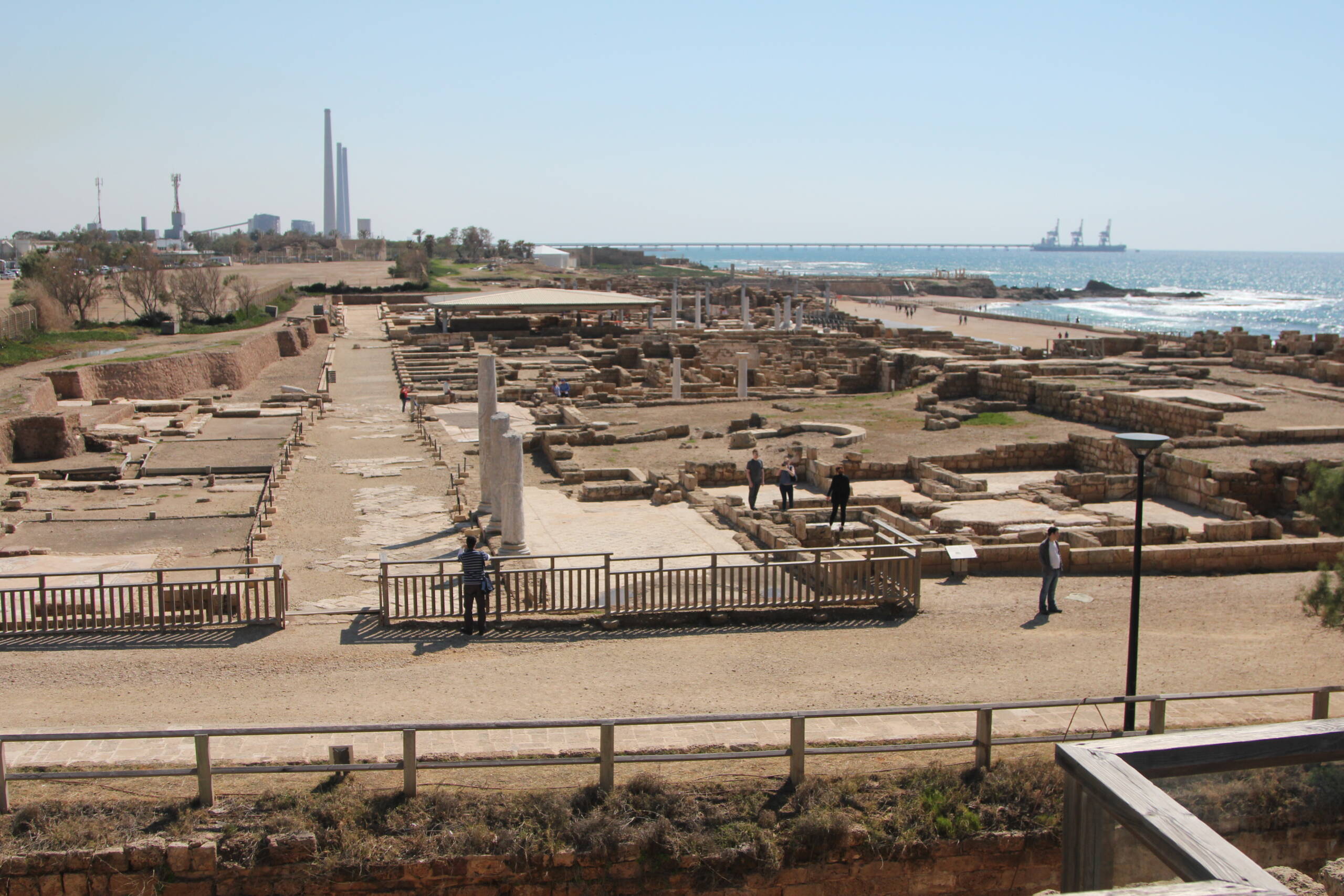
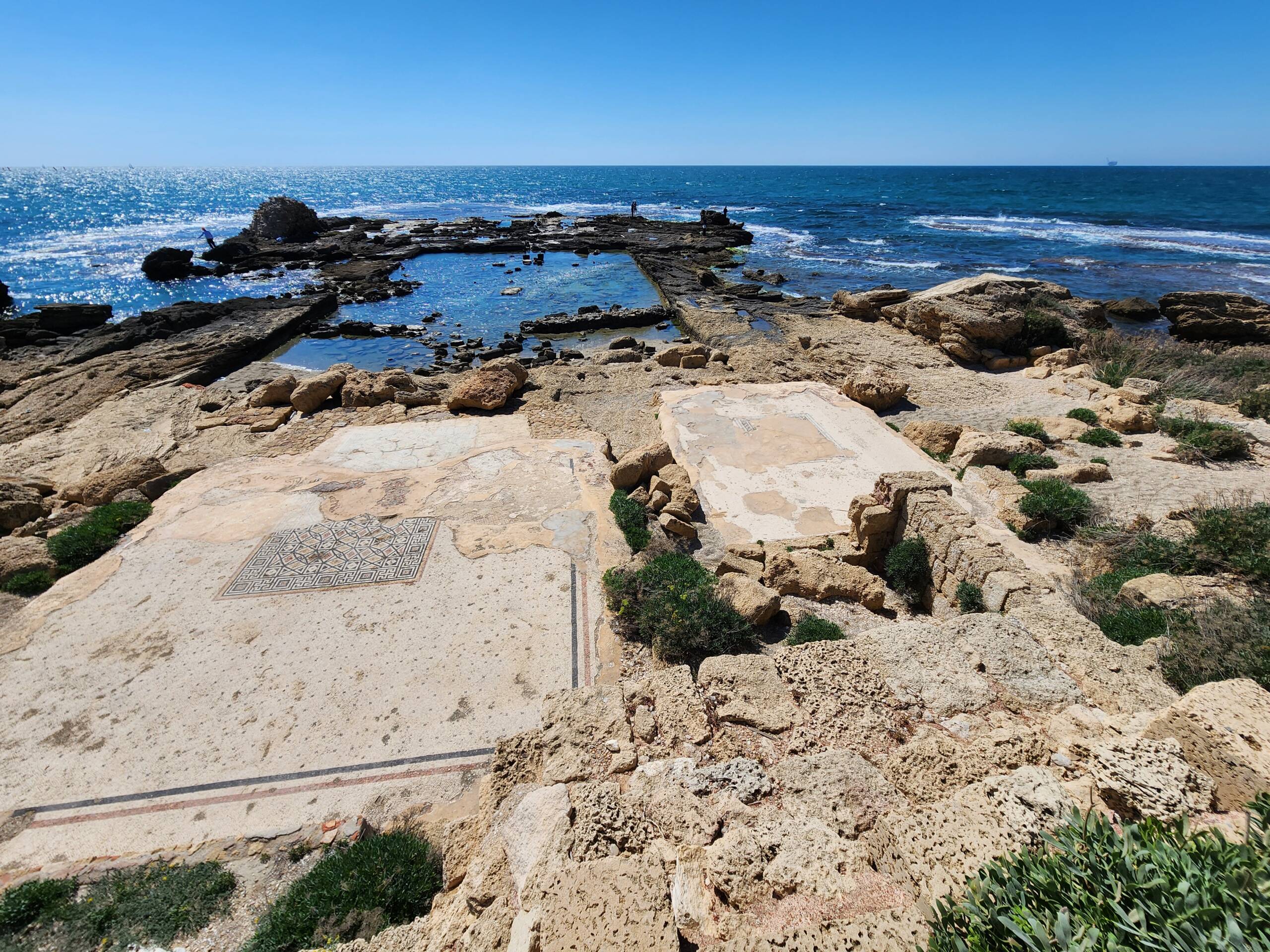
Caesarea rewards visitors who slow down. Most come for the amphitheater, the harbor ruins, or the Crusader fortifications — and those are worth every minute. But it’s the smaller, stranger discoveries like this sarcophagus, sitting in the open air between gravel paths and interpretive signs, that make the place feel genuinely alive with history. Roman Caesarea was a cosmopolitan port city. Someone here — wealthy enough to commission fine marble, educated enough to choose Dionysian iconography — wanted their tomb to say something. It still does.
The sarcophagus is part of the Caesarea National Park archaeological complex, managed by the Israel Antiquities Authority. It’s accessible during standard park hours and sits near the ancient harbor precinct.