There is a version of a perfect afternoon that costs less than two euros and requires no reservation. In Lisbon, it arrives on a black tray: one pastel de nata, one coffee, no further negotiation required.
The pastel de nata is a Portuguese custard tart with a specific argument to make. The shell is laminated pastry, lacquered and blistered at the edges from a very hot oven. The custard inside — egg yolk, sugar, cream — sets just past liquid, glossy across the top, scorched in places to something almost caramelized. It is not subtle. It does not try to be. The char is the point.
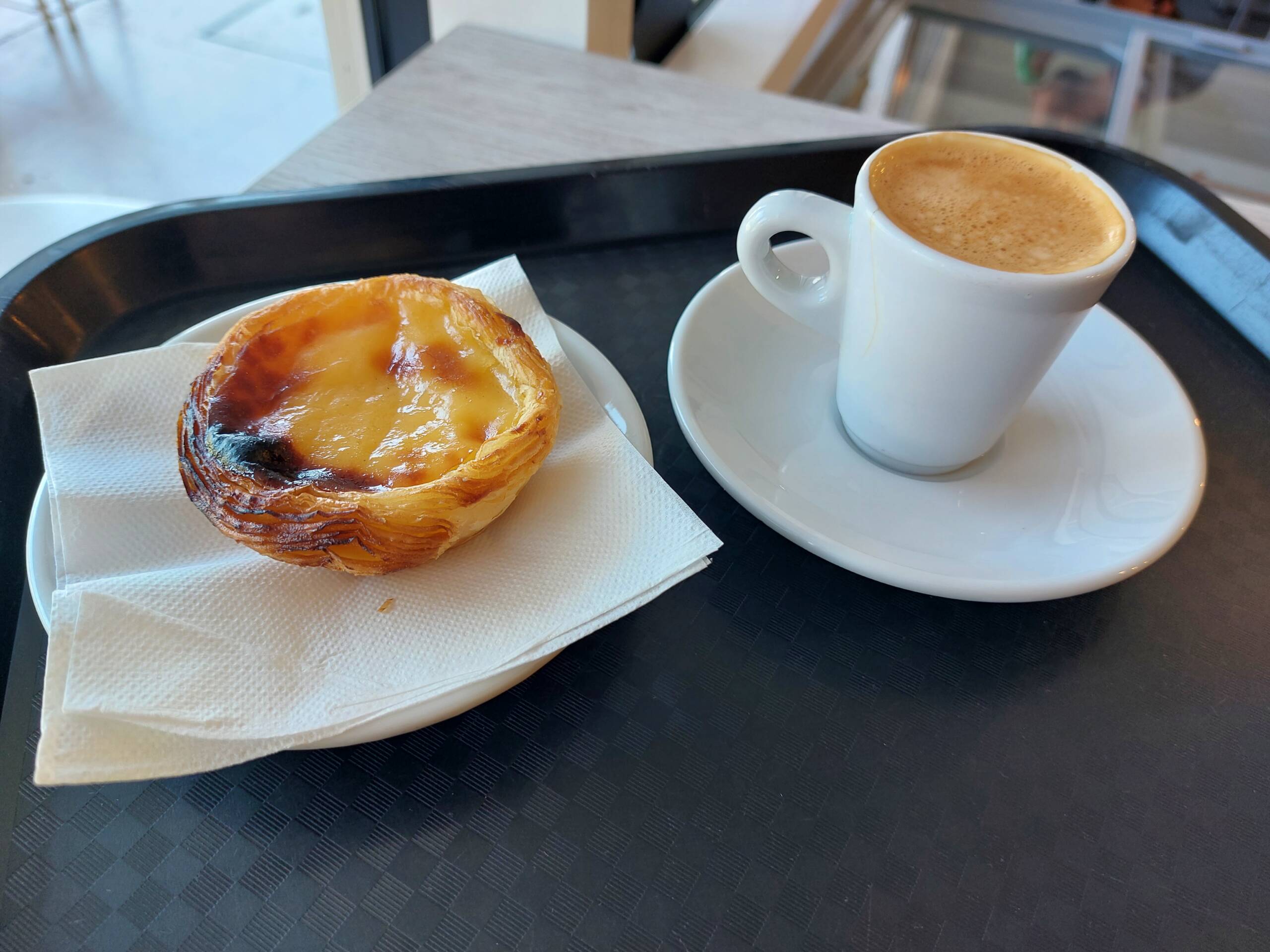
The coffee comes alongside as a matter of course. In Lisbon, coffee means a small, strong espresso-adjacent cup — a bica in local usage — with a thin layer of crema on top. The bitterness is calibrated, not aggressive. It is made to cut through the sweetness of the tart rather than compete with it.
This combination — tart, coffee, napkin, tray — is essentially the Portuguese mid-morning. It exists in pastry shops, museum cafés, airport departure lounges, and neighborhood counters where nobody looks up when you walk in. The ritual is portable and classless in the best sense. The quality, when the oven temperature is right, is not.
Lisbon rewards this kind of eating: unhurried, inexpensive, grounded in one thing done with care. The pastel de nata is the clearest example. You eat it standing at a counter or sitting at a small table by a window, and for the duration of it, the city outside can wait.