Few cities pack their contradictions as tightly as Baku. In a single glance you can take in a medieval walled city, the gilded mansions of a vanished oil aristocracy, and a trio of flame-shaped skyscrapers throwing colored light across the Caspian Sea. Azerbaijan calls itself the Land of Fire, and its capital lives up to the name: ancient and brash, Persian and European, conservative and flamboyant, all at the same time. It is one of the most underrated city breaks on the edge of Europe, and a night walk is the fastest way to fall for it.
The Flame Towers and the Land of Fire
Start with the skyline. The three Flame Towers rise above the city on a hill behind the Old City, their facades wrapped in tens of thousands of LED panels that turn the buildings into a single animated screen. Through the evening the towers cycle through pouring flames, the red-blue-green of the Azerbaijani flag, and a giant figure waving a banner over the bay. It is unapologetically theatrical, and it works.
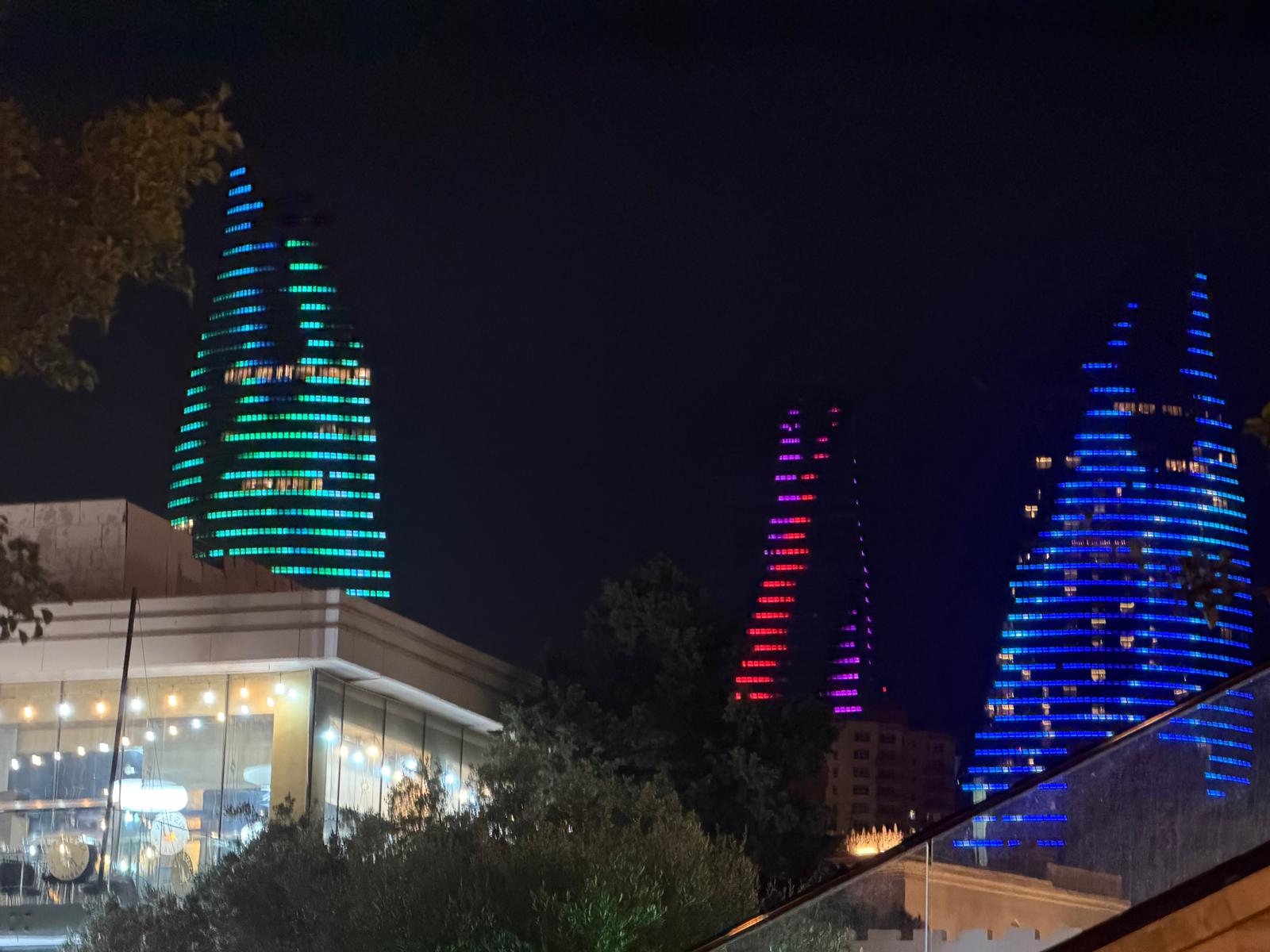
The fire theme is older than the towers. Azerbaijan sits on enormous reserves of oil and natural gas, and in places the gas seeps to the surface and burns on its own. That phenomenon fed a long tradition of fire reverence here, from Zoroastrian worship to the eternal flames you can still visit at the Ateshgah fire temple and the Yanar Dag hillside on the Absheron Peninsula, both an easy half-day trip out of the city. The Flame Towers are simply the modern, twenty-first-century version of a very old local idea.
Icherisheher: the walled Old City
Drop down off the hill and you enter another century. Icherisheher, the Inner City, is a UNESCO World Heritage site and the historic core of Baku, ringed by medieval fortress walls and threaded with narrow lanes of honey-colored stone. Inside you’ll find the 12th-century Maiden Tower, the cylindrical landmark wrapped in legends, and the Palace of the Shirvanshahs, a sandstone complex of courtyards, a mosque, and a royal tomb that was the seat of the region’s rulers. Old caravanserais that once housed Silk Road traders now serve as restaurants, and stray cats own the rooftops.
It is small enough to get pleasantly lost in for an afternoon, and at night, when the day-trippers thin out, the lamplit alleys are the most atmospheric corner of the city.
A bathhouse from the oil-boom era
Tucked just outside the walls is one of Baku’s most photographed doorways: the Taza Bey hammam, built in 1886 and lavishly restored in 2003. Behind the carved wooden doors, gilded lamps, cherubs, and lions is a working bathhouse where locals still come to soak, steam, and submit to a vigorous all-over scrub before settling in for tea. The decor inside is gloriously over-the-top, a magpie’s hoard of curios and souvenirs covering every wall.
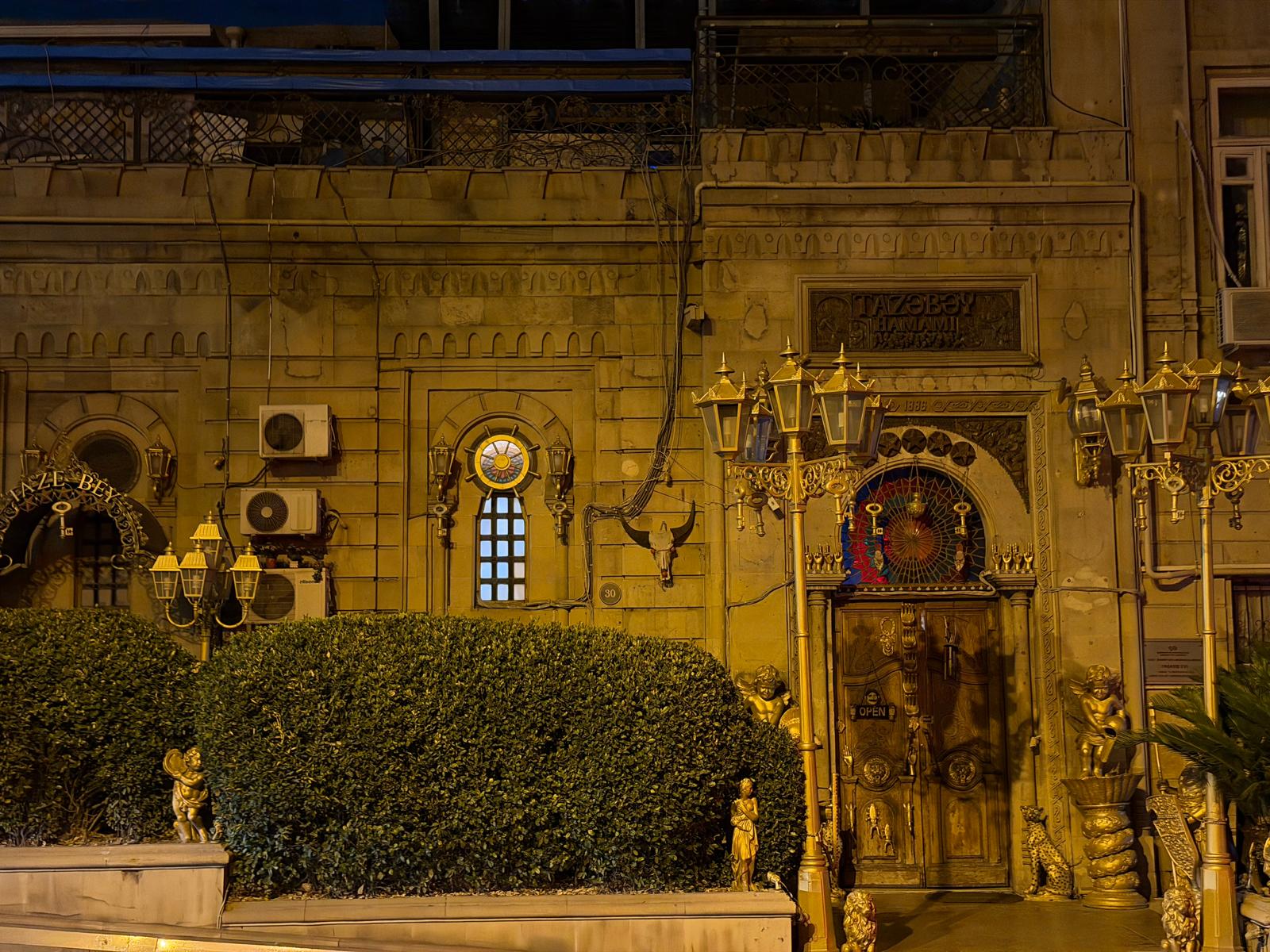
A few practical notes if you want the experience rather than just the photo: the bathhouse is primarily for men, though women are admitted for massage services, and it’s worth agreeing on the price and duration before you commit. For a more traditional and centrally located alternative inside the walls, the centuries-old Agha Mikayil hammam alternates men’s and women’s days through the week. Either way, the post-bath tea ceremony is non-negotiable.
The Belle Époque and the Boulevard
Baku’s first oil boom, around the turn of the twentieth century, minted a generation of fabulously rich barons who built grand European-style mansions to show off their fortunes. That heritage is everywhere in the city center, and the newest additions play the same game. The Four Seasons, with its cream limestone walls and copper-green domes glowing on the waterfront, looks every bit a 19th-century palace but was actually built in 2012, in a beaux-arts style borrowed from the French Riviera. It sits right where the Old City meets the seafront, which tells you most of what you need to know about how this city layers its eras.
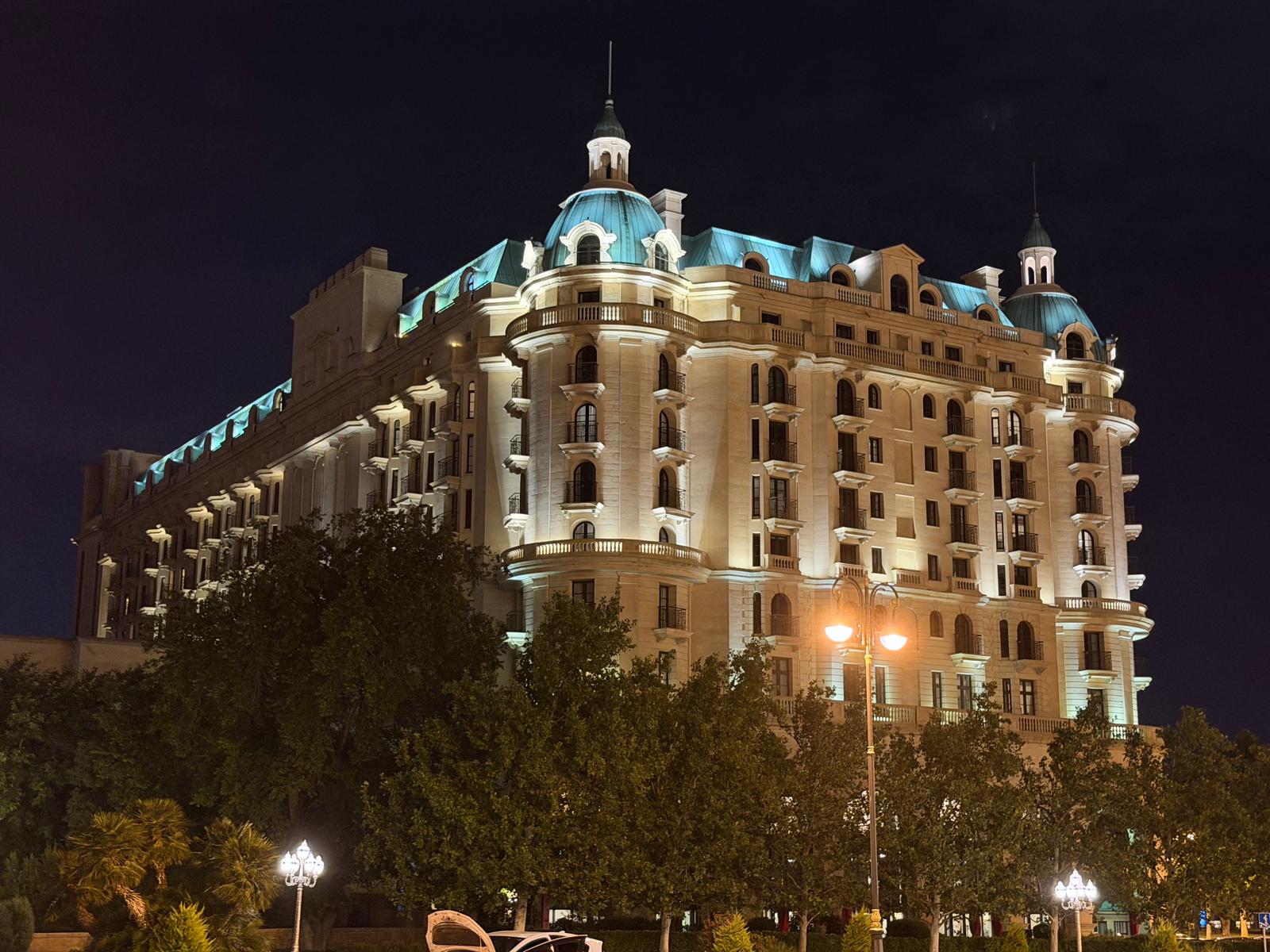
In front of it runs the Boulevard, the seaside promenade along the Caspian that is the city’s living room. Locals stroll it at all hours, especially after dark when the heat lifts; you’ll find tea houses, fountains, a small Venice-style canal, and uninterrupted views of the bay. For modern architecture of a different order, make time for the Heydar Aliyev Center, Zaha Hadid’s sweeping white wave of a building on the edge of downtown, and the carpet museum on the waterfront, housed in a structure shaped like a giant rolled-up rug.
What to eat
Azerbaijani food is one of the trip’s quiet pleasures, drawing on Persian, Turkish, and Caucasian traditions. Look for plov, the saffron-scented rice dish served with meat, dried fruit, and chestnuts; qutab, thin folded flatbreads filled with greens, pumpkin, or minced meat; dushbara, tiny dumplings in broth; and dolma, vegetables and vine leaves stuffed with spiced lamb. Everything tends to end the same way: black tea poured into a pear-shaped armudu glass and drunk with jam, pastries, and conversation that runs long.
Practical notes
The most comfortable months are spring (April to June) and autumn (September to October), when the city is warm but not the furnace it becomes in midsummer, and the famously persistent Baku wind is at its kindest. The center is walkable, the metro is cheap and easy for longer hops, and ride-hailing apps work well. Many visitors will need an e-visa, which is straightforward to arrange online before you travel, so check the current requirements for your passport.
Give Baku two or three days and it rewards you out of all proportion to its profile. Walk the walls in the morning, soak in a 19th-century bathhouse in the afternoon, eat plov as the sun drops into the Caspian, and finish on the Boulevard with the Flame Towers burning overhead. It’s a city that refuses to be one thing, and that’s exactly the point.