• Skip to main content
  • Skip to secondary menu
  • Skip to footer

Travel Marketing

Travel and Tourism Trends

  • Sponsored Post
  • Travel Event Calendar
  • Travel Market
  • Travel Magazine
  • About
  • Contact

Ancient Egypt at The Met: Stone, Silence, and the Weight of Time

January 10, 2026 By admin

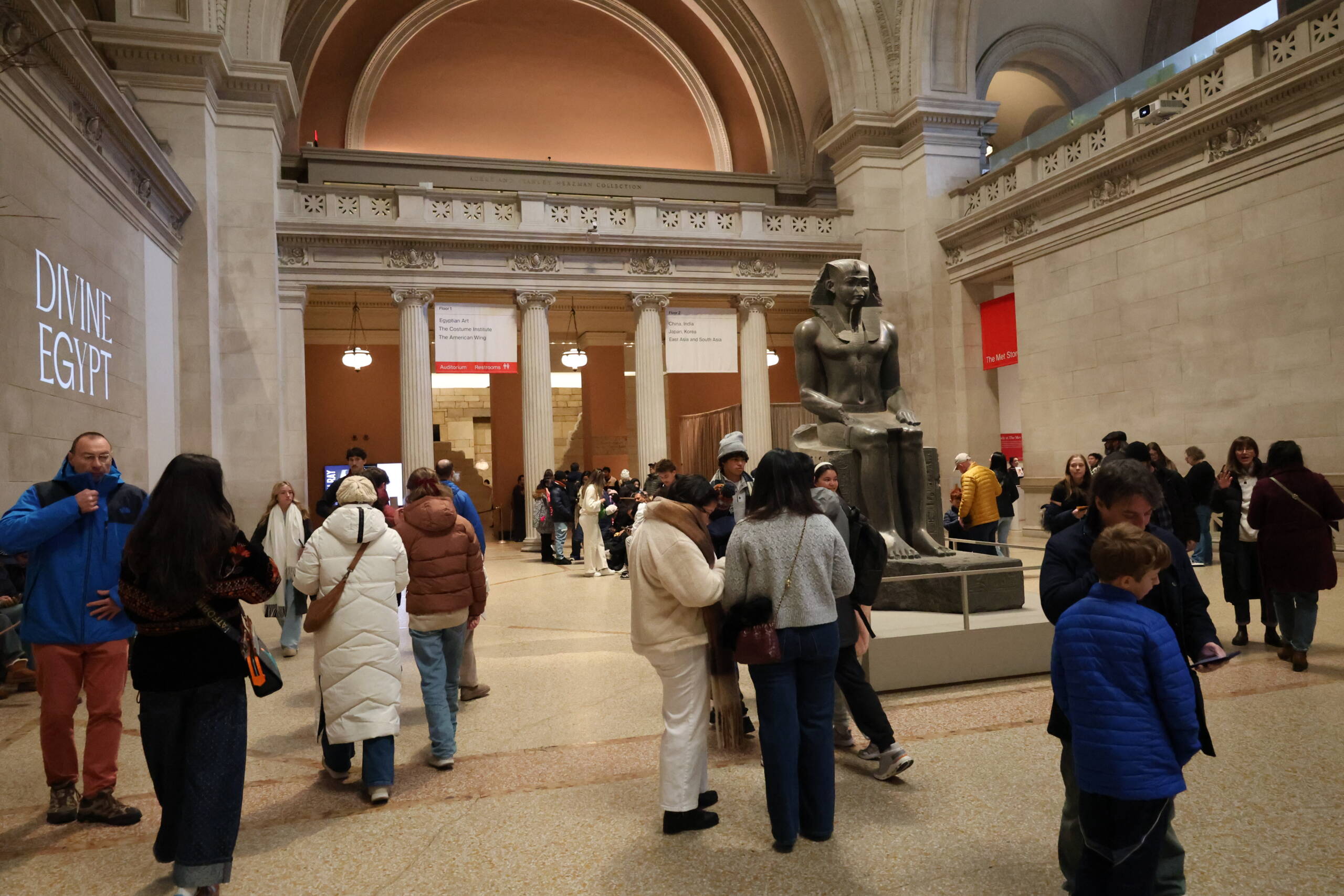
Walking into the Egyptian galleries at the Metropolitan Museum of Art feels less like entering an exhibition and more like crossing a border. The first image sets the tone immediately: the grand hall, busy and slightly chaotic, modern coats brushing past ancient stone. In the center sits an Egyptian statue—massive, calm, immovable—while people orbit it with phones, scarves, winter boots. On the wall, the words Divine Egypt glow softly, almost understated for what they promise. The architecture of the space matters here: high arches, warm stone, symmetry that echoes temples rather than galleries. The statue doesn’t perform for the crowd; it waits. That quiet confidence, that refusal to rush, feels very Egyptian, even now, even here, in New York.
Ancient Egypt at The Met

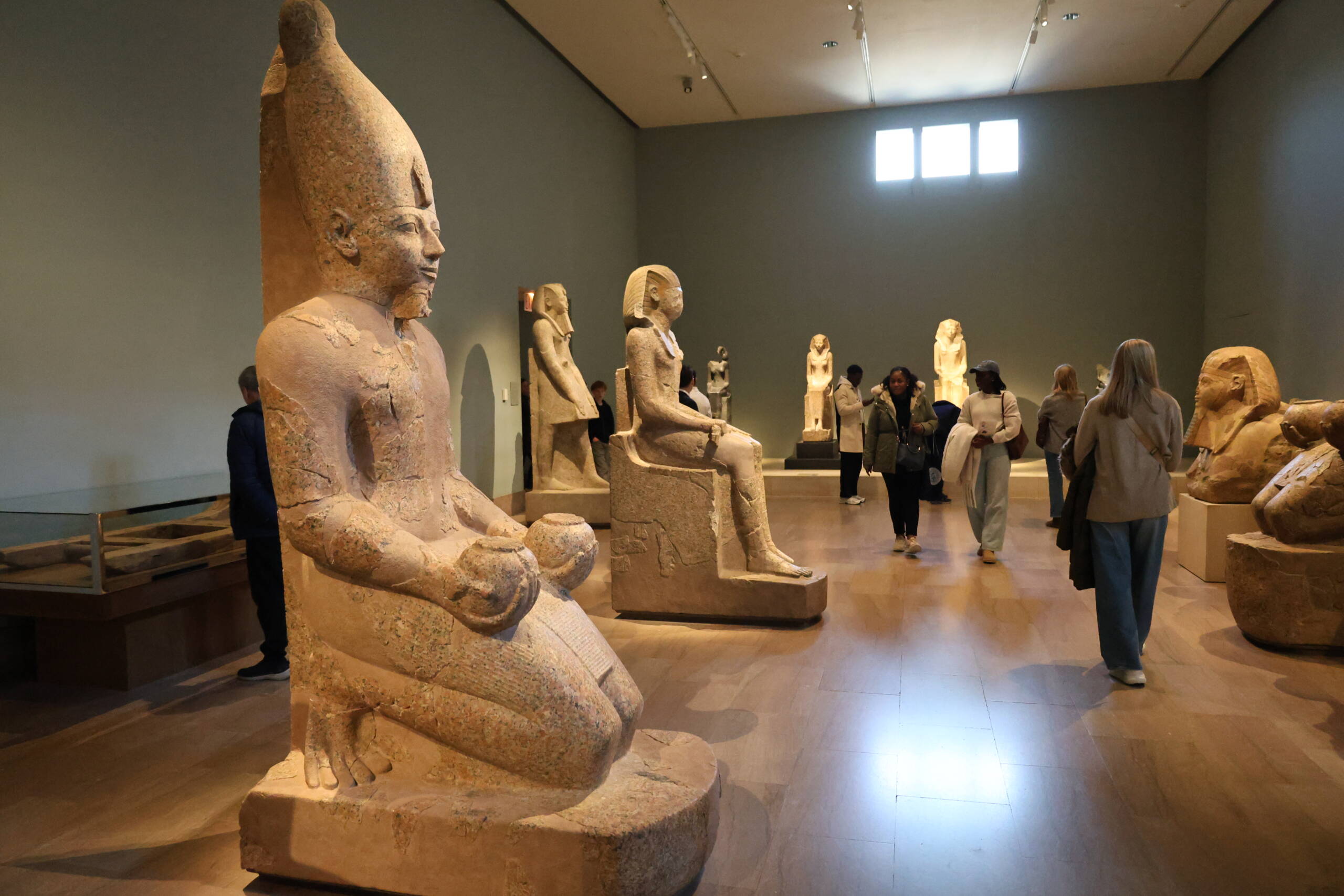
Deeper inside, the noise drops. The second photograph shows a room of seated pharaohs and officials carved from pale stone, arranged in a measured rhythm. Each figure faces forward, hands resting on knees, posture rigid yet strangely humane. The surfaces are worn, chipped, softened by centuries, and you can almost read time in the cracks. Visitors stand scattered between them, bundled in neutral winter tones, dwarfed by the scale and gravity of the sculptures. Light filters in from high windows, controlled and respectful, never dramatic. It’s a room that asks you to slow down without explicitly saying so. You catch yourself adjusting your pace, your breathing, maybe even your voice, as if sound itself could disturb something ancient and alert.
Ancient Egypt at The Met

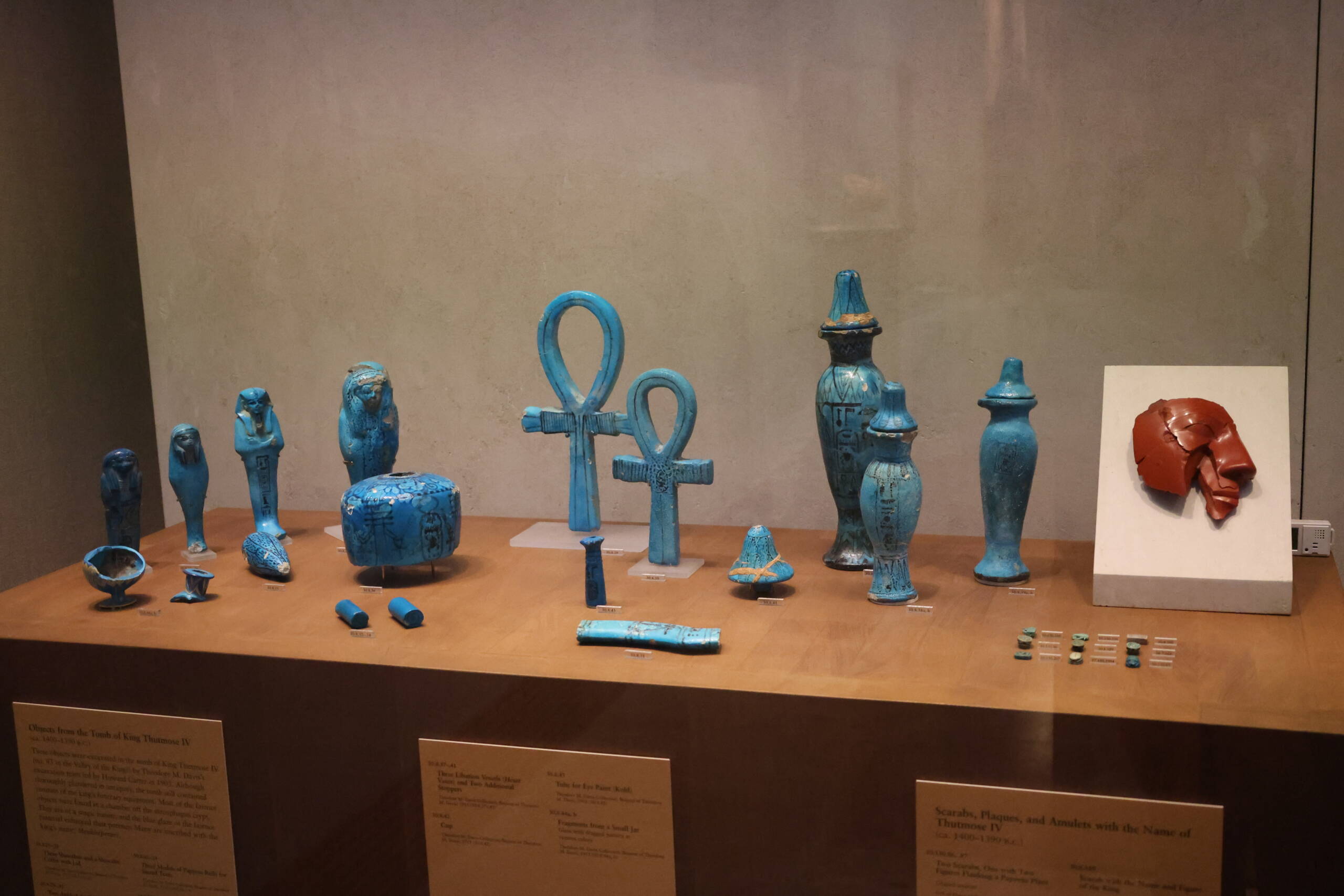
Then comes color—unexpected, electric. The display of blue faience objects feels almost shocking after so much stone. Ankhs, amulets, vessels, small figurines, all lined up behind glass, glowing in shades of turquoise and deep sky-blue. This isn’t the Egypt of dust and sand; it’s vivid, symbolic, intentional. The ankhs stand upright like punctuation marks, repeating life, life, life. Nearby, tiny scarabs and plaques are arranged with meticulous care, each one once carried on a body, hidden in cloth, buried with purpose. Off to the side, a fragment of a red stone face stares outward, broken but expressive, as if mid-thought. The craftsmanship here feels intimate. These weren’t monuments for crowds; they were objects meant to be held, trusted, believed in. You can sense that closeness even through the glass.
Ancient Egypt at The Met

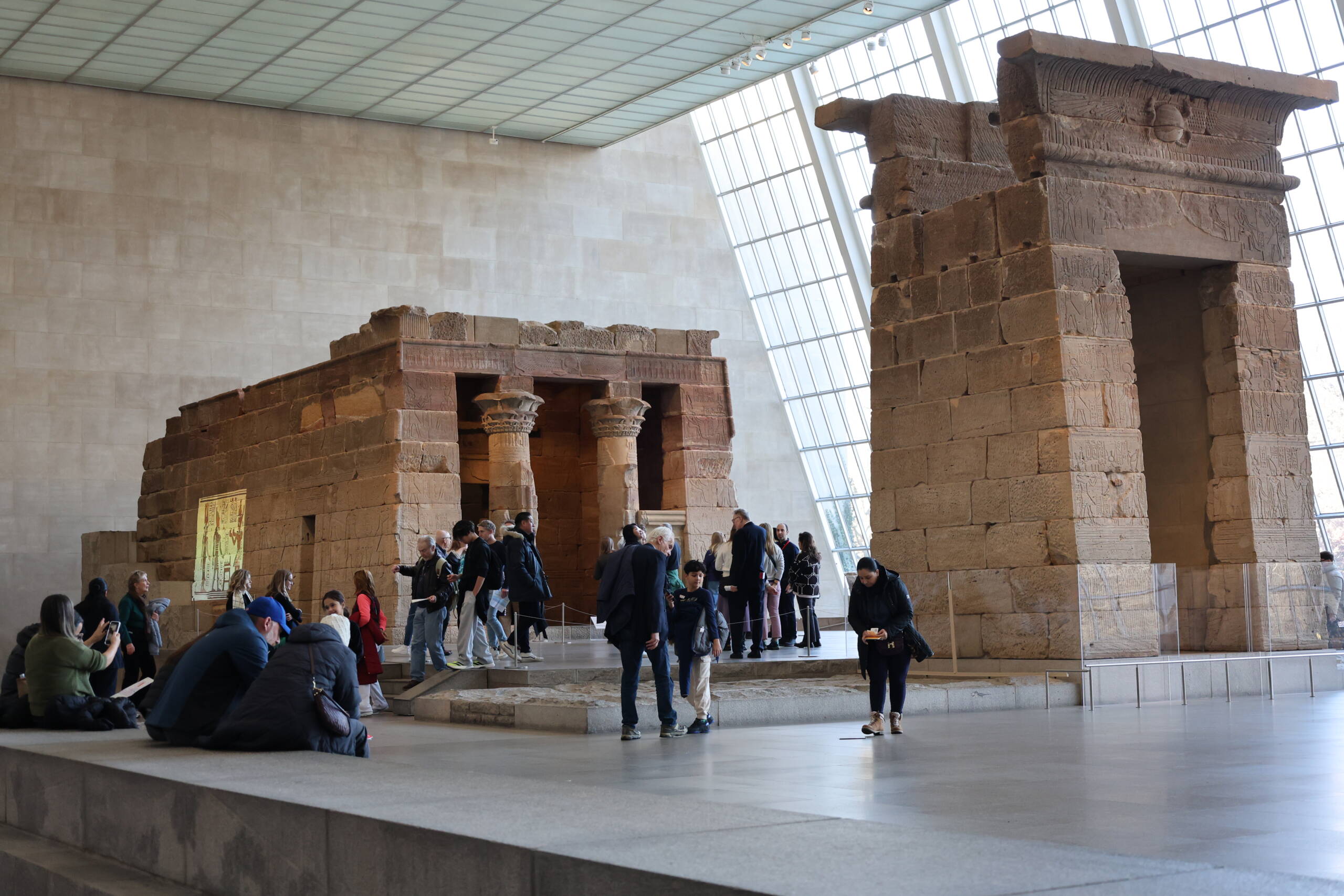
The final space opens up dramatically. A reconstructed Egyptian temple fills the room, framed by a vast glass wall that lets daylight pour in. Outside is New York—trees, sky, the suggestion of seasons—but inside stands ancient stone, assembled block by block, hieroglyphs still sharp, columns still upright. People sit on the steps, rest, check their phones, let children wander. The contrast is almost too perfect: modern life unfolding casually at the feet of a structure built for eternity. The temple doesn’t dominate the space; it anchors it. You realize this isn’t about nostalgia or exoticism. It’s about continuity. Civilizations rise, cities change, museums get built, crowds come and go—but stone remembers.
Ancient Egypt at The Met

Leaving the Egyptian wing, there’s a slight disorientation, like stepping out of a long conversation you didn’t want to end. The Met doesn’t present Ancient Egypt as distant or decorative. It lets it exist on its own terms: solid, symbolic, patient. And somewhere between the statues, the blue amulets, and that sunlit temple, you feel it—the unsettling, comforting idea that time is both fragile and incredibly durable. You step back into New York carrying a little of that weight, and oddly enough, it suits the city just fine.

Filed Under: News

Footer

Recent Posts

  • Wrocław’s Market Square in Fisheye: Why I Kept the Distortion
  • Salamanca’s Stone Faces: A Photo Essay in Five Frames
  • Europe’s Tourist Crime Belt: Pickpockets, Bracelet Scams, and Why the Same Offenders Keep Working
  • The Beach Racket in Italy, Greece and Spain: Turnstiles, Cheap Concessions, and a Shoreline You Can’t Reach
  • Why Lisbon Cafés Are Putting Up No Laptops Signs: Coffee, Instagram, and the Remote Work Terrace
  • Four in Ten Travelers Visit Landmarks Mainly for the Photo: How Instagram and Reels Reshaped Tourism
  • Why Comporta Still Feels Empty: The Rice Estate Behind Portugal’s Most Coveted Beaches
  • Travel in 2026: Five Photos That Explain the Year’s Real Trends
  • Tiny Tourism: Why Travellers Are Choosing Towns Nobody Photographs
  • In Defence of the Hop-On Hop-Off Bus

Media Partners

  • Virtual Travel Guide
  • Ancient Rome
Largo do Chiado at Night: A Brasileira, the Bronze Poet and a Floor Made of Waves
Sintra at Noon, Venice at Midnight: Six European Cities and the Hour That Suits Them
Porto’s Chestnut Season Is the Shoulder Season Worth Booking
Venice at Night Is the Version No Access Fee Covers
The 18th-Century Fountain Hidden Inside Bordeaux’s Customs Museum Courtyard
The Bilbao Effect, 500 Years Early: Jerónimos Monastery And The Guggenheim
Bilbao’s Quiet Renaissance: From Industrial Port to Design Destination
Lisbon’s Seven Hills: A Walking Guide That Tells You the Truth
New Orleans: An American City That Plays by Different Rules
Ha Long Bay Without the Cruise Brochure
Sponsored Post
About
Contact
How Much Silver Was in a Roman Denarius? Debasement Tables From Augustus to Diocletian
Ausonius, the Roman Poet Behind Saint-Émilion's Most Famous Wine
Roman Concrete in Museum Fragments: What the Cross-Section Actually Shows
Roman Sarcophagi Spent More Time as Fountains and Church Tombs Than as Graves
Aquincum Museum Reconstructs 16 Roman Faces From Skulls Found on Budapest's Danube Frontier
Roman Public Latrines Reveal an Empire That Built Sanitation Without Achieving Hygiene
The Pont du Gard: Rome's Most Perfect Structure

Media Partners

  • Media Forum
  • Market Analysis
Four Nights in Europe: What Mixed Artificial Light Does to a Photograph
Brussels Social Housing Standoff: MR Freezes €131 Million Over Foyer Anderlechtois Chairman
Syracuse Has No Town Beach, So Ortigia Swims Off the Rocks
Weekly Network Analytics Summary: August 30 to September 5, 2026
SanDisk (SNDK) Rallied 11.9% Into an S&P 100 Add That Forces Almost Nobody to Buy
Texas A&M Is Spending $11.8 Million on a Water Tower Before Its Semiconductor Institute Can Open
Cloudflare's September 15 AI Crawler Block Turns the Ad Tag Into an Access Key
Pedro Sánchez Lost Control at Ceuta and Blamed Everyone Else
Three European Cities Where Architecture and Festival Collide
Duane Davis Convicted in Tupac Shakur's 1996 Murder
The Immersive Experience in the Museum World
Japan, China, and Taiwan: A New Triangle of Risk — and a Window of Opportunity for Japan
Ghost Kitchens as Infrastructure: The Shift from Restaurants to Intelligent Food Networks
The Zoom Divide Nobody Saw Coming
The Perfect Budget Content-Creator Kit
Reimagining Prague’s Tourism Future Through Immersive Media and VR Museums
Israel’s Urban Paradox: Tel Aviv Moves, the Rest Stand Still
American Express Global Business Travel (GBTG): Understanding the Business and the Investment Case
Why the Canon R8 Paired With the New RF 45mm f/1.2 Lens Quietly Becomes the Content Creator’s Sweet-Spot
The Future of Travel: A $15.5 Trillion Industry

Copyright © 2026 Travel Marketing

Media Partners: Timey · Publishing House · Ancient Rome · Photography · Calendarial · Transportational