There are experiences that linger long after the glass is empty, and wine tasting in Porto is one of them. To sit among barrels that have seen generations come and go, to breathe in the cool, damp air of a cellar that has been steeped in oak, stone, and time, is to touch something older than yourself. You don’t just sip port here—you inherit it, for an hour or two, like a guest in a house where the walls themselves have soaked in centuries of stories.
This room is a world apart. Heavy wooden casks, darkened with age, line the stone walls like sleeping giants. Their bellies are filled with the nectar of the Douro, slowly maturing in silence, waiting for the right moment to be poured and remembered. One of the barrels stretches higher than a man can reach, with measurements carved up its length like an ancient clock tracking not hours but vintages. To sit on those little stools shaped like mini casks, surrounded by giants, is to be reminded of scale—your glass is tiny, fleeting, but the labor behind it is vast, generational.
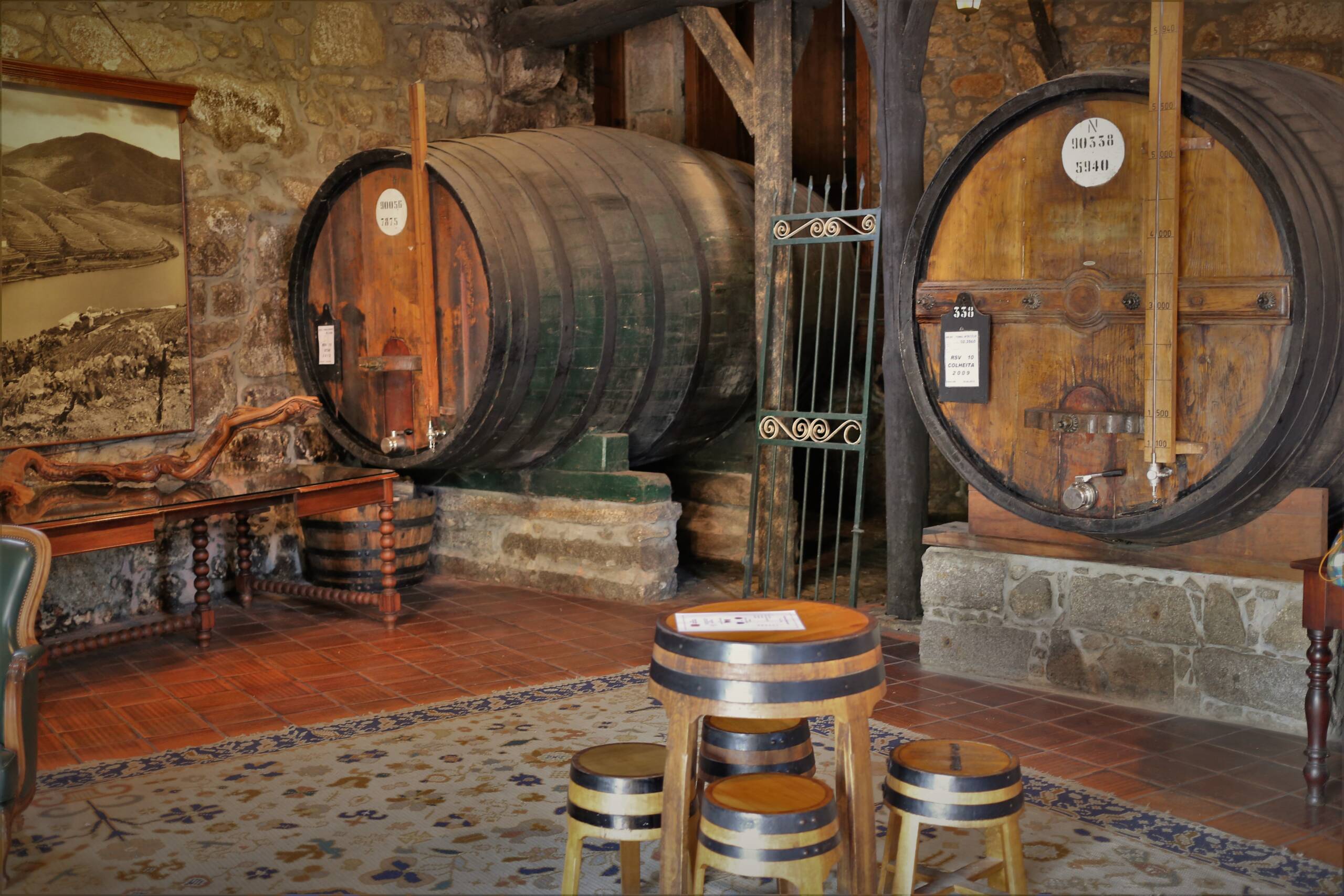
Tasting port in Porto is never just about the liquid. It begins with the story: the river that carved its way through mountains of schist, the terraced vineyards that look impossible until you realize men and women built them stone by stone, carrying earth in baskets up impossible slopes. Then came the rabelos, those wooden boats built to ferry barrels downriver long before trucks and trains existed. And finally, the cellars of Vila Nova de Gaia, where the barrels rest in this damp Atlantic climate, letting time soften and sweeten the wine’s power. By the time you raise the glass to your lips, you’ve already traveled centuries.
Each pour carries a different chapter. A ruby port bursts with youthful intensity, all cherries and spice, a reminder of fresh harvests and energy. A tawny, aged for decades, slips across the tongue like velvet, caramel and walnut unfolding slowly as though it refuses to be rushed. Vintage ports are another thing entirely: bottled promise, designed to be forgotten on a shelf until life itself has moved forward far enough to deserve opening it. The guide, often equal parts historian and poet, explains all this with a reverence that feels contagious. You sip, nod, and suddenly realize you’re part of a ritual that has repeated here for hundreds of years.
But perhaps what makes it unforgettable is how casual it all feels. You sit in a cellar that smells of wood and stone, on a barrel-shaped stool that creaks slightly under you, a patterned rug beneath your feet, and you laugh with strangers who, like you, are caught between tasting notes and the sheer novelty of being here. Someone asks whether they’re meant to swirl a port like a fine red, and the room erupts in easy laughter. It doesn’t feel like a stiff ceremony. It feels like being welcomed into a Portuguese living room where the unspoken rule is: enjoy, remember, and maybe leave with a slight glow in your cheeks.
Outside, Porto bustles. The Douro glitters under the bridge, and the city’s colors dance in the sun. But down here, among the barrels, time is thick and slow. Every sip holds not just the flavors of fruit, wood, and age, but the patience of generations who trusted the river, the vines, and the years. Wine tasting in Porto isn’t just about drinking—it’s about listening, pausing, and letting yourself be folded into the centuries-old rhythm of a city that has always lived by its river and its wine.
Porto Wine Tasting Guide
If the cellar atmosphere is the soul of Porto, then the wine lodges across Vila Nova de Gaia are its open doors. Every major port house you’ve ever heard of (and many you haven’t) line the steep streets opposite the Ribeira, each with its own character, heritage, and style of telling the story of port. The best part is you can spend an entire afternoon wandering between them, tasting, comparing, and discovering which style feels most like yours.
Start with the classics: Graham’s, perched slightly uphill, rewards the climb with sweeping views over the Douro and Porto’s orange rooftops. Their tours are well-structured, their cellars massive, and their vintage ports are poured with pride. Down closer to the river, Sandeman greets you with its iconic silhouette of the caped man. It leans into showmanship, but behind the theatrics the tasting flight is solid and varied. A short walk away, Taylor’s offers one of the most refined experiences—its manicured garden terrace is the kind of place where you can sit for hours, sipping a 20-year-old tawny as if you have nowhere else to be.
Not everything is about the big names, though. Calém provides approachable tastings, often paired with fado shows in the evening—a chance to let music mingle with your glass. Kopke, established in the 1600s, claims to be the oldest port house, and its riverside tasting room feels both intimate and historical. Smaller producers like Quinta do Noval or Churchill’s might not have the same scale, but they bring a more boutique energy, often with guides who will happily go into the details of terroir, barrel age, and harvest conditions.
Prices vary depending on the house and the type of tasting. A simple flight with three different styles can start around €10–15, while vertical tastings of aged tawnies or vintage ports can climb well past €50. It’s worth deciding ahead of time if you want to cover more ground with multiple stops or go deep into one house’s offerings. Some lodges also require advance bookings, especially during the high season, so it’s smart to check schedules online.
Getting there is easy: just cross the Dom Luís I Bridge on foot, and in minutes you’re in Gaia with signs pointing you to one port lodge after another. The walk itself is part of the experience, giving you panoramic views of Porto’s Ribeira, the river glinting below, and the rabelos floating like symbols of another age.
One tip: pace yourself. Porto’s wine tastings aren’t meant to be rushed. Try a ruby at one house, a tawny at another, maybe even a white port spritz as a refreshing break. In between, sit on the riverfront, let the sun catch the water, and snack on cheese or salted almonds. It turns a wine tour into a day that flows as naturally as the Douro itself.