Just an hour east of Palermo, Cefalù offers one of Sicily’s most memorable encounters with Norman architecture. Its cathedral stands beneath the enormous limestone cliff known as La Rocca, surrounded by a broad brick-paved square and the compact streets of the old town.
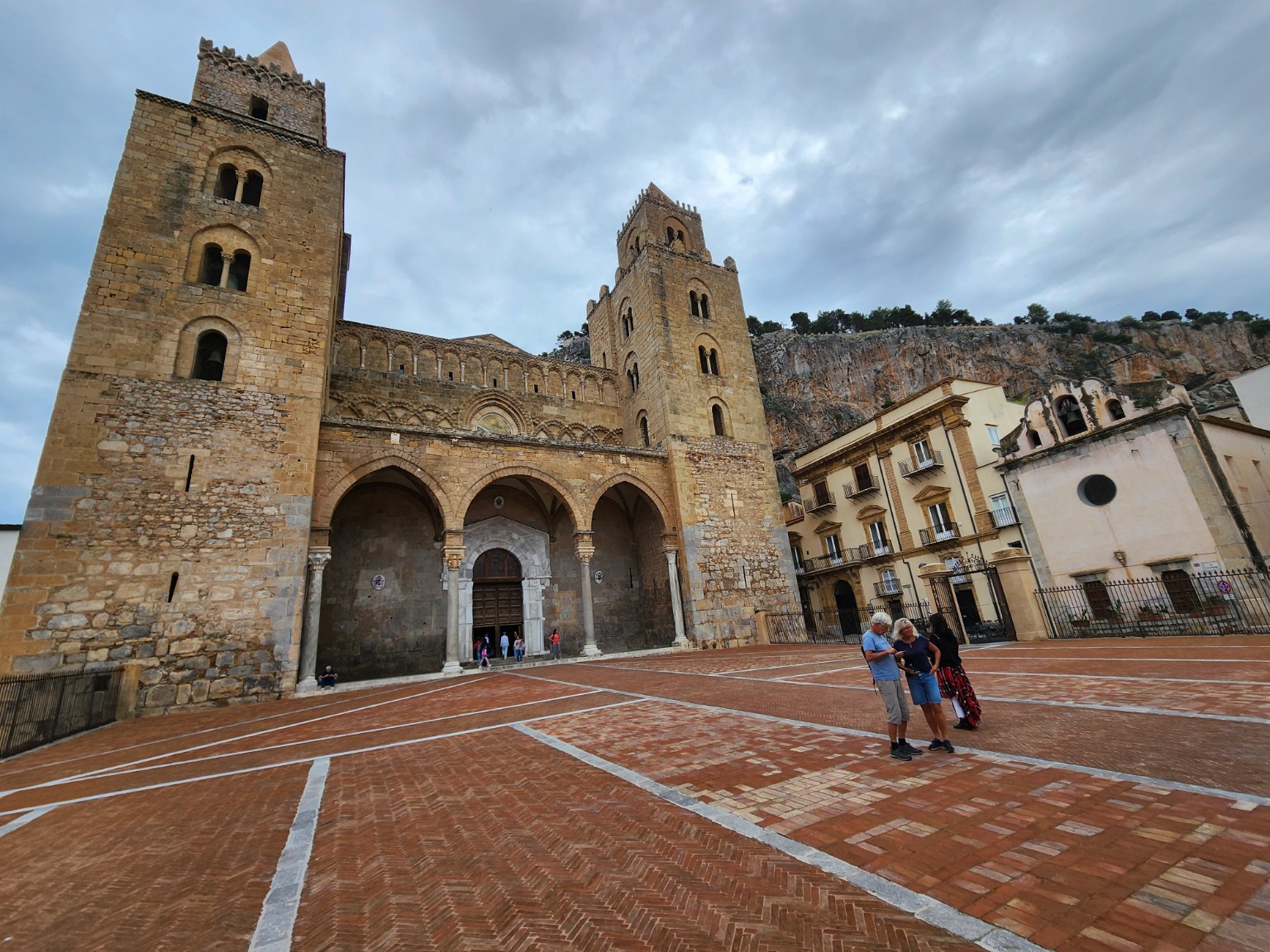
Commissioned by Roger II, king of Sicily, in 1131, the cathedral reflects the island’s remarkable medieval meeting of Norman, Byzantine, Arab and Latin traditions. It belongs to the UNESCO-listed Arab-Norman Palermo and the Cathedral Churches of Cefalù and Monreale.
From the square, the cathedral’s two imposing, unequal towers resemble the defenses of a fortress. Between them, a three-arched portico invites visitors inside. The warm, weathered stone takes on a subdued color beneath the cloud-filled sky, while the wide terracotta pavement gives the building room to breathe. The handful of people in the photograph provides scale: this is an enormous building for a small seaside town.
Inside, the mood changes. Tall stone columns and arches divide the nave, dark timber beams span the ceiling, and rows of wooden pews lead the eye toward a radiant golden apse. There, the famous twelfth-century Byzantine mosaic of Christ Pantocrator presides over the sanctuary. The contrast between the relatively restrained nave and the shimmering mosaics is astonishing.
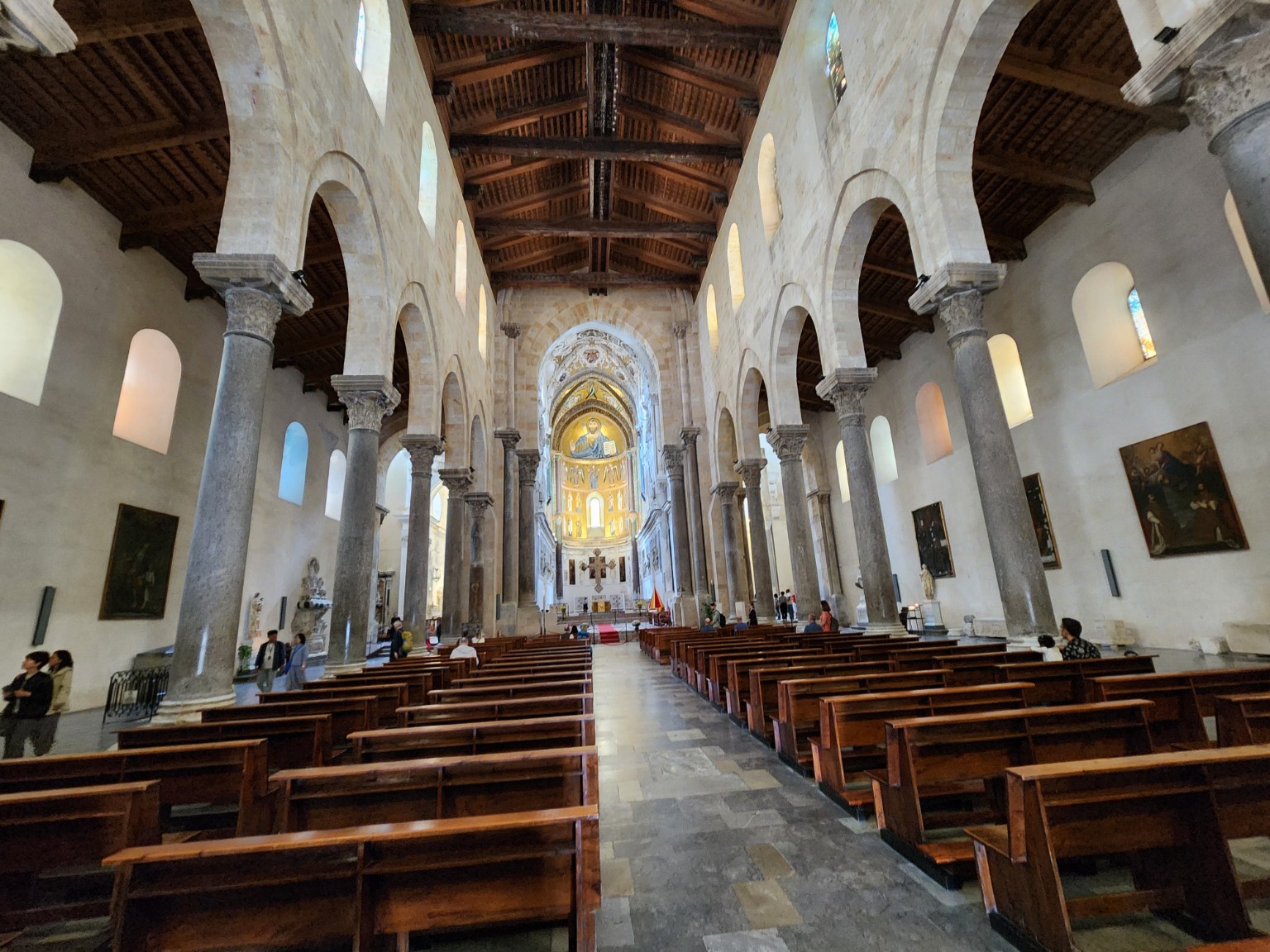
The interior photograph captures this contrast from the central aisle. The pews create a powerful perspective, grey columns rise into pale arches, and narrow windows introduce soft patches of daylight. At the far end, gold mosaics glow above the altar. Even with visitors moving quietly through the nave, the space retains a remarkable calm.
Cefalù is often promoted for its sandy beach, picturesque harbor and seafood restaurants. Those are good reasons to come, certainly, but the cathedral turns an enjoyable coastal excursion into an encounter with almost nine centuries of Sicilian history. Leave time for the old harbor and waterfront after visiting the church, and for wandering the streets that connect the cathedral square with the sea.
Regional trains from Palermo Centrale generally reach Cefalù in around 45 to 60 minutes, and the cathedral is an easy walk from the station. Photographers will appreciate a wide-angle lens for the square and the soaring interior, though careful exposure is essential when shooting the darker nave against the bright mosaics.
Palermo may have more monuments, but Cefalù delivers something uniquely concentrated: a Norman cathedral, a towering rock, and the Mediterranean, all within a few minutes’ walk.