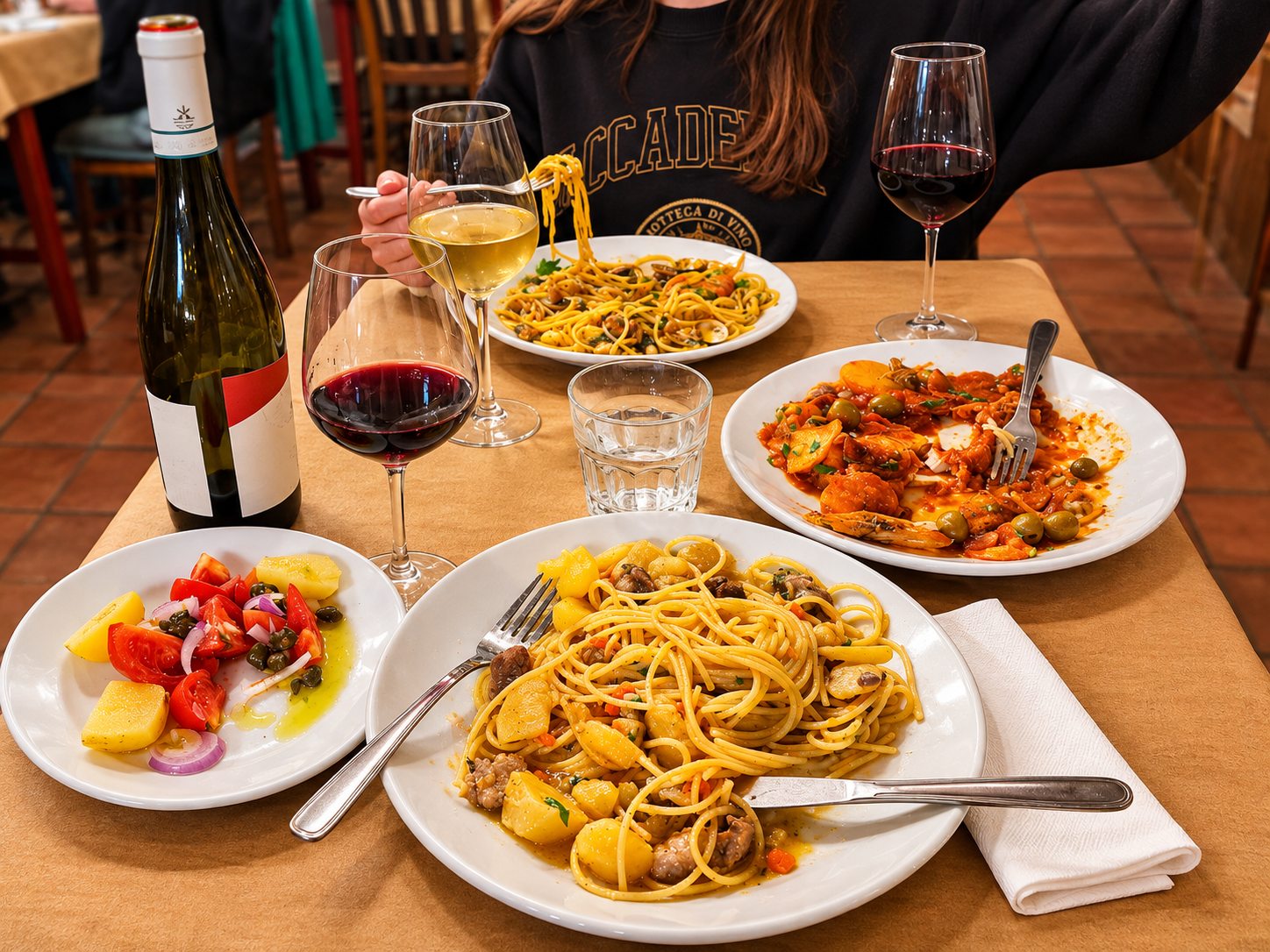
There is a small culinary mystery waiting for visitors to Palermo. Order a salad and you may find generous pieces of boiled potato among the tomatoes and onions. Order pasta and, depending on the recipe, potatoes may turn up there too. In countries where pasta and potatoes are usually alternatives, this feels like an unusually enthusiastic commitment to carbohydrates. But Sicily has a perfectly sensible explanation, and it begins with the island’s history rather than any modern dietary fashion.
At a recent dinner in Palermo, the table offered a good illustration of how satisfying Sicilian meals can be. Plates of pasta shared space with a rustic salad dressed with olive oil, tomatoes, onion, capers and pieces of potato. There was wine, plenty of conversation, and very little interest in making the meal look minimalist. It was the sort of dinner that makes a visitor ask why an ingredient as ordinary as the potato keeps reappearing.
Insalata vastasa, the salad that refuses to be a side dish
One of Palermo’s best-known rustic preparations is insalata vastasa. The name is often explained as a deliberately unrefined or hearty salad, and its ingredients justify the reputation. Boiled potatoes commonly meet tomatoes, onions, green beans and olives, with olive oil bringing everything together. Recipes vary between homes and restaurants; capers and other additions may appear as well. Rather than a few leaves beside the main course, the result is a substantial plate that can stand on its own.
Potatoes are especially good in this context. Served warm or at room temperature, they soak up dressing and balance the sharpness of onion, the acidity of tomatoes and the saltiness of olives or capers. A simple salad becomes filling without requiring expensive ingredients. The combination is practical, but it is also delicious, particularly when the olive oil and tomatoes are good.
Why would anyone put potatoes in pasta?
For many travelers, pasta with potatoes is the more surprising combination. Yet pasta e patate is a long-established southern Italian comfort dish. It is most famously associated with Naples and Campania, not exclusively with Sicily, and its precise consistency varies: some cooks make it almost soupy, while others cook it down until the starches form a thick, creamy sauce.
The underlying idea is straightforward. Small quantities of pasta and potatoes, cooked together with aromatics, can feed a family economically. As the potatoes soften, they release starch, helping bind the dish without cream. Cheese, herbs, vegetables or other ingredients may enrich it, but the basic preparation does not require much. It is worth remembering, though, that not every Sicilian pasta dish containing potato is necessarily traditional pasta e patate; individual restaurants have their own combinations.
Cucina povera, making something memorable from little
To understand the attraction, look at cucina povera, the resourceful cooking associated with rural and working-class households throughout Italy. The phrase literally means poor cuisine, but it describes ingenuity more than deprivation. Bread was reused rather than discarded. Seasonal vegetables carried meals. Legumes supplied substance. A little fish, meat or cheese might flavor a much larger quantity of grains or vegetables.
Potatoes fit this approach beautifully. They are affordable, store reasonably well, absorb flavor and make modest portions more satisfying. Pairing them with pasta may seem redundant to someone accustomed to dividing a plate into protein, vegetable and one starch. Traditional home cooking was not designed around that formula. It was designed around what was available, what tasted good and how many people needed feeding.
A late arrival on an island famous for wheat
There is an intriguing historical twist. Sicily has a deep association with wheat and grain cultivation stretching back to antiquity. Pasta is part of the island’s identity, while potatoes originated in the Andes and reached Europe only after transatlantic contact. Their incorporation into Sicilian cooking was therefore a much later development.
Over time the crop found a place in local agriculture and kitchens. Southeastern Sicily, including the Syracuse area, is known for early potatoes, harvested under conditions that suit the Mediterranean climate. Those potatoes have their own seasonal appeal and are a reminder that this is not simply an imported ingredient surviving in old recipes: it is also a local agricultural product.
Potatoes beyond the salad bowl
Another reason potatoes seem ubiquitous is their versatility. Sicilian versions of gattò di patate, a baked potato dish related to the wider southern Italian tradition, can incorporate cheese, eggs and savory fillings. Potato-based preparations also appear in home cooking, street-food variations and baked dishes. Each family and town has its own habits, so it is better to think of potatoes as a flexible part of the culinary vocabulary than as the foundation of every Sicilian meal.
And there are important limits to the generalization. Sicily’s most recognizable foods include arancine, panelle, caponata, couscous in the west, seafood, citrus, almonds and countless pasta recipes without a potato in sight. The island’s cuisine reflects centuries of Mediterranean exchange, including Arab, Norman, Spanish and other influences. Potatoes are one chapter of a much larger story.
What to order in Palermo
If the combination intrigues you, start with a traditional potato-and-tomato salad, especially when you see insalata vastasa on the menu. Notice how olive oil, onion and briny accents transform plain boiled potatoes. Then try a pasta dish that incorporates potatoes if a restaurant offers one, without assuming it must be a specifically Sicilian specialty. Markets and neighborhood trattorias are good places to encounter these unpretentious combinations.
What stays with me about that Palermo dinner is not simply the presence of potatoes in two places. It is the absence of any sense that this needs explaining. A plate can be generous, rustic and a little chaotic, and still express a coherent food culture. In northern Europe, potatoes often replace pasta. In southern Italy, they sometimes join it. And after a long day walking through Palermo, that doesn’t seem such a strange idea after all.