Sicilian cuisine is one of the great attractions of visiting Palermo. It combines centuries of Mediterranean influences with an unmistakably local approach to ingredients, preparation and presentation. Two photographs from a recent visit capture different sides of this food culture: a restaurant table filled with generous pasta dishes, olives and red wine, and a selection of strawberry-and-cream pastries that illustrates the island’s enthusiasm for desserts.
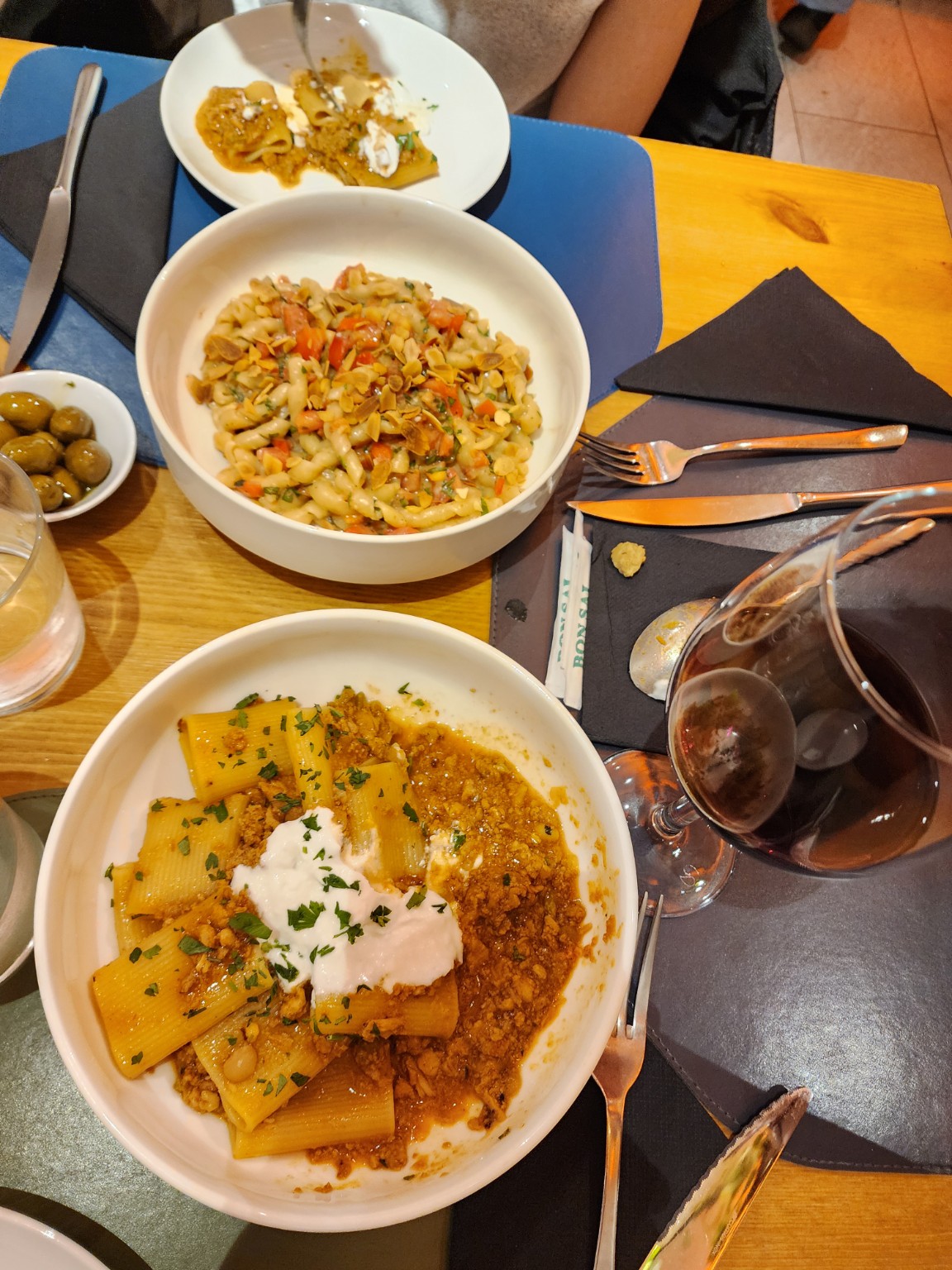
The first photograph tells a familiar Sicilian story: pasta is the center of the meal, not an afterthought. In the foreground, large ridged tubes of pasta are covered with a substantial reddish-brown ragù and a spoonful of soft white cheese, finished with chopped herbs. A second bowl holds smaller pasta shapes mixed with diced vegetables and herbs, topped with toasted sliced nuts. A small bowl of green olives and a glass of red wine complete the table. The dishes are colorful, generous and unpretentious.
Palermo’s pasta traditions include pasta con le sarde, made with sardines, wild fennel, raisins and pine nuts; pasta alla Norma, more closely associated with eastern Sicily but found across the island, with eggplant, tomato and ricotta salata; and anelletti al forno, the baked ring-shaped pasta often associated with family gatherings. The dishes in the photograph need not be assigned those specific names to appreciate their shared culinary language: hearty sauces, herbs, contrasting textures and carefully chosen garnishes.
The city’s cuisine reflects its history. Muslim rule introduced or helped spread agricultural products and culinary practices that left lasting marks on Sicily, including the prominence of citrus, almonds, rice and sweet-and-sour combinations. Subsequent Norman, Spanish and other Mediterranean influences contributed further layers. The result is a regional cuisine with recognizable Italian foundations and a character entirely its own.
And then there is dessert. Palermo’s pastry shops are practically an itinerary in themselves, whether one chooses a traditional cannolo filled with ricotta, cassata, almond sweets, or a less formal cream-filled pastry piled high with fruit.
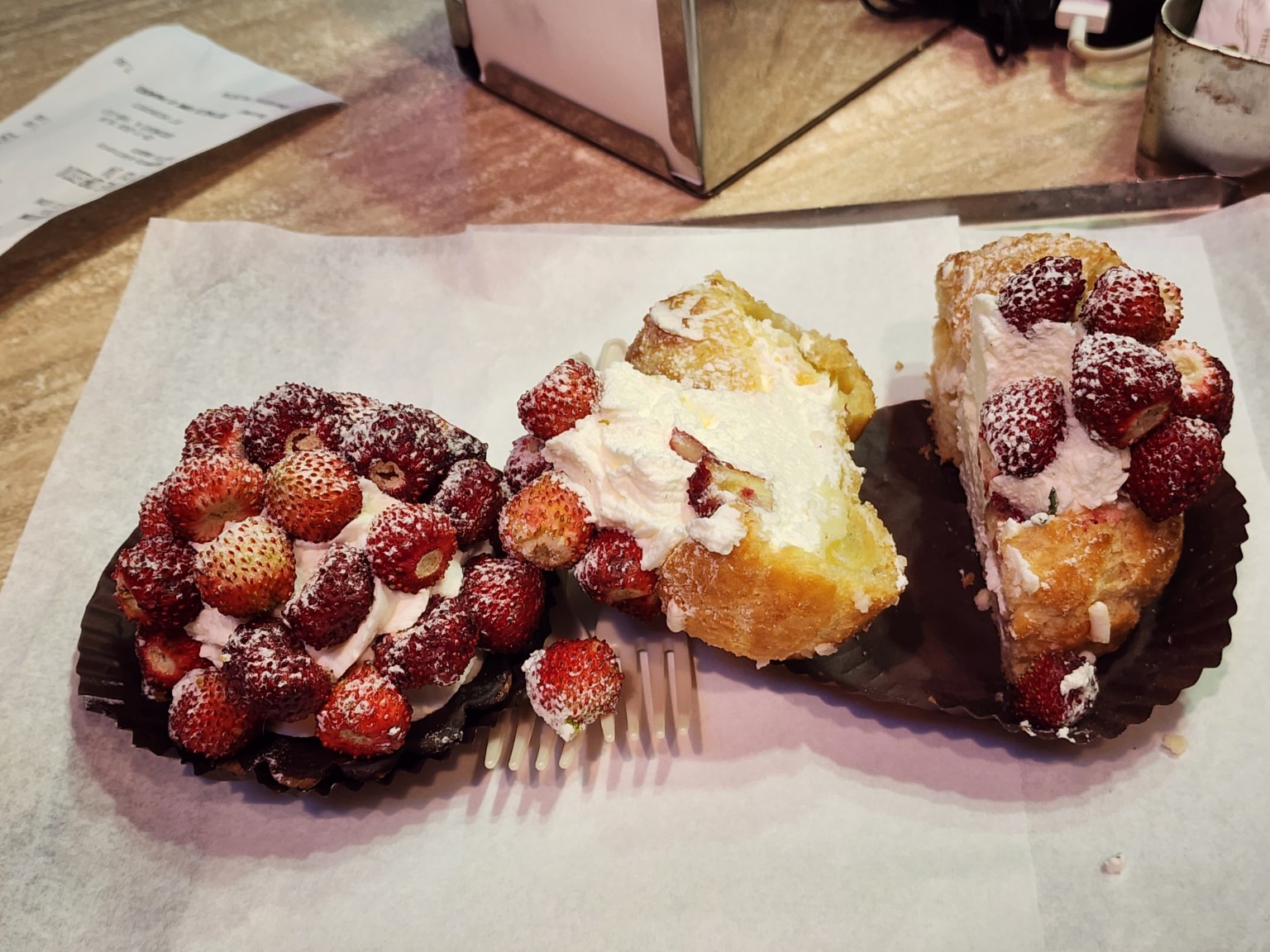
The second photograph shows three individual pastries on parchment paper. One is crowded with small red strawberries dusted with powdered sugar, nestled over cream in a dark fluted paper cup. Another has been opened to reveal a golden, airy interior and a generous cream filling. The third stands upright, with strawberries layered into and over the cream. They are not the austere sort of dessert meant to be admired from a distance. They invite a fork, and perhaps a second coffee.
Strawberry-and-cream pastries are not uniquely Sicilian, but they fit naturally into Palermo’s lively pastry culture. The island’s best-known sweets also include cannoli, cassata, granita and brioche, each worth seeking out during a visit. For travelers, a bakery stop is an opportunity to experience the city in a different register from the markets and historic monuments.
Palermo rewards an unhurried approach to eating. Browse a market in the morning, sit down for a proper pasta lunch, and leave room for something sweet later in the day. Street food such as arancine, panelle and sfincione deserves attention too, but it would be a mistake to think that street snacks tell the whole culinary story. The city’s restaurant tables and pastry counters are equally revealing.
The appeal is not simply the quantity of food or the richness of the sauces. It is the way familiar ingredients are combined into something unmistakably Sicilian, served without ceremony and remembered long after the meal ends.