• Skip to main content
  • Skip to secondary menu
  • Skip to footer

Travel Marketing

Travel and Tourism Trends

  • Sponsored Post
  • Travel Event Calendar
  • Travel Market
  • Travel Magazine
  • About
  • Contact

Walking the Tel Aviv Promenade, Where Beachwear Meets Streetwear

September 28, 2025 By admin Leave a Comment

Few places in the world manage to blur the lines between city life and beach culture as seamlessly as Tel Aviv. The promenade, stretching along the Mediterranean, is one of those liminal spaces where the rules bend and personal expression takes center stage. At dusk, when the air cools but the stone walkway still radiates the warmth of the day, the whole strip turns into a moving stage. It’s not just a place to walk—it’s a runway where locals and visitors alike improvise their own version of style. Some dress in sportswear as if ready to leap into a marathon, others slip into casual evening attire with the thought of dinner and cocktails in mind, while many, freshly emerged from the sea, make no attempt to change and simply let the sand cling to their skin as they wander in bikinis and swim trunks. This collision of worlds is precisely what makes the promenade such an unforgettable experience.
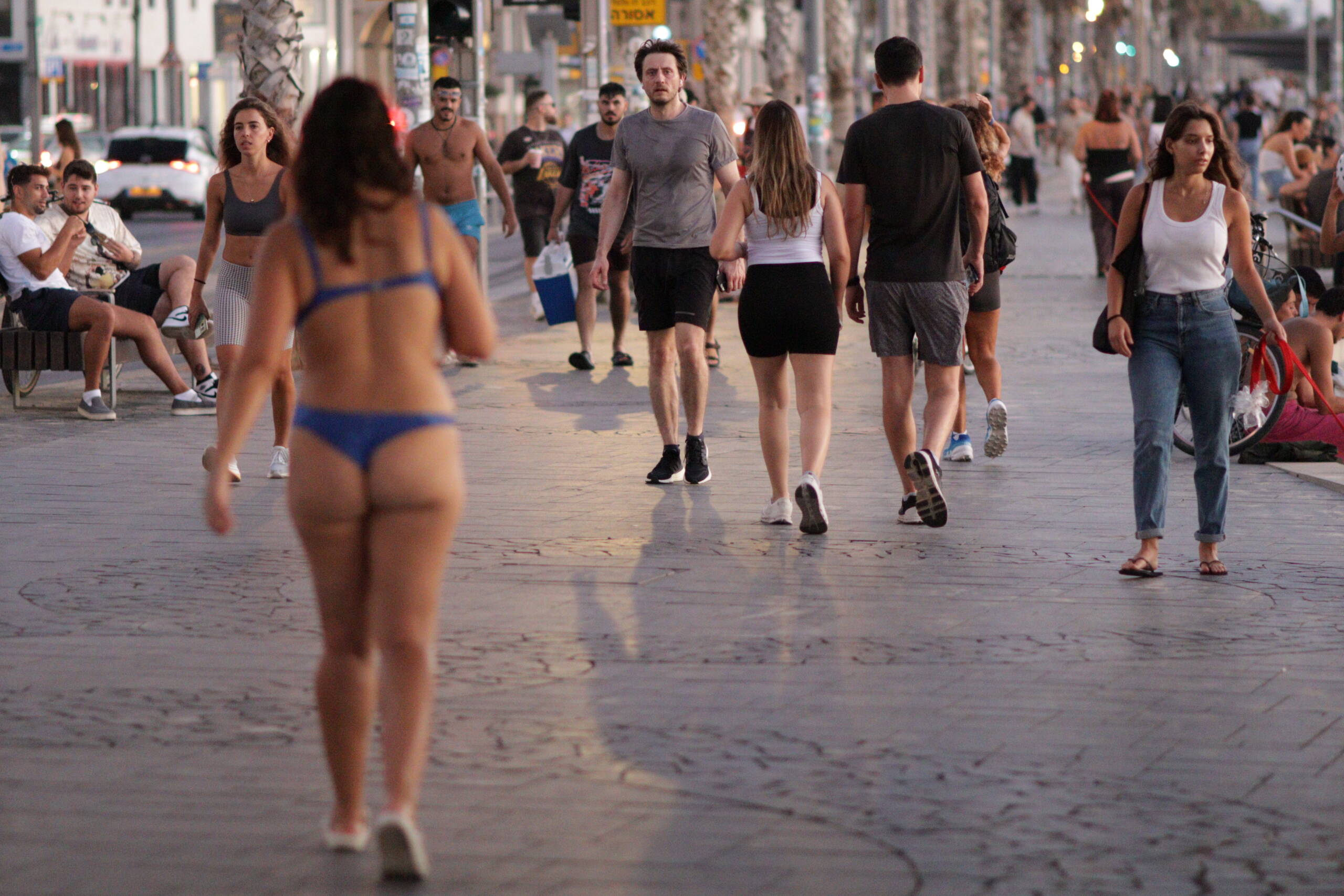
Walking the Tel Aviv Promenade, Where Beachwear Meets Streetwear

The photo brings this spirit alive with almost cinematic clarity. In the foreground, a woman in a bright blue bikini strides confidently up the promenade, her minimal beachwear becoming the central focal point against the backdrop of fully clothed walkers. She’s a bold reminder that in Tel Aviv, a beach body doesn’t need to stay by the water. To her left, groups of friends sit on benches, casually glued to their phones or deep in conversation, their sneakers and shorts marking them as city dwellers at ease. Further up the walkway, a couple strolls hand in hand, dressed in sporty athleisure that suggests they may have just finished a jog. On the right, a young woman in jeans and a tank top cuts through the scene with effortless chic, her casual urban style balancing out the more eccentric moments around her. The eye is constantly moving, bouncing between contrasts—sand and stone, swimwear and denim, leisure and exercise.

As you watch the promenade unfold, the energy feels unrestrained and oddly harmonious. There is no central theme, no single rhythm; instead, the chaos becomes its own order. This is the charm of Tel Aviv: the refusal to fit into neat boxes, the willingness to let identities overlap and coexist. The palm trees lining the path anchor the atmosphere in the Mediterranean, but the sheer diversity of clothing and movement reminds you that this is also a cosmopolitan city, awake and alive at all hours. In the background, the light begins to soften into that golden-pink hue that seems made for photography, casting long shadows of walkers onto the patterned pavement. The entire walkway glows as if participating in the evening performance.

Travelers arriving here often expect a clear separation between activities—swim at the beach, change for dinner, jog in the morning. But Tel Aviv challenges that notion. Here, you can live multiple lives in a single evening without ever stepping off the promenade. You might swim in the afternoon, grab a shawarma in your swimsuit while the sun goes down, and then wander straight into the city nightlife without missing a beat. It’s quirky, yes, but it’s also liberating. The promenade teaches you that you don’t need to conform, that spontaneity is not only welcome but celebrated. Everyone you pass contributes to the collective atmosphere, each person a moving brushstroke on this canvas of urban-meets-seaside life.

This is what makes Tel Aviv unforgettable to me: the unapologetic informality. Where else can you sit on a bench in full sports gear next to someone dripping from the sea, while another couple in dinner clothes saunters past? There’s a rhythm here, but it’s not dictated by rules. Instead, it’s shaped by freedom, and the beauty of that freedom is that no one really questions it. The promenade belongs to everyone, regardless of how they choose to walk it.

Filed Under: News

Reader Interactions

Leave a Reply Cancel reply

Your email address will not be published. Required fields are marked *

Footer

Recent Posts

  • Why Lisbon Cafés Are Putting Up No Laptops Signs: Coffee, Instagram, and the Remote Work Terrace
  • Four in Ten Travelers Visit Landmarks Mainly for the Photo: How Instagram and Reels Reshaped Tourism
  • Why Comporta Still Feels Empty: The Rice Estate Behind Portugal’s Most Coveted Beaches
  • Travel in 2026: Five Photos That Explain the Year’s Real Trends
  • Tiny Tourism: Why Travellers Are Choosing Towns Nobody Photographs
  • In Defence of the Hop-On Hop-Off Bus
  • EasyJet Agrees £5.7bn Apollo Takeover: What Changes for Passengers and What Doesn’t
  • Taormina Beach Guide: Mazzarò, Isola Bella, and What Nobody Tells You About the Pebbles
  • Juliet’s Balcony in Verona Was Added in the 1930s and the Crowds Do Not Care
  • St Mark’s Basilica in Venice: The Gold Mosaics Are Dimmer Than the Photographs Suggest

Media Partners

  • Virtual Travel Guide
  • Ancient Rome
Porto’s Chestnut Season Is the Shoulder Season Worth Booking
Venice at Night Is the Version No Access Fee Covers
The 18th-Century Fountain Hidden Inside Bordeaux’s Customs Museum Courtyard
The Bilbao Effect, 500 Years Early: Jerónimos Monastery And The Guggenheim
Bilbao’s Quiet Renaissance: From Industrial Port to Design Destination
Lisbon’s Seven Hills: A Walking Guide That Tells You the Truth
New Orleans: An American City That Plays by Different Rules
Ha Long Bay Without the Cruise Brochure
Istanbul at the Threshold: A City That Has Always Been Two Things at Once
Iceland’s Ring Road: What the Drive Teaches You That No Photograph Can
Sponsored Post
About
Contact
Roman Concrete in Museum Fragments: What the Cross-Section Actually Shows
Roman Sarcophagi Spent More Time as Fountains and Church Tombs Than as Graves
Aquincum Museum Reconstructs 16 Roman Faces From Skulls Found on Budapest's Danube Frontier
Roman Public Latrines Reveal an Empire That Built Sanitation Without Achieving Hygiene
The Pont du Gard: Rome's Most Perfect Structure
Water Across the Empire: Roman Aqueducts and the Hydraulic Logic of Conquest
Who Cleaned Roman Rome: The Social Economy of Waste

Media Partners

  • Media Forum
  • Market Analysis
Intuit (INTU) Q4 FY2026: 3% Online Customer Growth Matters More Than the EPS Guide
Why I Registered for an API Course
Micron $MU and SanDisk $SNDK Sold Off on a Weibo Post: Why I Think the Market Priced the Wrong Thing
OSINT Digest: Palantir Contracts, RT Mirror Domains, AI Debt and Russia's Retreat From Syria
AI Companies Are Paying Two Different Prices for the Same Books: License or Settlement
Bessent Promises an Economic D-Day for Iran While Hormuz Runs at 20% of Normal Traffic
Big Tech Will Spend About $700 Billion on AI Infrastructure in 2026. The Revenue Is Not Close.
Carney Answers With Dollar-for-Dollar Tariffs on US Steel, Dairy and Electronics From September 8
ChatGPT Referrals to Publishers Grew 200% and Still Account for Under 1% of Traffic
Congress Is Drafting Bills With AI, and AI Is Bad at the Part That Matters
The Immersive Experience in the Museum World
Japan, China, and Taiwan: A New Triangle of Risk — and a Window of Opportunity for Japan
Ghost Kitchens as Infrastructure: The Shift from Restaurants to Intelligent Food Networks
The Zoom Divide Nobody Saw Coming
The Perfect Budget Content-Creator Kit
Reimagining Prague’s Tourism Future Through Immersive Media and VR Museums
Israel’s Urban Paradox: Tel Aviv Moves, the Rest Stand Still
American Express Global Business Travel (GBTG): Understanding the Business and the Investment Case
Why the Canon R8 Paired With the New RF 45mm f/1.2 Lens Quietly Becomes the Content Creator’s Sweet-Spot
The Future of Travel: A $15.5 Trillion Industry

Copyright © 2026 Travel Marketing

Media Partners: Timey · Publishing House · Ancient Rome · Photography · Calendarial · Transportational