Vienna is a city that doesn’t just encourage slowing down—it codified it into a way of life. The trams might grind along the Ringstraße and the tour groups may clog Stephansplatz, but beneath all that motion lies a quiet insistence: pause, sit, order a coffee, and let the world go on without you for a while. And in Vienna, that pause almost always comes with something sweet.
The great cafés are the obvious entry point. Café Central, where vaulted ceilings soar above marble columns, feels like a palace disguised as a coffeehouse. Writers, philosophers, and dreamers once filled these halls—Trotsky and Freud, Schnitzler and Zweig—and though today it’s tourists with guidebooks and cameras, there’s still a sense of grandeur in the air. Waiters in black waistcoats bring porcelain cups of mélange with the reverence of sommeliers, and the glass counters glitter with strudels, tortes, and elaborate confections so precise they look engineered.
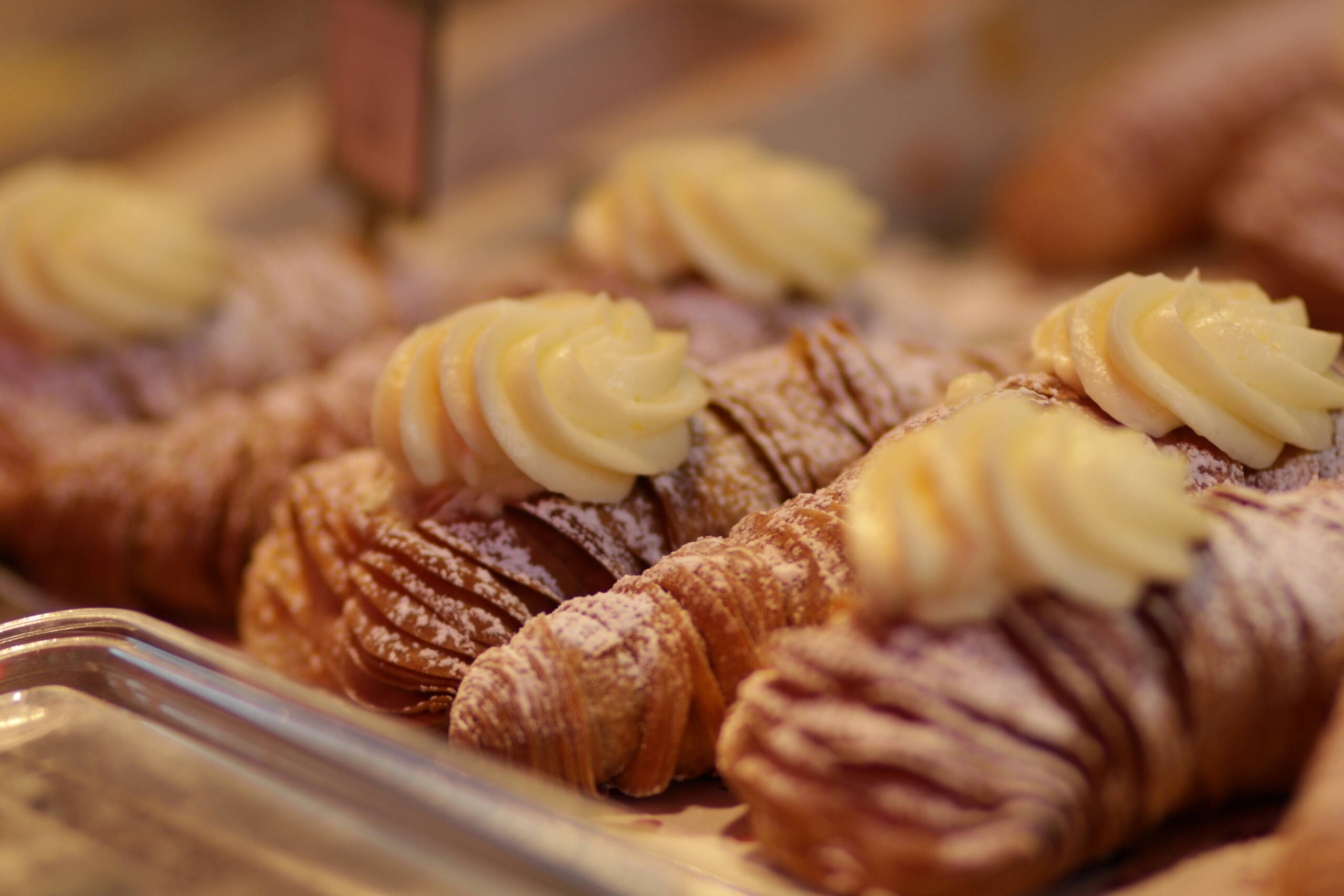
A short stroll takes you to Demel, where the spectacle is as much about watching as tasting. The kitchen sits behind glass, patissiers at work like actors on stage, folding dough, piping cream, sculpting pastries into edible architecture. A golden, sugar-dusted creation arrives at your table, crowned with a swirl of cream that dares you to ruin its perfection. One forkful and you’re reminded why pastry here is never just a snack—it’s Vienna distilled into flour, sugar, and history.
And history, in Vienna, seeps into every bite. Take the strudel, perhaps the city’s most enduring pastry. Its story stretches back to the seventeenth century and the Ottoman sieges. Legend has it that when the Turks left their camps outside Vienna, they abandoned sacks of coffee and recipes that would inspire the Viennese imagination. From the baklava-like pastries of the Ottoman kitchens, strudel was born—filo-thin layers wrapped around spiced apples or sweet cheese, baked until crisp, then dusted with sugar like the first snow on the Alps. Even today, a plate of Apfelstrudel links you to that collision of cultures, a siege turned into sweetness.
But Vienna is not only chandeliers and marble cafés. Step away from the Ringstraße and you’ll find the modest bakeries and neighborhood cafés that keep the city running. A Spar bakery tucked near a tram stop, fluorescent-lit and unremarkable, sells kipferl (the crescent rolls that likely inspired the French croissant) for little more than a coin. Topfengolatschen—quark-filled turnovers—are wrapped in paper for workers on their way to shift, and Buchteln, soft yeasted buns stuffed with jam, are eaten on the go. Here, coffee is drunk quickly at standing counters, and yet even these everyday pastries trace Vienna’s layered past. The kipferl itself, so ordinary now, is said to have been shaped in homage to the Ottoman crescent after the failed siege of 1683, each bite a small victory disguised as breakfast.
In neighborhoods like Ottakring or Favoriten, Turkish and Balkan bakeries carry on their own traditions. Syrup-soaked baklava sits beside Viennese strudels, trays of börek join the display, and the scent of strong, dark coffee fills the room. These aren’t tourist shrines; they’re living spaces where languages overlap, where families linger over shared plates, where the Viennese sweet tooth reveals its global inheritance.
What makes Vienna so remarkable is how naturally it spans these worlds. One moment you’re in Oberlaa Konditorei, savoring a delicate tartlet under soft lighting, the next you’re biting into a humble sugar-dusted Golatsche from a corner bakery, standing on the sidewalk while a tram rattles past. One experience whispers of emperors and composers, the other of workers and neighbors—but both are stitched together by the same unhurried rhythm.
Vienna teaches you that travel isn’t only about palaces and opera houses. Sometimes it’s about a pastry whose folds remember a siege, a crescent roll that carries centuries of defiance, or a slice of Sachertorte that once fueled the conversations of revolutionaries and poets. Sweetness here is history, culture, and daily bread. And to taste it—whether beneath chandeliers or beneath fluorescent lights—is to step into the city’s long tradition of turning pause into art.
Leave a Reply