• Skip to main content
  • Skip to secondary menu
  • Skip to footer

Travel Marketing

Travel and Tourism Trends

  • Sponsored Post
  • Travel Event Calendar
  • Travel Market
  • Travel Magazine
  • About
  • Contact

The Weight of a Document, Salamanca’s Statue and Today’s Spain

October 7, 2025 By admin Leave a Comment

The statue in Salamanca—depicting the signing of the Estatutos de Limpieza de Sangre—is not just bronze figures over a table, it’s a monument to one of the most consequential political documents of Spain’s early modern era. Those statutes, first drawn up in the mid-15th century, institutionalized the notion that lineage and ancestry determined one’s worth and eligibility. They required proof of “pure Christian blood” to access certain positions in universities, the church, and civic administration, effectively discriminating against conversos (Jews who had converted to Christianity), moriscos (Muslims who had converted), and their descendants. It was bureaucracy used as a weapon—law turned into a gatekeeper of exclusion.
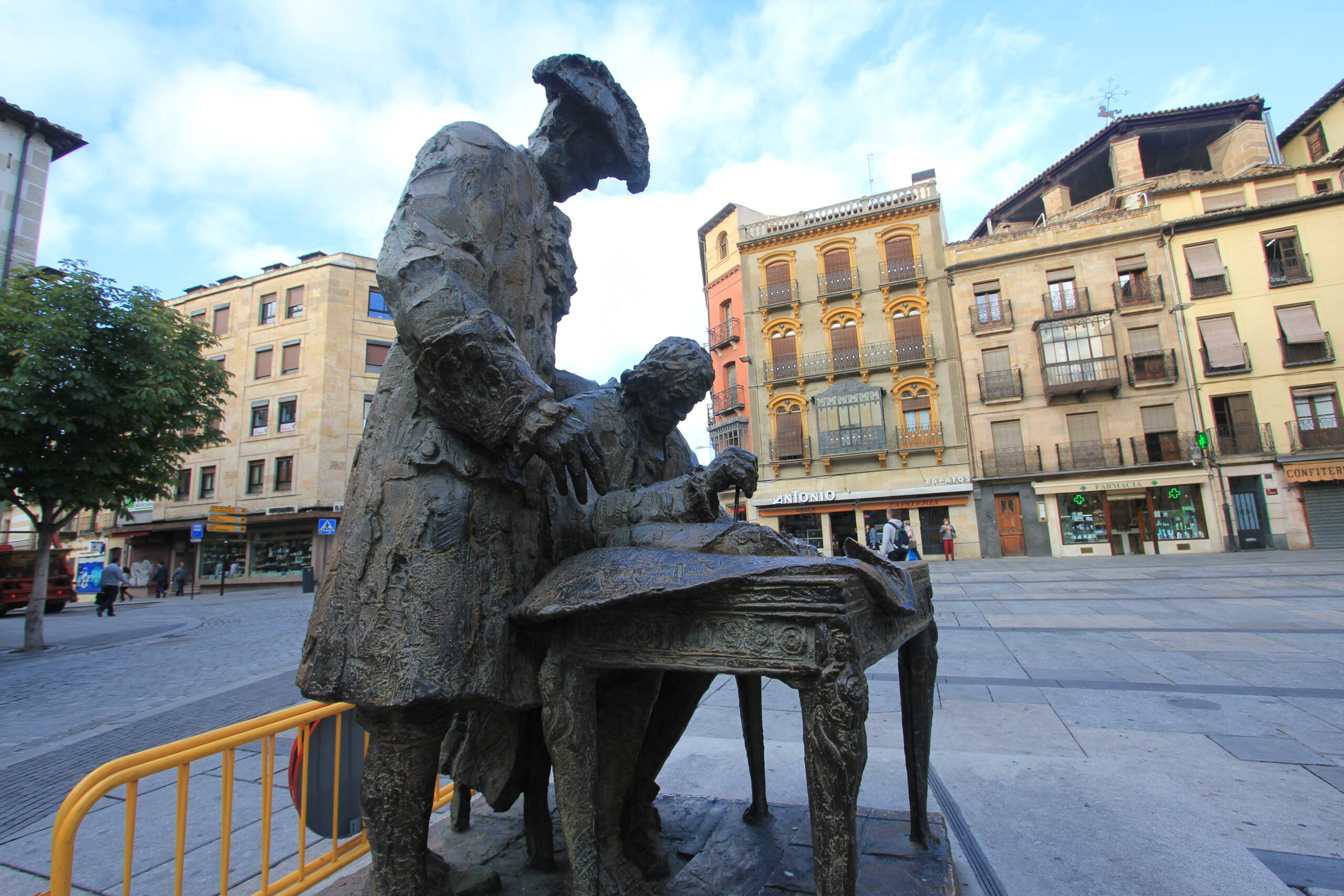
The Weight of a Document, Salamanca’s Statue and Today’s Spain

In its own time, this was a profoundly political act. It reflected anxieties in Castile and Aragón after centuries of convivencia, where Jews, Muslims, and Christians had lived side by side, sometimes uneasily, sometimes fruitfully. The statutes hardened society, aligning with the rise of the Inquisition and the broader project of forging a unified Catholic identity for Spain. They codified suspicion and division, embedding the idea that “true belonging” could be legislated and certified on paper. That Salamanca—home of Spain’s most prestigious university—was the place of such rules is no accident; the city was both an intellectual powerhouse and a crucible of orthodoxy.

Fast forward to today, and you can’t help but see echoes. Modern Spain is a democracy deeply committed to pluralism, shaped by its 1978 Constitution and its membership in the European Union. Yet questions of identity, belonging, and exclusion still linger. Think of Catalonia’s push for independence, or debates around immigration from North Africa and Latin America, or the sharp rise of populist parties who frame national identity as something fragile and under threat. The mechanisms are different—ballots instead of blood statutes, referendums instead of inquisitorial trials—but the underlying anxieties about who “counts” as fully Spanish still bubble up.

Standing in front of this monument, you can’t help but feel the weight of continuity. A quill pen in the 15th century defined centuries of privilege and exclusion. Today, parliamentary decrees, constitutional amendments, or EU treaties play that role. The question remains: who writes Spain’s future, and who is left outside the table where the document is signed?

Spain’s plazas are full of beauty, but this particular sculpture is also a mirror. It asks you to think about how much progress has been made, how far the country has come from those dark statutes—and yet, how fragile and contested identity still is, five centuries later.

Filed Under: News

Reader Interactions

Leave a Reply Cancel reply

Your email address will not be published. Required fields are marked *

Footer

Recent Posts

  • Why Lisbon Cafés Are Putting Up No Laptops Signs: Coffee, Instagram, and the Remote Work Terrace
  • Four in Ten Travelers Visit Landmarks Mainly for the Photo: How Instagram and Reels Reshaped Tourism
  • Why Comporta Still Feels Empty: The Rice Estate Behind Portugal’s Most Coveted Beaches
  • Travel in 2026: Five Photos That Explain the Year’s Real Trends
  • Tiny Tourism: Why Travellers Are Choosing Towns Nobody Photographs
  • In Defence of the Hop-On Hop-Off Bus
  • EasyJet Agrees £5.7bn Apollo Takeover: What Changes for Passengers and What Doesn’t
  • Taormina Beach Guide: Mazzarò, Isola Bella, and What Nobody Tells You About the Pebbles
  • Juliet’s Balcony in Verona Was Added in the 1930s and the Crowds Do Not Care
  • St Mark’s Basilica in Venice: The Gold Mosaics Are Dimmer Than the Photographs Suggest

Media Partners

  • Virtual Travel Guide
  • Ancient Rome
Porto’s Chestnut Season Is the Shoulder Season Worth Booking
Venice at Night Is the Version No Access Fee Covers
The 18th-Century Fountain Hidden Inside Bordeaux’s Customs Museum Courtyard
The Bilbao Effect, 500 Years Early: Jerónimos Monastery And The Guggenheim
Bilbao’s Quiet Renaissance: From Industrial Port to Design Destination
Lisbon’s Seven Hills: A Walking Guide That Tells You the Truth
New Orleans: An American City That Plays by Different Rules
Ha Long Bay Without the Cruise Brochure
Istanbul at the Threshold: A City That Has Always Been Two Things at Once
Iceland’s Ring Road: What the Drive Teaches You That No Photograph Can
Sponsored Post
About
Contact
Roman Concrete in Museum Fragments: What the Cross-Section Actually Shows
Roman Sarcophagi Spent More Time as Fountains and Church Tombs Than as Graves
Aquincum Museum Reconstructs 16 Roman Faces From Skulls Found on Budapest's Danube Frontier
Roman Public Latrines Reveal an Empire That Built Sanitation Without Achieving Hygiene
The Pont du Gard: Rome's Most Perfect Structure
Water Across the Empire: Roman Aqueducts and the Hydraulic Logic of Conquest
Who Cleaned Roman Rome: The Social Economy of Waste

Media Partners

  • Media Forum
  • Market Analysis
Micron $MU and SanDisk $SNDK Sold Off on a Weibo Post: Why I Think the Market Priced the Wrong Thing
OSINT Digest: Palantir Contracts, RT Mirror Domains, AI Debt and Russia's Retreat From Syria
AI Companies Are Paying Two Different Prices for the Same Books: License or Settlement
Bessent Promises an Economic D-Day for Iran While Hormuz Runs at 20% of Normal Traffic
Big Tech Will Spend About $700 Billion on AI Infrastructure in 2026. The Revenue Is Not Close.
Carney Answers With Dollar-for-Dollar Tariffs on US Steel, Dairy and Electronics From September 8
ChatGPT Referrals to Publishers Grew 200% and Still Account for Under 1% of Traffic
Congress Is Drafting Bills With AI, and AI Is Bad at the Part That Matters
Fed Minutes Show a Hiking Bias, and Traders Cut September Odds Anyway
Google Referrals Fell 60% for Small Publishers and 22% for Large Ones, and That Gap Is the Point
The Immersive Experience in the Museum World
Japan, China, and Taiwan: A New Triangle of Risk — and a Window of Opportunity for Japan
Ghost Kitchens as Infrastructure: The Shift from Restaurants to Intelligent Food Networks
The Zoom Divide Nobody Saw Coming
The Perfect Budget Content-Creator Kit
Reimagining Prague’s Tourism Future Through Immersive Media and VR Museums
Israel’s Urban Paradox: Tel Aviv Moves, the Rest Stand Still
American Express Global Business Travel (GBTG): Understanding the Business and the Investment Case
Why the Canon R8 Paired With the New RF 45mm f/1.2 Lens Quietly Becomes the Content Creator’s Sweet-Spot
The Future of Travel: A $15.5 Trillion Industry

Copyright © 2026 Travel Marketing

Media Partners: Timey · Publishing House · Ancient Rome · Photography · Calendarial · Transportational