• Skip to main content
  • Skip to secondary menu
  • Skip to footer

Travel Marketing

Travel and Tourism Trends

  • Sponsored Post
  • Travel Event Calendar
  • Travel Market
  • Travel Magazine
  • About
  • Contact

Reflections from Lisbon: The Padrão dos Descobrimentos and Why Portugal Must Reclaim Its Borders

October 3, 2025 By admin Leave a Comment

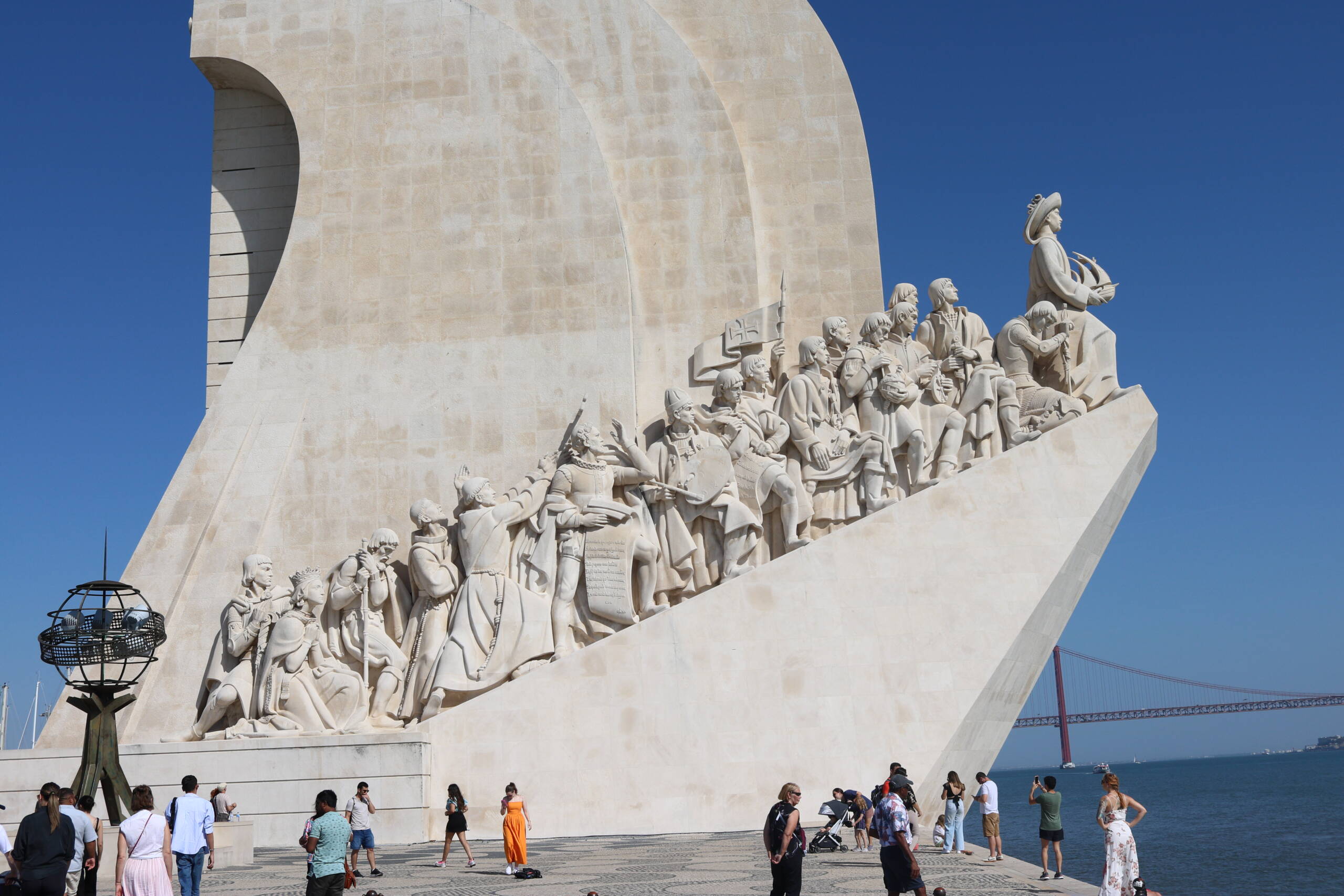
As I stood on the waterfront in Belém, Lisbon, gazing up at the imposing Padrão dos Descobrimentos, I couldn’t help but feel a surge of admiration for Portugal’s storied past. The monument, shaped like the prow of a caravel ship, towers 52 meters high and features over 30 statues of explorers, navigators, and visionaries from the 15th and 16th centuries—figures like Henry the Navigator leading the charge into unknown seas. Built in 1960 to commemorate the 500th anniversary of Henry’s death, it symbolizes the Age of Discovery, when Portuguese sailors boldly ventured out to expand their nation’s horizons, charting new worlds and establishing a global empire. In the photo I snapped (much like the one above), tourists mill about below the sculpted procession, with the iconic 25 de Abril Bridge stretching across the Tagus River in the background, under a brilliant blue sky. It’s a scene that captures the essence of Portugal’s adventurous spirit—a nation that once sent its people outward to conquer and innovate.
Reflections from Lisbon: The Padrão dos Descobrimentos and Why Portugal Must Reclaim Its Borders

But as I reflected on this monument to outward expansion, a stark irony hit me: today, Portugal isn’t sending explorers out; instead, it’s being overrun by waves of immigrants pouring in. What was once a symbol of national pride now stands as a poignant reminder of what could be lost if mass immigration continues unchecked. In a country of just over 10 million people, the foreign-born population has surged by about one million between 2020 and 2025 alone. This isn’t the controlled, beneficial migration of skilled contributors; it’s a flood that’s straining resources, inflating housing costs, and eroding the cultural fabric that makes places like this monument worth visiting.

Recent surveys show that around 70% of Portuguese citizens want less immigration, citing rising crime, overburdened public services, and a loss of national identity. Neighborhoods in Lisbon are transforming, with locals complaining that their city now resembles foreign enclaves, complete with increased violence and businesses shutting down after dark out of fear. The influx, particularly from non-European countries like Brazil, India, and Africa, has fueled a political backlash—evidenced by the rise of the far-right Chega party, which has propelled anti-immigration policies into the mainstream. Just this year, Portugal’s government, with Chega’s support, passed tougher laws restricting family reunification, job search visas, and automatic residencies, aiming to curb the chaos.

From a traveler’s perspective, this matters. The charm of Portugal—its historic sites, tight-knit communities, and unique heritage—is at risk. Imagine the Padrão dos Descobrimentos surrounded not by proud locals and curious visitors, but by the tensions of overpopulation and cultural dilution. Young Portuguese are emigrating in droves due to lack of opportunities, while immigrants fill the void without integrating, creating a vicious cycle. If we want to keep experiencing authentic European destinations like this, nations must prioritize their own citizens and control their borders. Portugal’s recent crackdown is a step in the right direction—proof that even socialist strongholds are waking up to the realities of unchecked immigration.

As I walked away from the monument, with the river breeze at my back, I thought: the explorers immortalized here didn’t invite the world to overrun their homeland; they went out to claim it. Portugal should honor that legacy by protecting its sovereignty today. If you’re planning a trip to Lisbon, visit this site—it’s a powerful reminder of what true national ambition looks like. But let’s hope the country acts fast to preserve it for future generations.

Filed Under: News

Reader Interactions

Leave a Reply Cancel reply

Your email address will not be published. Required fields are marked *

Footer

Recent Posts

  • Why Lisbon Cafés Are Putting Up No Laptops Signs: Coffee, Instagram, and the Remote Work Terrace
  • Four in Ten Travelers Visit Landmarks Mainly for the Photo: How Instagram and Reels Reshaped Tourism
  • Why Comporta Still Feels Empty: The Rice Estate Behind Portugal’s Most Coveted Beaches
  • Travel in 2026: Five Photos That Explain the Year’s Real Trends
  • Tiny Tourism: Why Travellers Are Choosing Towns Nobody Photographs
  • In Defence of the Hop-On Hop-Off Bus
  • EasyJet Agrees £5.7bn Apollo Takeover: What Changes for Passengers and What Doesn’t
  • Taormina Beach Guide: Mazzarò, Isola Bella, and What Nobody Tells You About the Pebbles
  • Juliet’s Balcony in Verona Was Added in the 1930s and the Crowds Do Not Care
  • St Mark’s Basilica in Venice: The Gold Mosaics Are Dimmer Than the Photographs Suggest

Media Partners

  • Virtual Travel Guide
  • Ancient Rome
Sintra at Noon, Venice at Midnight: Six European Cities and the Hour That Suits Them
Porto’s Chestnut Season Is the Shoulder Season Worth Booking
Venice at Night Is the Version No Access Fee Covers
The 18th-Century Fountain Hidden Inside Bordeaux’s Customs Museum Courtyard
The Bilbao Effect, 500 Years Early: Jerónimos Monastery And The Guggenheim
Bilbao’s Quiet Renaissance: From Industrial Port to Design Destination
Lisbon’s Seven Hills: A Walking Guide That Tells You the Truth
New Orleans: An American City That Plays by Different Rules
Ha Long Bay Without the Cruise Brochure
Istanbul at the Threshold: A City That Has Always Been Two Things at Once
Sponsored Post
About
Contact
Roman Concrete in Museum Fragments: What the Cross-Section Actually Shows
Roman Sarcophagi Spent More Time as Fountains and Church Tombs Than as Graves
Aquincum Museum Reconstructs 16 Roman Faces From Skulls Found on Budapest's Danube Frontier
Roman Public Latrines Reveal an Empire That Built Sanitation Without Achieving Hygiene
The Pont du Gard: Rome's Most Perfect Structure
Water Across the Empire: Roman Aqueducts and the Hydraulic Logic of Conquest
Who Cleaned Roman Rome: The Social Economy of Waste

Media Partners

  • Media Forum
  • Market Analysis
SanDisk (SNDK) Rallied 11.9% Into an S&P 100 Add That Forces Almost Nobody to Buy
Texas A&M Is Spending $11.8 Million on a Water Tower Before Its Semiconductor Institute Can Open
Cloudflare's September 15 AI Crawler Block Turns the Ad Tag Into an Access Key
Pedro Sánchez Lost Control at Ceuta and Blamed Everyone Else
Three European Cities Where Architecture and Festival Collide
Duane Davis Convicted in Tupac Shakur's 1996 Murder
AI Content Licensing in 2026: Who Is Actually Getting Paid, and Who Never Will
Google AI Overviews and the Publisher Traffic Collapse: What the 2026 Numbers Actually Show
NBCUniversal Puts Peacock Inside YouTube Premium, and Concedes Where the Audience Already Lives
Nexstar Owns Tegna and Isn't Allowed to Run It: Inside the Hold-Separate Order
The Immersive Experience in the Museum World
Japan, China, and Taiwan: A New Triangle of Risk — and a Window of Opportunity for Japan
Ghost Kitchens as Infrastructure: The Shift from Restaurants to Intelligent Food Networks
The Zoom Divide Nobody Saw Coming
The Perfect Budget Content-Creator Kit
Reimagining Prague’s Tourism Future Through Immersive Media and VR Museums
Israel’s Urban Paradox: Tel Aviv Moves, the Rest Stand Still
American Express Global Business Travel (GBTG): Understanding the Business and the Investment Case
Why the Canon R8 Paired With the New RF 45mm f/1.2 Lens Quietly Becomes the Content Creator’s Sweet-Spot
The Future of Travel: A $15.5 Trillion Industry

Copyright © 2026 Travel Marketing

Media Partners: Timey · Publishing House · Ancient Rome · Photography · Calendarial · Transportational