Tourism statistics usually arrive as cold numbers on a screen, but Portugal’s latest record — more than €23.5 billion in tourism revenue so far this year, with over €3.2 billion generated in September alone — is easier to feel when anchored to a real scene. Imagine standing in Porto as daylight thins into the soft blue of early evening, the kind of light that makes stone appear older and rooftops warmer. The air smells faintly of river moisture and something sweet — maybe pastry, maybe port wine from a nearby tasting room.
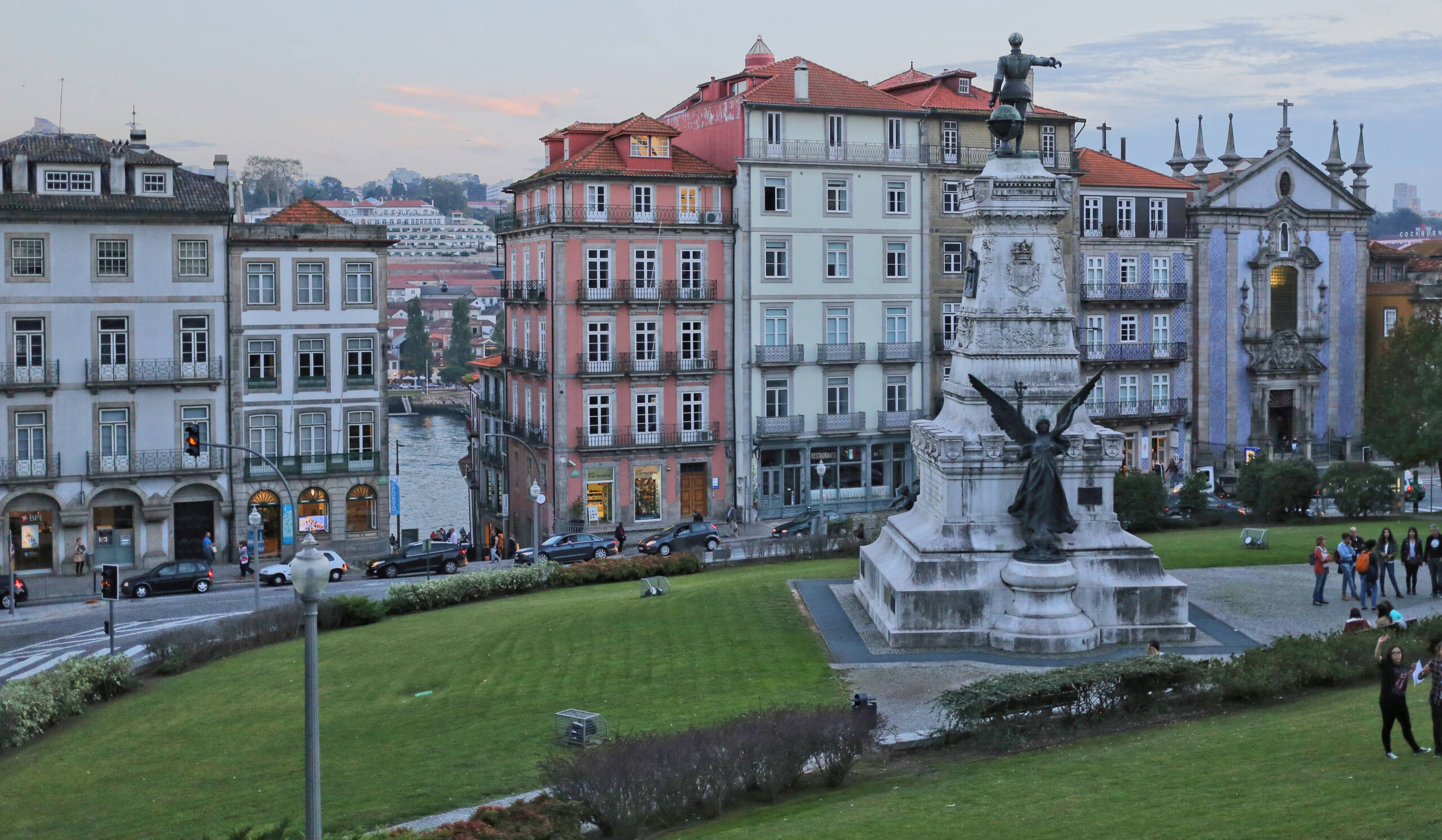
In front of you, a generous green square stretches downhill, a manicured sheet of grass broken only by the occasional worn shortcut carved by hurried feet. At the center rises the Monument to Prince Henry the Navigator, unveiled in the late 19th century when Portugal was busy defining its role in history and memory. The stone base is heavy and deliberate, etched with figures and inscriptions honoring the Age of Discoveries. Perched above it, Prince Henry stands carved in bronze with an outstretched arm, gazing not at the square but outward — toward imagined seas, trade routes, maps, and ambitions. At the pedestal’s base, a winged feminine guardian figure spreads her arms wide, almost mid-stride, as if ushering the city forward. The symbolism isn’t subtle: exploration, destiny, maritime power — all woven into metal and stone.
Behind the statue, a row of narrow historic buildings rises in pastel gradients. Their façades — grey, blush pink, pale blue — carry centuries of repainting, weathering, and quiet survival. The wrought-iron balconies were once practical, a place to air linens or gossip with neighbors. Today they’re part of the city’s visual signature, photographed endlessly and rented out in real estate listings promising “authentic Porto charm.” If you look closely, you can almost imagine the layers beneath: merchants in the 1700s selling spices and cloth; 19th-century aristocrats hosting salons; working-class families drying cod over small fires in the kitchen below.
To the right, the small church — Igreja de Santo António dos Congregados — holds its own kind of memory. Built on the remnants of an earlier chapel, its façade is wrapped in blue-and-white azulejos, Portugal’s ceramic storytelling language. The tiles trace sacred imagery now softened by rain, smog, and time. Inside, the walls have absorbed every whispered prayer, candle flame, and organ chord of the last two centuries. Outside, life keeps flowing — teenagers laughing, tourists posing, locals passing through as if the sacred and ordinary were never separate categories to begin with.
The river — the Douro — glints between buildings like a ribbon of quicksilver. Historically, this waterway carried the barrels of port wine that would eventually put Porto on global maps. Boats known as rabelos once navigated here, steered by men who understood the current the way farmers know soil or fishermen know sky. Today, modern river cruises replace those vessels, but the memory is still there, hidden in the slope of the banks and the pattern of the rooftops across the water.
And this is where the tourism numbers become real. September’s revenue — up 4.2% year-on-year — isn’t just a statistic; it’s preserved in the movement of people across this landscape. On the street below, cars glide through traffic lights while pedestrians drift in slow, soft clusters. Some are locals heading home. Others are visitors lingering with cameras, probably unaware that the square they’re standing in once served as a stage for civic ceremonies, protests, speeches, and parades. Tourism “imports” — Portuguese travelers heading abroad — grew slightly, but far less than what Portugal absorbed. The country is undeniably a net recipient of curiosity and attention.
What Portugal must now navigate feels strangely similar to Prince Henry’s raised gesture: possibility and responsibility. Tourism has become not just an industry but a cultural force shaping architecture, language, housing, and identity. The challenge is keeping the square alive — not just as a perfect photo, but as a place where people still belong, still live, still make memories that don’t require a boarding pass.
If Portugal can carry the weight of its past while shaping a tourism future that’s broader, fairer, less seasonal and more distributed, then perhaps this scene — the statue, the church, the façades, the river, the people — won’t just represent what Portugal was or what visitors see. It will represent what the country has decided to become.