There’s a moment, when you first look across this panorama, where the city doesn’t feel like a destination but a theatre stage caught mid-performance. The Douro River below glints with a strange calm confidence, and the ribbed metal arc of the Dom Luís I Bridge cuts across the frame like a deliberate underline: yes, this place was engineered to impress. The riverfront houses cluster together with red-tiled roofs and pastel walls fading under centuries of Atlantic air, and the skyline rises unevenly — towers, churches, stray cranes, steep streets, and rooftops layered like someone kept stacking pieces until gravity shrugged and accepted it. From afar, Porto feels dense yet soft, busy yet slow. It’s one of those cities that looks older than it wants to admit, but younger than its history books suggest.
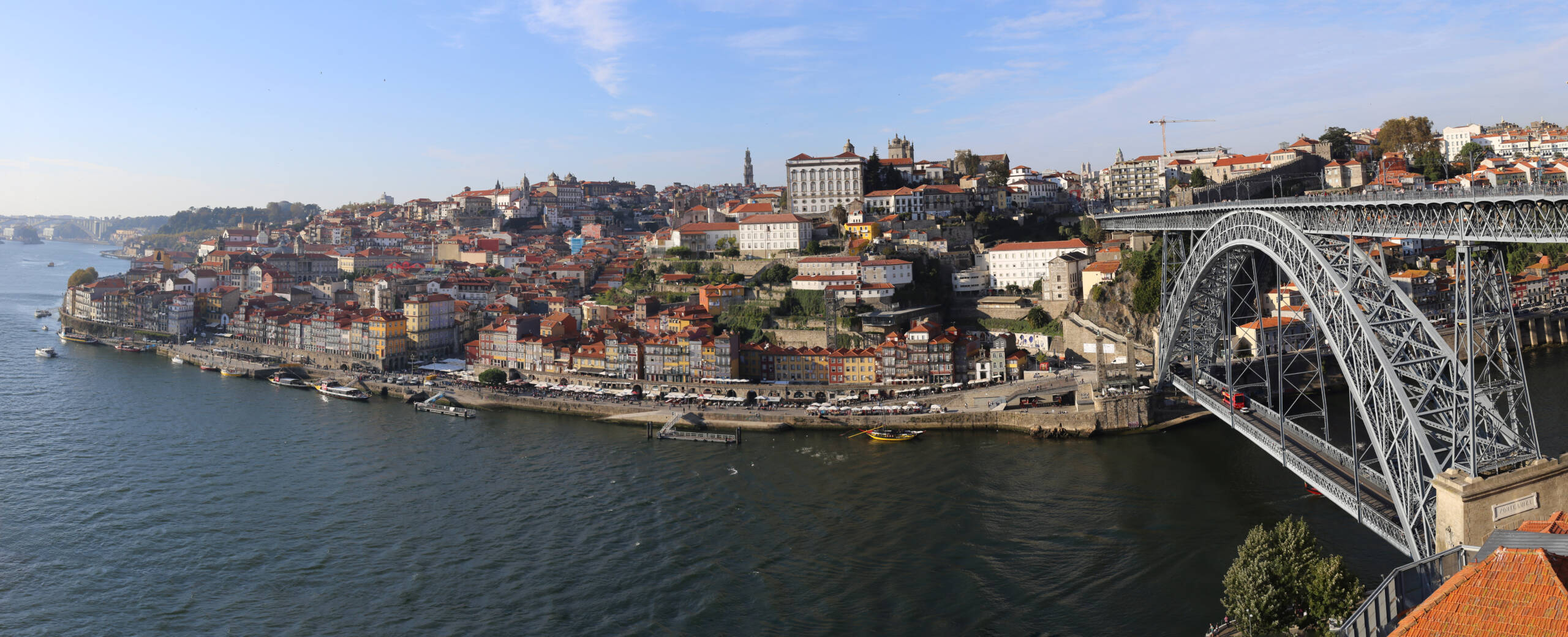
Looking closer, the lower riverfront — Ribeira — tells the first chapter of your future visit. Those tightly packed buildings lining the waterfront are places where you can order a glass of Porto tonico, or dive into a plate of grilled sardines, and accidentally spend two hours people-watching. Boats drift lazily along the water — some of them old *rabelo* boats once used to transport wine barrels downstream. These days they mostly carry tourists, which is fine; they still move at the same unhurried pace.
Higher up on the hill sits the Sé Cathedral and clusters of white stone buildings with terracotta roofs. The geography explains Porto’s soul pretty quickly: everything is built on slope. Stairs, switchbacks, funiculars — it’s a city that trains you into stronger legs and slower thinking. The Clerigos Tower pokes the sky like it’s trying to remind modern visitors that this city once measured time by bells, not notifications.
Then there’s the bridge — and you’ll cross it eventually. On the upper level, the metro glides past pedestrians, and there’s this cinematic feeling as the wind hits and the whole view spreads beneath you. Cross to the Vila Nova de Gaia side and suddenly you’re in port wine country distilled into warehouses. Those names—Taylor’s, Graham’s, Sandeman—aren’t just brands; they built empires here. Tastings become an unplanned afternoon, and sunsets from Gaia are arguably Porto’s most addictive experience.
A practical rhythm forms if you want to treat this panorama as a guide rather than a postcard: morning coffee somewhere high, lunch near the river, an afternoon wandering side streets with laundry hanging between balconies, and evening wine watching the world turn gold. Porto doesn’t demand an itinerary — it suggests moods.
And maybe that’s what this wide view really communicates: Porto isn’t trying to impress you with monuments or museums, though it easily could. Instead, it whispers a more human invitation—walk a little, sit often, eat slowly, look up, cross the bridge, and stay until the light shifts and the river changes color again.