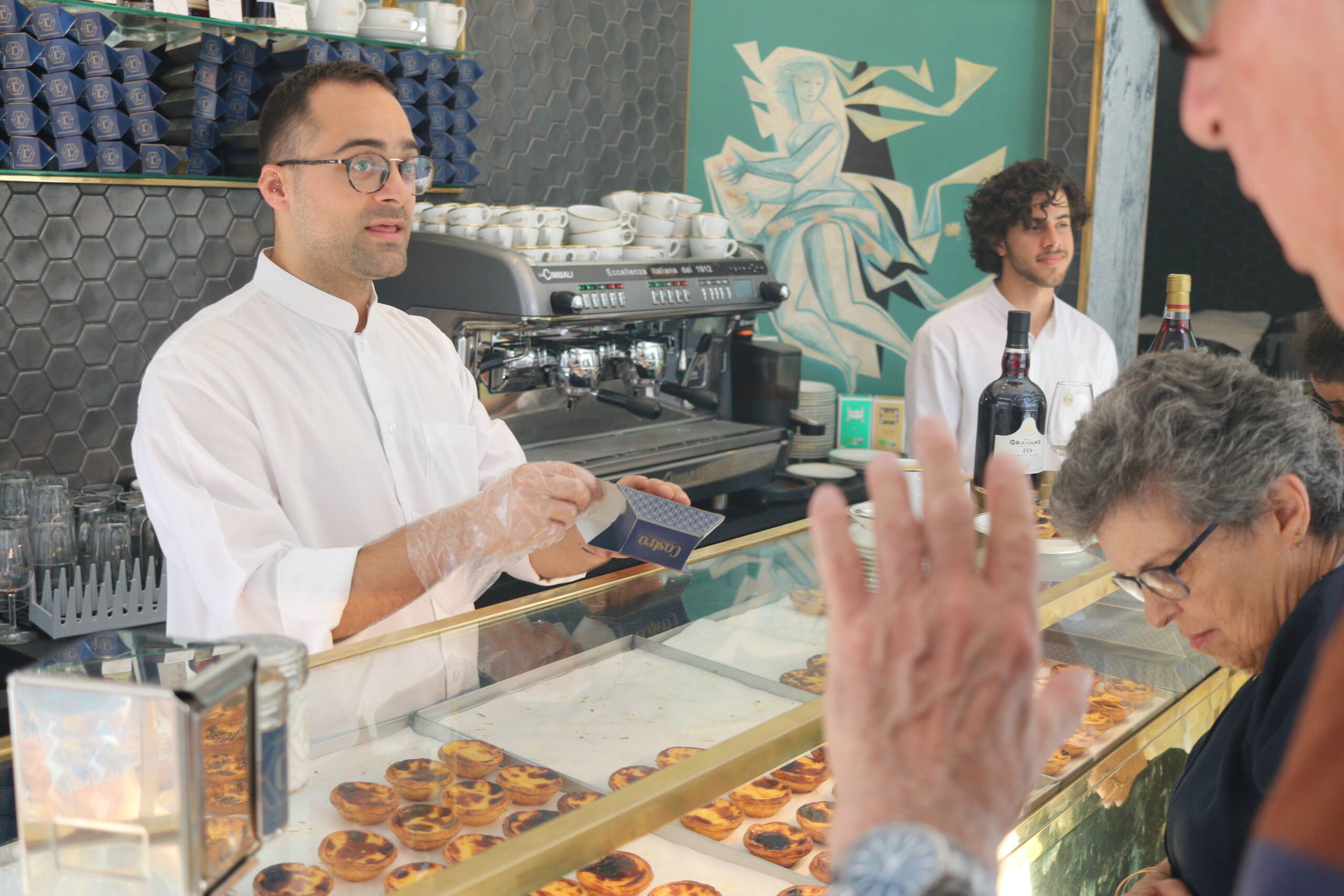
There are few pastries in the world that manage to embody both history and everyday joy the way Portugal’s pastel de nata does. Standing at a traditional counter like the one in this photo, with rows of golden custard tarts behind glass, one immediately senses the depth of a culinary tradition that goes far beyond a simple dessert. The scene is timeless: the vendor carefully packing pastries into a blue box, the aroma of coffee mingling with the sweetness of cinnamon and caramelized custard, and customers leaning forward with eager anticipation. It is not just about taste; it is about ritual, atmosphere, and cultural belonging.
The pastel de nata, sometimes known as the Portuguese custard tart, originated in the 18th century at the Jerónimos Monastery in Lisbon, where monks used egg whites for starching clothes and found themselves with an excess of yolks. These yolks, combined with sugar, flour, and cream, gave birth to the beloved custard filling. Soon, the recipe spread beyond the cloisters, eventually becoming synonymous with Lisbon’s famous Pastéis de Belém bakery, which still guards its secret recipe today. But over the centuries, the tart has become democratic, available at nearly every café in Portugal, each with its own subtle variations on the theme.
The image here captures this culture beautifully. The display case is filled with perfectly baked tarts, their tops marked by the essential dark blistering that signals the right caramelization of sugar under high heat. A barista in a crisp white coat works with precision, slipping the delicate pastries into branded packaging, while behind him the espresso machine waits to complete the pairing that has become part of daily Portuguese life. A pastel de nata is almost never eaten alone; it demands a bica, the short, intense espresso shot of Lisbon, or sometimes a glass of port wine when enjoyed as a leisurely afternoon indulgence.
Part of the joy of the pastel de nata is the universality of the experience. Locals will eat them as a quick breakfast on the way to work, dusted with a sprinkle of cinnamon and sugar, while tourists make pilgrimages to taste them in the very neighborhoods where they were born. The café setting is often small and intimate, where conversation flows freely, and the act of standing at the counter—like the customers in the photo—is as much a part of the tradition as the tart itself. It is here that one sees the blend of generations: older patrons savoring their tart slowly, younger ones grabbing a quick bite, and everyone united in appreciation of this custard marvel.
What makes the pastel de nata unique is not only its flavor but its resilience as a cultural symbol. Unlike many pastries that fade into the background of daily life, this one continues to hold a place of honor in Portugal’s identity. It is celebrated in festivals, exported across the globe, and adapted into modern interpretations, yet the essence remains the same: a flaky shell holding a warm, creamy custard that balances sweetness with the faintest savory whisper of egg. In Lisbon, Porto, Coimbra, or the Azores, each pastel de nata feels familiar yet local, a sweet constant across different regions of the country.
For travelers, tasting a pastel de nata is more than culinary tourism; it is a way to participate in the rhythm of Portuguese life. Whether bought in a centuries-old bakery or at a bustling café like the one pictured, each bite is a connection to history, to craft, and to the simple joy of sharing food. The ritual of ordering, watching it packed, and finally enjoying it—sometimes in just two or three bites—becomes a memory that lingers as long as the flavor. It is a reminder that the heart of travel is not only in the landmarks we visit but also in the small, everyday experiences that tie us to a culture.
For anyone planning a trip to Portugal, embracing the pastel de nata tradition should be as essential as visiting a castle, a monastery, or a fado house. Stop at the counter, exchange a few words with the staff, sip your coffee, and savor this golden piece of heritage. The pastel de nata is not just dessert; it is Portugal in miniature—warm, layered, soulful, and unforgettable.