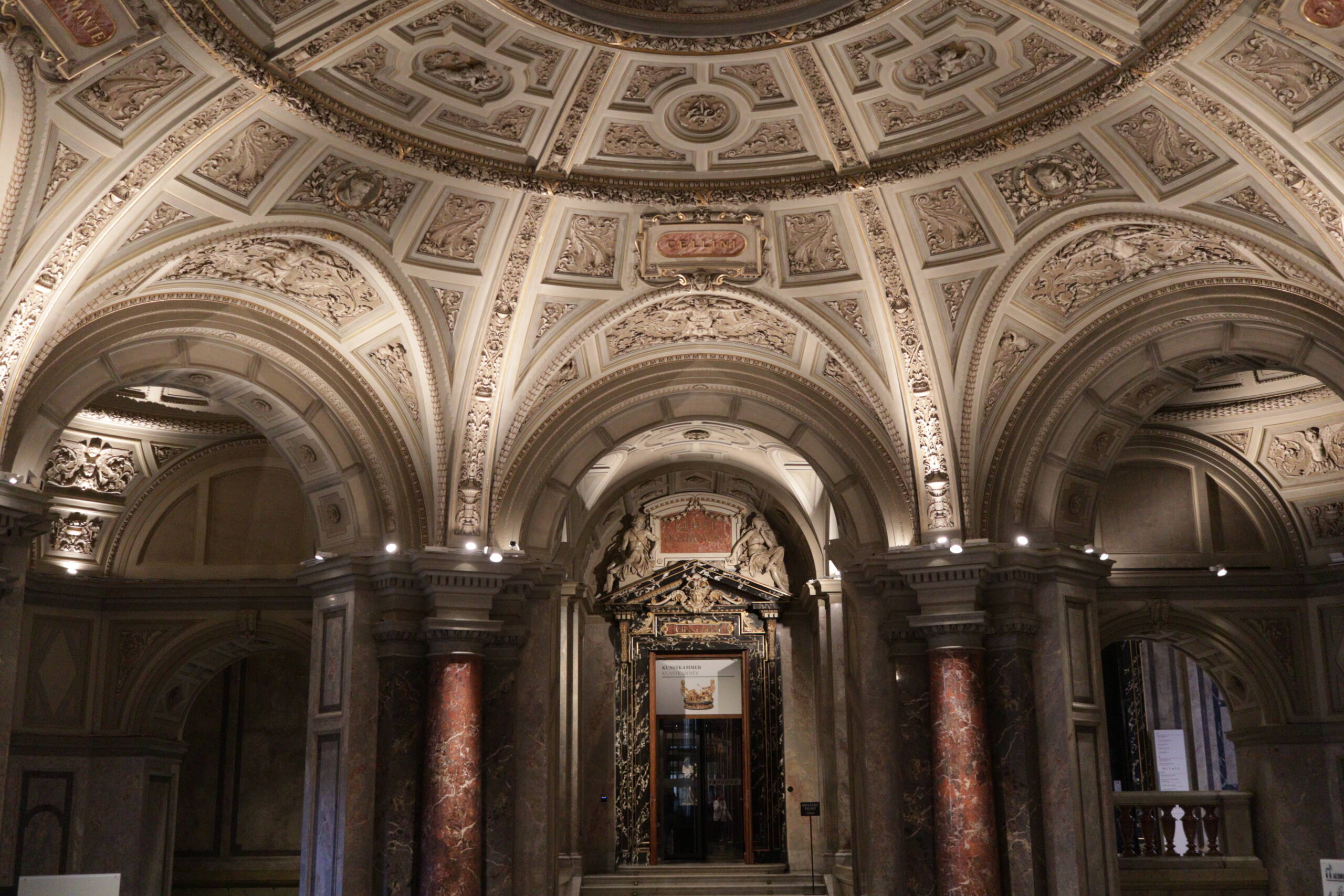
The moment you step into the Kunsthistorisches Museum in Vienna, the tone is set before a single object is seen. The grand entrance hall — vaulted ceilings, sculpted reliefs, polished marble columns, and gilded architectural details — reflects the ambition and cultural agenda of the Habsburg dynasty. This was not merely a museum. It was conceived as a statement of power, lineage, and cultivated taste.
Standing before the entrance to the Kunstkammer feels almost theatrical — as if you’re not just entering another museum gallery, but stepping through a threshold into a hidden world. With its marble pillars, gilded ornament, and sculptural figures watching from above, the doorway evokes the atmosphere of a guarded vault. It feels a little like the moment in the tale of Alibaba when the secret cave opens and unimaginable treasures lie beyond — except here, the wonders are real, preserved, and arranged with purpose. The transition from the public museum space into this chamber creates a quiet anticipation: you sense that what waits inside isn’t ordinary art, but the rare, the exquisite, and the extraordinary.
Among its most historically significant sections is the Kunstkammer Wien, the chamber of art and wonders. It represents one of the most complete surviving collections of its kind and traces its origins to the 16th and 17th centuries. At a time when scientific discovery, trade expansion, and humanism reshaped Europe, rulers assembled encyclopedic collections designed to represent the full scope of human knowledge and natural marvels.
This tradition began under Emperor Ferdinand II and was later expanded significantly in the era of Emperor Rudolf II in Prague — a ruler known for his fascination with alchemy, cosmology, and artistic experimentation. The Kunstkammer was not separated by discipline the way modern museums are. Instead, it unified four major categories:
Artificialia — works of human craftsmanship such as ivory carvings, goldsmithing, clocks, and automata.
Naturalia — exotic shells, coral, minerals, fossils, and rare animal specimens.
Scientifica — instruments of astronomy, geometry, cartography, and engineering.
Exotica — objects from Africa, Asia, and the Americas, reflecting early global trade networks.
The hall leading into the Kunstkammer reminds visitors that these weren’t once museum pieces — they were diplomatic gifts, symbols of knowledge, and demonstrations of imperial reach. Today, the exhibition includes masterpieces by artists such as Wenzel Jamnitzer, Georg Petel, Benvenuto Cellini, and the workshop of Augsburg goldsmiths known for technical virtuosity.
Walking through the Kunstkammer feels less like approaching art objects and more like entering a curated intellectual worldview. Every piece reflects craftsmanship, rarity, and curiosity — the priorities of a court that saw collecting as a form of ruling. What remains remarkable is how much survived intact through political upheaval, wars, and shifting cultural values.
For travelers interested in Renaissance Europe, early science, and the origins of museums, the Kunstkammer is essential. It offers direct insight into how rulers thought, what they valued, and how knowledge was once staged as spectacle. Many collections today attempt to educate. This one still manages to astonish.
When visiting Vienna, set aside time — not just for the paintings upstairs, but for this museum within the museum. The world the Habsburgs built here was intended to impress. Centuries later, it still does.