• Skip to main content
  • Skip to secondary menu
  • Skip to footer

Travel Marketing

Travel and Tourism Trends

  • Sponsored Post
  • Travel Event Calendar
  • Travel Market
  • Travel Magazine
  • About
  • Contact

Kafkaesque in Bronze, Prague

October 28, 2025 By admin

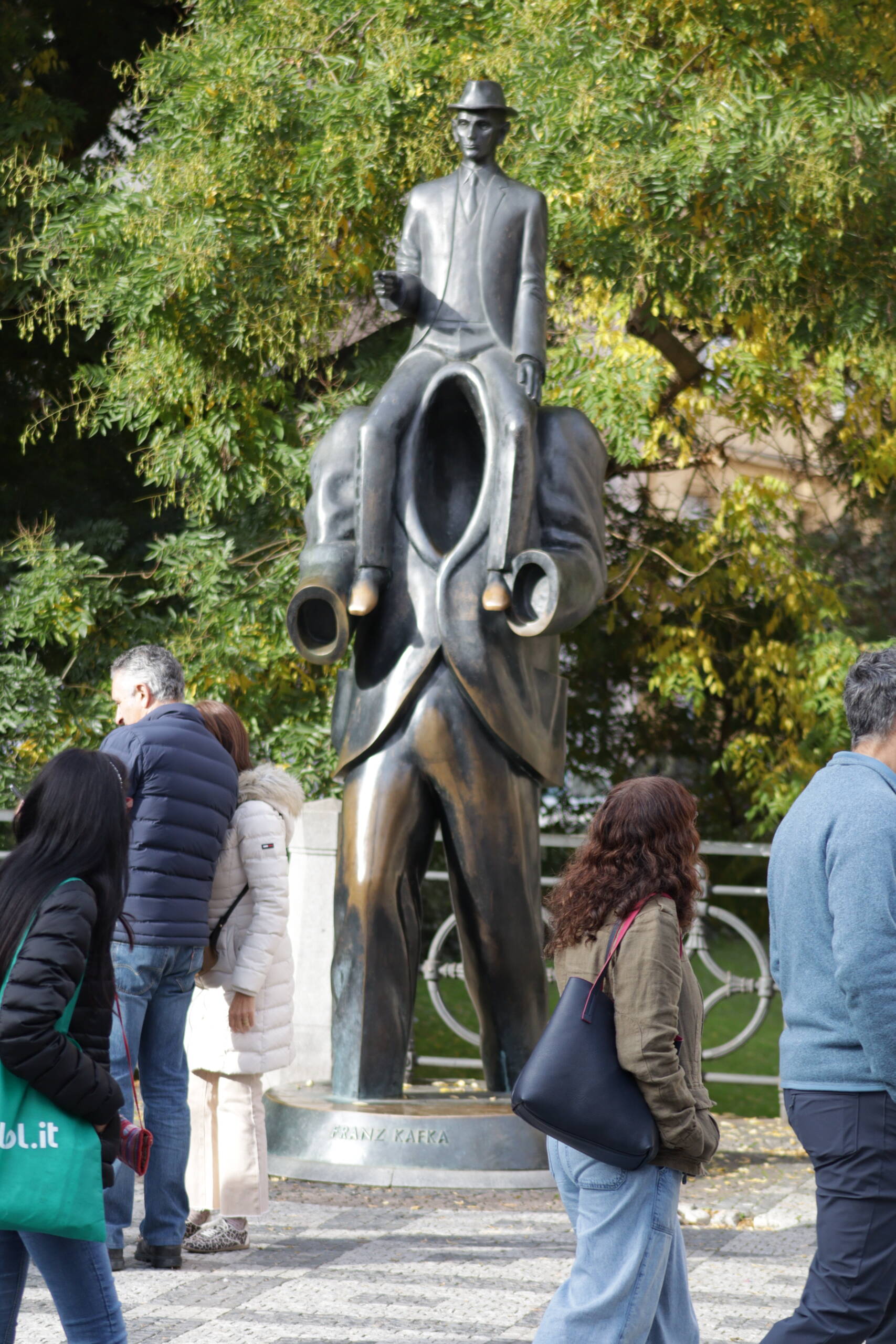
Walking through Prague, it’s easy to stumble upon corners where literature has taken physical form, and nowhere is this more striking than the Franz Kafka Monument near the Spanish Synagogue. At first glance, the statue looks bizarre, almost unsettling. A headless, hollow figure in a bulky overcoat strides forward with confidence, yet its body is nothing but an empty shell. Perched atop its shoulders is a smaller man, sharp in his suit and fedora, holding his hand slightly outward as if both presenting himself and simultaneously clinging to something intangible. It doesn’t take long to recognize this is Kafka himself, eternally carried by an absurd, faceless presence.
Kafkaesque in Bronze, Prague

The design is pure surrealism, but also deeply personal. Created by Czech sculptor Jaroslav Róna in 2003, the monument is inspired by a scene from Kafka’s early short story Description of a Struggle. In that work, a man rides on another’s shoulders through Prague’s streets, an image that perfectly captures Kafka’s blend of the mundane and the nightmarishly strange. Here, bronze makes visible that exact sensation—an elegant, suited figure supported by a hulking void. You can almost feel the paradox: the dignity of Kafka’s words set against the weight of anonymity, bureaucracy, and absurdity. It’s a scene that refuses to resolve itself, much like his stories.

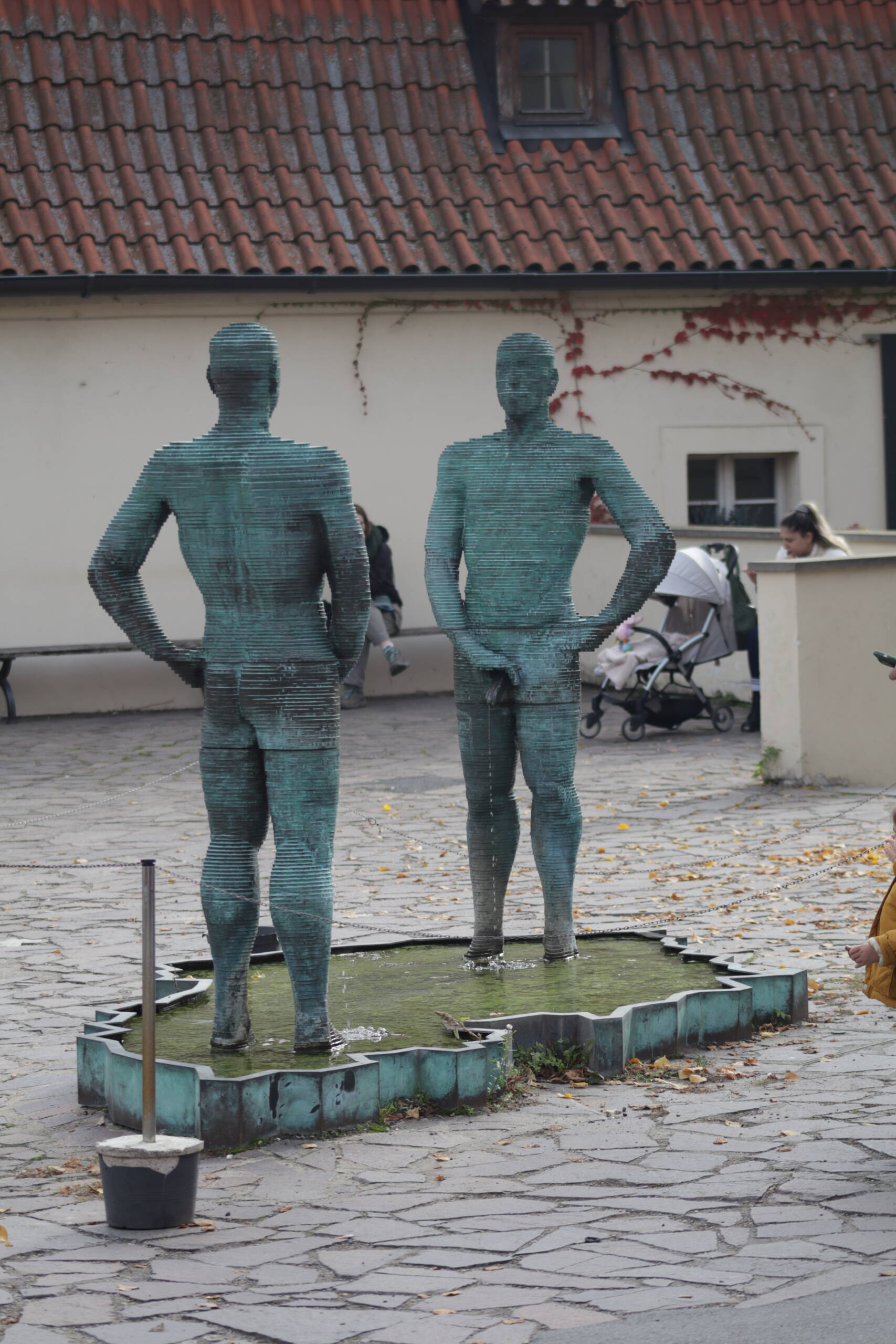
And then, just a short walk across the river, you stumble into another absurd spectacle: David Černý’s infamous Piss sculpture, placed boldly in the courtyard in front of the Kafka Museum. Two bronze male figures, segmented like geological layers, stand facing each other in a shallow pool shaped like the outline of the Czech Republic. What makes people laugh, cringe, or shake their heads is that these figures are mechanized—yes, they urinate into the water, hips moving, streams shifting to “write” words. Visitors can even text a number to have the statues “spell out” their message in liquid script. The fact that this irreverent installation greets you right at the entrance to a museum devoted to Kafka himself feels deliberate, almost a provocation: you can’t enter the shrine to Prague’s most enigmatic writer without first confronting a scene that is as absurd, comic, and unsettling as his prose.
Kafkaesque in Bronze, Prague

Where the Kafka statue embodies the haunting weight of the unseen and the unknowable, Černý’s piece is brash, satirical, and vulgar in the most deliberate way. It pokes at national pride, mocks solemnity, and forces you to confront how thin the line is between dignity and ridicule. Standing in front of both works in the same afternoon, you can sense a thread: Prague doesn’t just celebrate its culture and history; it confronts it with irony, provocation, and a refusal to let meaning rest comfortably.

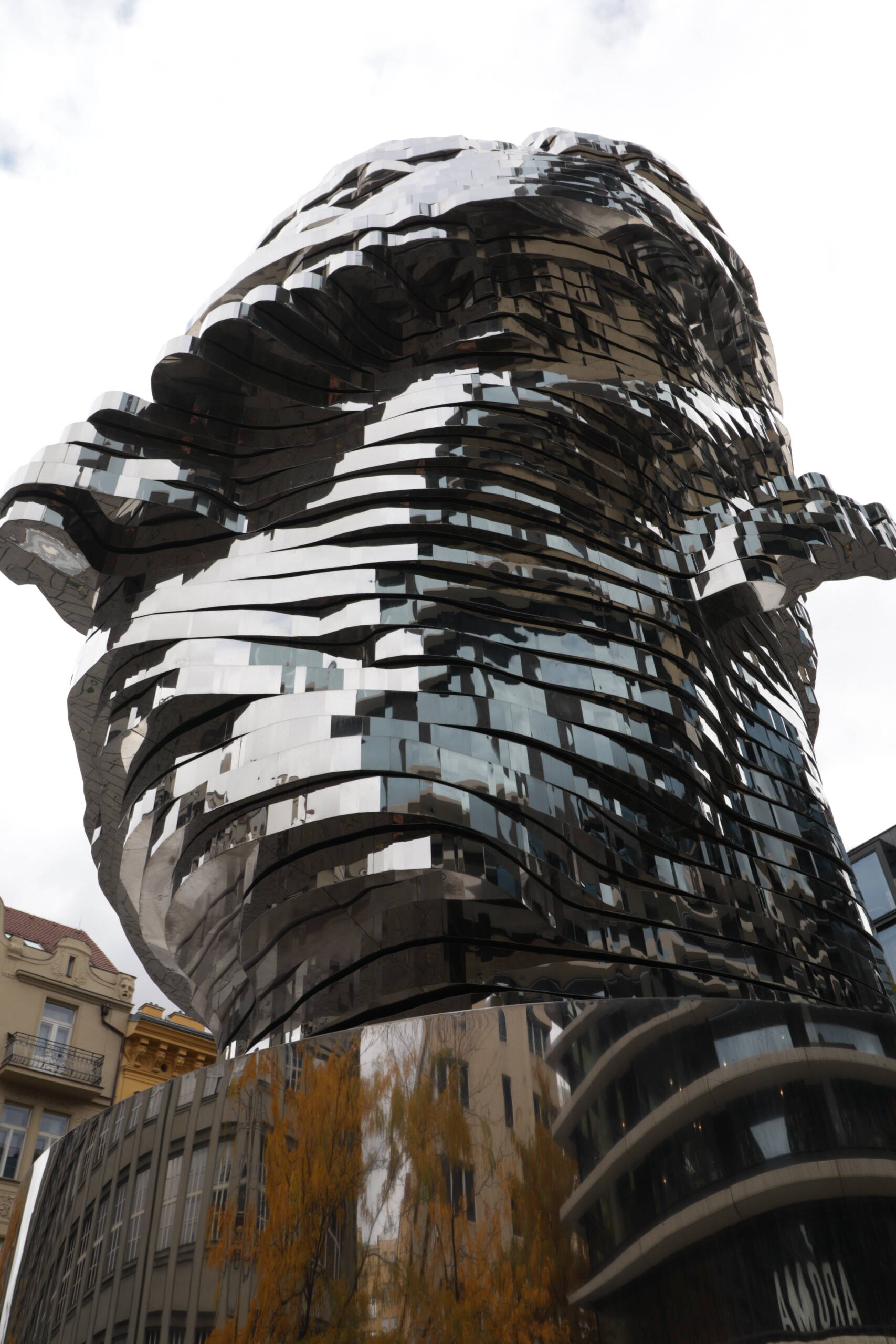
And as if the city wanted to seal this artistic statement, another monumental creation rises above the bustling shopping district: Head of Franz Kafka, again by David Černý. This massive, mirrored sculpture is composed of 42 rotating stainless steel layers, each segment constantly shifting to reassemble and disassemble Kafka’s face in real time. The reflections of nearby buildings, clouds, and pedestrians ripple across its surface, making the entire head feel alive, fluid, and unstable—like an identity never quite settled. Watching it turn, break apart, and come together again is hypnotic, like witnessing the physical embodiment of Kafka’s themes of fragmentation, transformation, and the futility of finding permanence in a world of constant change.
Kafkaesque in Bronze, Prague

Seeing these three works—the bronze Kafka riding a faceless giant, the irreverent urinating figures at the Kafka Museum, and the mechanical steel head—together gives you a fuller picture of Prague’s character. The city isn’t afraid of contradictions: solemn and satirical, reverent and irreverent, haunting and humorous. Each sculpture is a reminder that Prague is as much about unsettling questions as it is about picturesque beauty. It’s a city where absurdity is not just tolerated, but celebrated—and somehow, that makes it all feel perfectly, unmistakably Kafkaesque.

Filed Under: News

Footer

Recent Posts

  • TOURISE Summit 2027: March 23-25, Riyadh, Saudi Arabia
  • Wrocław’s Market Square in Fisheye: Why I Kept the Distortion
  • Salamanca’s Stone Faces: A Photo Essay in Five Frames
  • Europe’s Tourist Crime Belt: Pickpockets, Bracelet Scams, and Why the Same Offenders Keep Working
  • The Beach Racket in Italy, Greece and Spain: Turnstiles, Cheap Concessions, and a Shoreline You Can’t Reach
  • Why Lisbon Cafés Are Putting Up No Laptops Signs: Coffee, Instagram, and the Remote Work Terrace
  • Four in Ten Travelers Visit Landmarks Mainly for the Photo: How Instagram and Reels Reshaped Tourism
  • Why Comporta Still Feels Empty: The Rice Estate Behind Portugal’s Most Coveted Beaches
  • Travel in 2026: Five Photos That Explain the Year’s Real Trends
  • Tiny Tourism: Why Travellers Are Choosing Towns Nobody Photographs

Media Partners

  • Virtual Travel Guide
  • Ancient Rome
Largo do Chiado at Night: A Brasileira, the Bronze Poet and a Floor Made of Waves
Sintra at Noon, Venice at Midnight: Six European Cities and the Hour That Suits Them
Porto’s Chestnut Season Is the Shoulder Season Worth Booking
Venice at Night Is the Version No Access Fee Covers
The 18th-Century Fountain Hidden Inside Bordeaux’s Customs Museum Courtyard
The Bilbao Effect, 500 Years Early: Jerónimos Monastery And The Guggenheim
Bilbao’s Quiet Renaissance: From Industrial Port to Design Destination
Lisbon’s Seven Hills: A Walking Guide That Tells You the Truth
New Orleans: An American City That Plays by Different Rules
Ha Long Bay Without the Cruise Brochure
Sponsored Post
About
Contact
A Freed Slave in Augustan Rome Paid to Have His Wrinkles Carved in Marble
The Badminton Sarcophagus Was Carved While the Roman Empire Was Coming Apart
The Boscoreale Bedroom at the Met May Be Named for the Wrong Roman
The Met's Augustus Was Carved After He Died, and It Shows Him Half His Age
The Met's Caracalla Denarius Promised Imperial Heirs and Then Rome Erased the Bride
Mapping 186,000 Miles of Roman Roads Shows Rome Was Never the Empire's Main Hub
How Much Silver Was in a Roman Denarius? Debasement Tables From Augustus to Diocletian

Media Partners

  • Media Forum
  • Market Analysis
Four Nights in Europe: What Mixed Artificial Light Does to a Photograph
Brussels Social Housing Standoff: MR Freezes €131 Million Over Foyer Anderlechtois Chairman
Syracuse Has No Town Beach, So Ortigia Swims Off the Rocks
Weekly Network Analytics Summary: August 30 to September 5, 2026
SanDisk (SNDK) Rallied 11.9% Into an S&P 100 Add That Forces Almost Nobody to Buy
Texas A&M Is Spending $11.8 Million on a Water Tower Before Its Semiconductor Institute Can Open
Cloudflare's September 15 AI Crawler Block Turns the Ad Tag Into an Access Key
Pedro Sánchez Lost Control at Ceuta and Blamed Everyone Else
Three European Cities Where Architecture and Festival Collide
Duane Davis Convicted in Tupac Shakur's 1996 Murder
The Immersive Experience in the Museum World
Japan, China, and Taiwan: A New Triangle of Risk — and a Window of Opportunity for Japan
Ghost Kitchens as Infrastructure: The Shift from Restaurants to Intelligent Food Networks
The Zoom Divide Nobody Saw Coming
The Perfect Budget Content-Creator Kit
Reimagining Prague’s Tourism Future Through Immersive Media and VR Museums
Israel’s Urban Paradox: Tel Aviv Moves, the Rest Stand Still
American Express Global Business Travel (GBTG): Understanding the Business and the Investment Case
Why the Canon R8 Paired With the New RF 45mm f/1.2 Lens Quietly Becomes the Content Creator’s Sweet-Spot
The Future of Travel: A $15.5 Trillion Industry

Copyright © 2026 Travel Marketing

Media Partners: Timey · Publishing House · Ancient Rome · Photography · Calendarial · Transportational