There’s something almost surreal about looking at that massive faux-biblical fortress in Eilat — once the dramatic home of the Kings City theme park — and seeing, of all things, a Greek discount homeware chain glowing in rainbow colors across its ancient-kingdom façade. The whole structure feels like it’s whispering a story it never meant to tell: how a city that once chased grand narratives and ambitious tourism dreams has quietly slid into a more modest, bargain-hungry reality. You can almost picture the ghosts of animatronic Pharaohs sighing as they make room for plastic toys and €2 mugs.
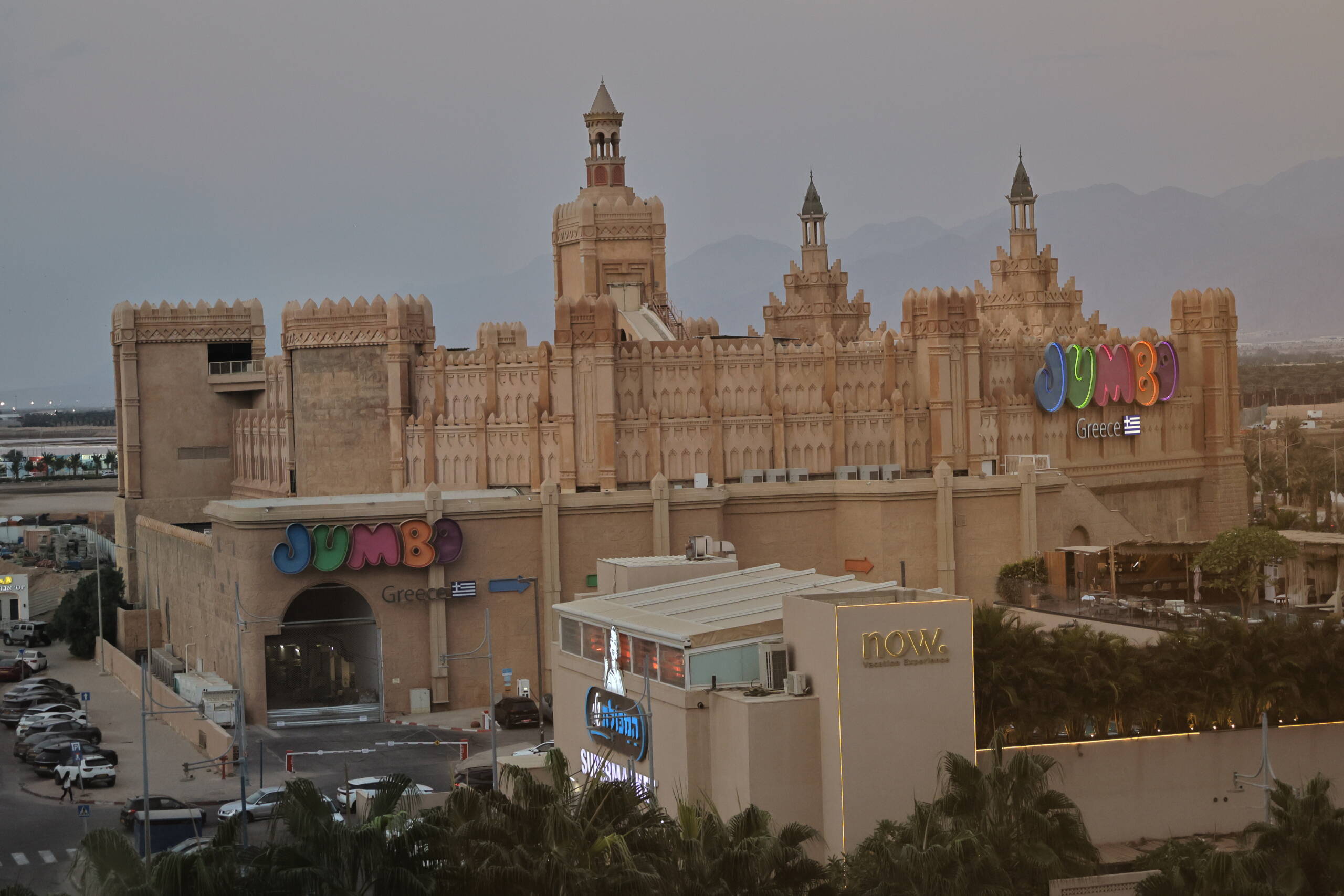
Jumbo Over Kings City — A Quiet Signal of Eilat’s Tourism Decline
Kings City, for all its kitsch and overblown theatrics, at least tried to match the ambition of Eilat’s luxury hotel strip — that row of shimmering, oversized resorts selling the fantasy of a holiday kingdom by the Red Sea. The theme park’s biblical extravaganza was built as an attraction to keep tourists engaged, spending, and curious. It was part of a vision where Eilat wasn’t just sun and beach, but also entertainment, storytelling, and a splash of spectacle. Its closure in 2015 already hinted at a slowdown, but the true symbolism only arrived later, quietly, with a Greek big-box retailer moving in.
Because when a signature tourist attraction is replaced by Jumbo — a low-cost chain better known for cheap Christmas decorations and plastic storage bins — it’s not just a quirky retail story; it’s a symptom. A theme park closing is one thing. A theme park repurposed into a giant discount store, smack in the middle of Eilat’s most expensive tourism zone, is something else entirely. It signals a shift from ambition to accommodation, from selling experiences to selling household clutter. And honestly, it feels completely out of place next to the upscale hotels, like someone parked a cut-price Athens suburban mall in front of the Royal Beach Hotel and hoped no one would notice.
The strange contrast is almost too on-the-nose: the desert mountains in the background, the palatial pseudo-biblical architecture up front, and nestled inside that, shelves of €1.99 party supplies. If city planners wanted a metaphor for Eilat’s struggle, they couldn’t have crafted a better one. A resort city that once aspired to be a miniature Las Vegas now finds itself leaning on discount retail to fill the void left by shrinking foreign tourism, high prices, and a lack of new creative investments.
And maybe that’s the part that stings a little. Jumbo isn’t the problem — it’s just a shop doing what shops do. But its presence in *that* building, in *that* location, says more than any tourism report ever could. Eilat has stopped dreaming big. A castle of stories became a castle of cheap inflatables, and the city seems strangely okay with it.