• Skip to main content
  • Skip to secondary menu
  • Skip to footer

Travel Marketing

Travel and Tourism Trends

  • Sponsored Post
  • Travel Event Calendar
  • Travel Market
  • Travel Magazine
  • About
  • Contact

Giants in the Streets of Barcelona

August 22, 2025 By admin Leave a Comment

Walking through the narrow, sunlit streets of Barcelona, I found myself swept up in a celebration unlike anything I had experienced before. The air buzzed with excitement as people filled every corner of the Gothic Quarter, their laughter and chatter bouncing off the stone façades. Suddenly, towering figures appeared above the crowd—giants, moving gracefully despite their immense size, carried on the shoulders of unseen performers. One, a regal woman dressed in a flowing rose-colored gown with golden embroidery, clutched a delicate bouquet of flowers. Another, a nobleman in a heavy blue and red robe, loomed so large that I could only see his lower half as he turned the corner.
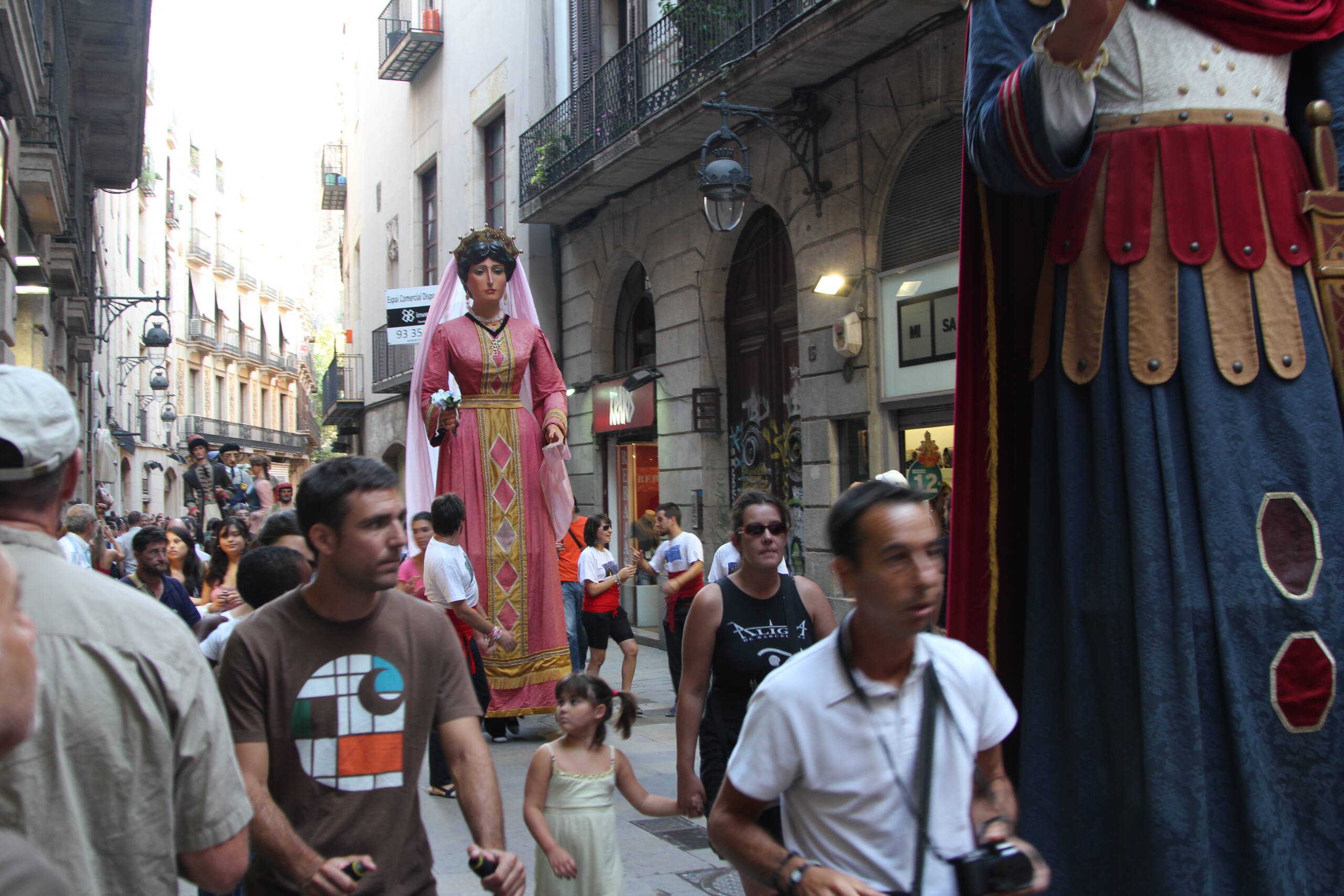
Giants in the Streets of Barcelona

Children craned their necks in awe, some gripping tightly to their parents’ hands, others daring to wave at the towering figures as though they might wave back. The little girl in front of me, wearing a light summer dress, held on tightly to her mother while gazing upward with wide eyes, caught between wonder and disbelief. Around them, people bustled along, some moving quickly as if trying to get ahead of the parade, others content to slow their pace and enjoy the spectacle.

These towering figures are known as gegants, a beloved tradition in Catalonia dating back to the Middle Ages. Originally linked to Corpus Christi processions, they evolved into a festive symbol of civic pride. Each giant typically represents historical or mythical characters—kings, queens, nobles, or even folkloric figures—brought to life during parades and festivals. Behind their grand presence is a local tradition of craftsmanship, as every gegant is carefully built and painted by artisans, then carried by skilled bearers who make them dance through the streets. For Catalans, they are not only entertainment but a living piece of cultural identity, linking communities to centuries of history.

What struck me most was how seamlessly this moment blended into the life of the city. The balconies overhead were filled with onlookers, just as they might be during a quiet evening, but today they leaned forward eagerly to watch tradition march through their streets. Shopkeepers stood at their doors, neighbors greeted one another, and tourists like me tried to capture every detail without missing the feeling of being part of it. It was a reminder that in Barcelona, history and festivity are not separate—both live and breathe in the daily rhythm of its neighborhoods.

As the giants disappeared down the street, their presence lingered, leaving behind a sense of shared celebration. I realized that here, festivals are not just spectacles for outsiders but living traditions deeply woven into the identity of the city. Watching the gegants sway to the beat of distant drums, I understood why Barcelona feels less like a destination and more like a place that welcomes you into its ongoing story.

Filed Under: News

Reader Interactions

Leave a Reply Cancel reply

Your email address will not be published. Required fields are marked *

Footer

Recent Posts

  • Why Lisbon Cafés Are Putting Up No Laptops Signs: Coffee, Instagram, and the Remote Work Terrace
  • Four in Ten Travelers Visit Landmarks Mainly for the Photo: How Instagram and Reels Reshaped Tourism
  • Why Comporta Still Feels Empty: The Rice Estate Behind Portugal’s Most Coveted Beaches
  • Travel in 2026: Five Photos That Explain the Year’s Real Trends
  • Tiny Tourism: Why Travellers Are Choosing Towns Nobody Photographs
  • In Defence of the Hop-On Hop-Off Bus
  • EasyJet Agrees £5.7bn Apollo Takeover: What Changes for Passengers and What Doesn’t
  • Taormina Beach Guide: Mazzarò, Isola Bella, and What Nobody Tells You About the Pebbles
  • Juliet’s Balcony in Verona Was Added in the 1930s and the Crowds Do Not Care
  • St Mark’s Basilica in Venice: The Gold Mosaics Are Dimmer Than the Photographs Suggest

Media Partners

  • Virtual Travel Guide
  • Ancient Rome
Sintra at Noon, Venice at Midnight: Six European Cities and the Hour That Suits Them
Porto’s Chestnut Season Is the Shoulder Season Worth Booking
Venice at Night Is the Version No Access Fee Covers
The 18th-Century Fountain Hidden Inside Bordeaux’s Customs Museum Courtyard
The Bilbao Effect, 500 Years Early: Jerónimos Monastery And The Guggenheim
Bilbao’s Quiet Renaissance: From Industrial Port to Design Destination
Lisbon’s Seven Hills: A Walking Guide That Tells You the Truth
New Orleans: An American City That Plays by Different Rules
Ha Long Bay Without the Cruise Brochure
Istanbul at the Threshold: A City That Has Always Been Two Things at Once
Sponsored Post
About
Contact
Roman Concrete in Museum Fragments: What the Cross-Section Actually Shows
Roman Sarcophagi Spent More Time as Fountains and Church Tombs Than as Graves
Aquincum Museum Reconstructs 16 Roman Faces From Skulls Found on Budapest's Danube Frontier
Roman Public Latrines Reveal an Empire That Built Sanitation Without Achieving Hygiene
The Pont du Gard: Rome's Most Perfect Structure
Water Across the Empire: Roman Aqueducts and the Hydraulic Logic of Conquest
Who Cleaned Roman Rome: The Social Economy of Waste

Media Partners

  • Media Forum
  • Market Analysis
SanDisk (SNDK) Rallied 11.9% Into an S&P 100 Add That Forces Almost Nobody to Buy
Texas A&M Is Spending $11.8 Million on a Water Tower Before Its Semiconductor Institute Can Open
Cloudflare's September 15 AI Crawler Block Turns the Ad Tag Into an Access Key
Pedro Sánchez Lost Control at Ceuta and Blamed Everyone Else
Three European Cities Where Architecture and Festival Collide
Duane Davis Convicted in Tupac Shakur's 1996 Murder
AI Content Licensing in 2026: Who Is Actually Getting Paid, and Who Never Will
Google AI Overviews and the Publisher Traffic Collapse: What the 2026 Numbers Actually Show
NBCUniversal Puts Peacock Inside YouTube Premium, and Concedes Where the Audience Already Lives
Nexstar Owns Tegna and Isn't Allowed to Run It: Inside the Hold-Separate Order
The Immersive Experience in the Museum World
Japan, China, and Taiwan: A New Triangle of Risk — and a Window of Opportunity for Japan
Ghost Kitchens as Infrastructure: The Shift from Restaurants to Intelligent Food Networks
The Zoom Divide Nobody Saw Coming
The Perfect Budget Content-Creator Kit
Reimagining Prague’s Tourism Future Through Immersive Media and VR Museums
Israel’s Urban Paradox: Tel Aviv Moves, the Rest Stand Still
American Express Global Business Travel (GBTG): Understanding the Business and the Investment Case
Why the Canon R8 Paired With the New RF 45mm f/1.2 Lens Quietly Becomes the Content Creator’s Sweet-Spot
The Future of Travel: A $15.5 Trillion Industry

Copyright © 2026 Travel Marketing

Media Partners: Timey · Publishing House · Ancient Rome · Photography · Calendarial · Transportational