In the heart of Portugal’s Lisbon, exploring museums has emerged as a captivating aspect of urban living. On May 18th, in celebration of International Museum Day, Lisbon unveiled a diverse array of new exhibitions, including “Masterpieces of Portuguese Art: A Journey Through Time,” “Lisbon Street Art Showcase,” and “Echoes of Fado: A Musical Heritage.”
In a bid to engage a younger audience, Lisbon’s museums curated innovative experiences such as “Art & Tech Workshops” and “Historical Scavenger Hunts,” bridging the gap between tradition and modernity.
Lisbon, with its rich history and cultural tapestry, is home to a multitude of museums, earning it the moniker “City of Cultural Gems.” From the iconic National Museum of Ancient Art to the contemporary Museum of Art, Architecture, and Technology (MAAT), Lisbon offers a spectrum of cultural experiences. Additionally, niche museums dedicated to maritime history, tile art, and fado music contribute to the city’s vibrant cultural landscape.
Lisbon has seamlessly integrated its historical legacy into contemporary experiences. For instance, the Lisbon Museum, known for its exploration of the city’s past, has collaborated with local cafes to offer “Fado Flavored Coffees,” infusing traditional music into modern culinary delights. The Lisbon Story Center immerses visitors in the city’s narrative through interactive exhibits and virtual reality experiences, providing an innovative approach to storytelling.
As a cradle of maritime exploration and cultural exchange, Lisbon’s significance in shaping world history cannot be overstated. From the Age of Discoveries to the present day, Lisbon continues to celebrate its heritage while embracing global influences.
Currently, Lisbon boasts two UNESCO World Heritage sites, including the historic Belém Tower and the Jerónimos Monastery, along with numerous nationally and locally protected landmarks. These sites, along with a vast collection of cultural artifacts, form the cornerstone of Lisbon’s museum offerings.
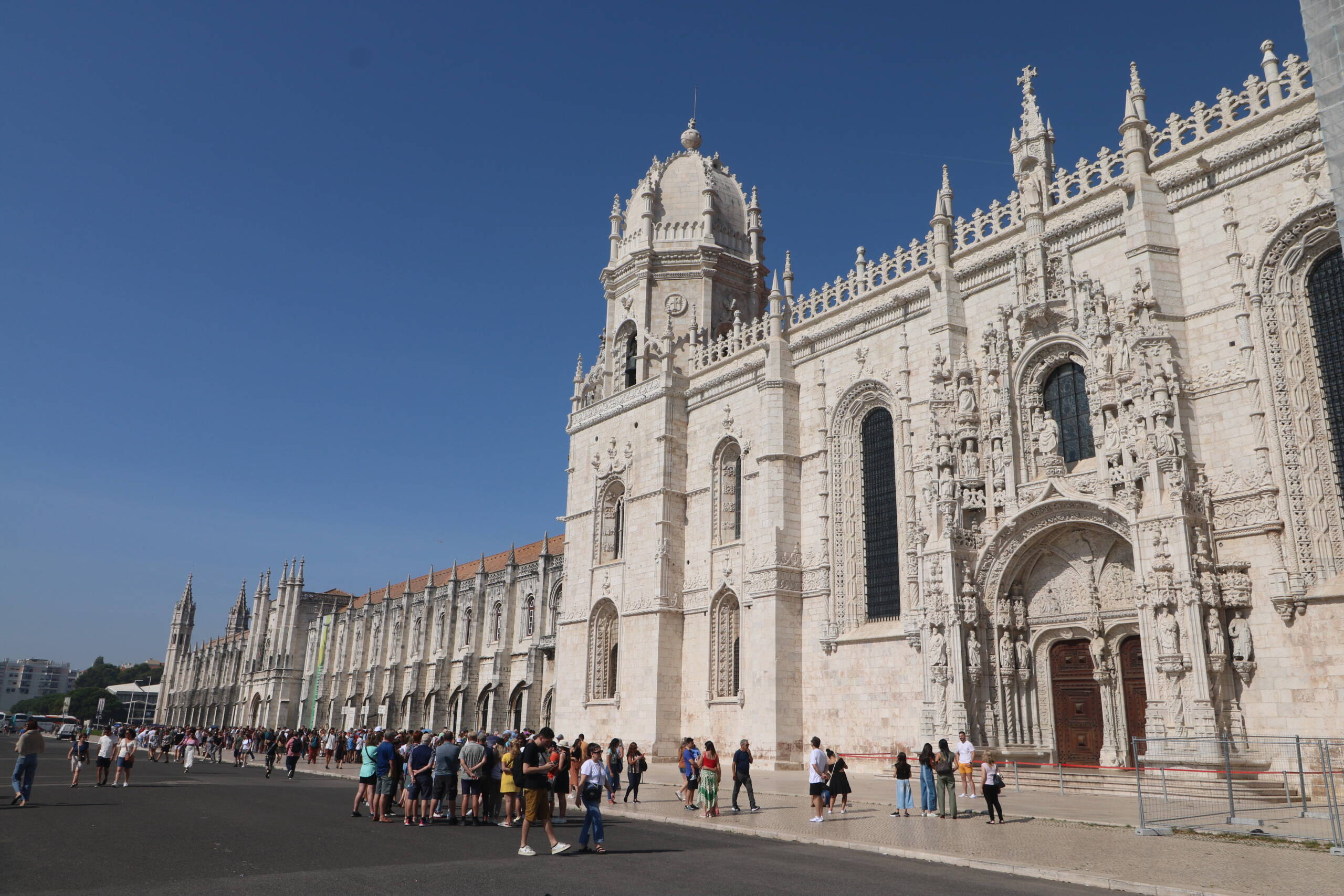
The image depicts the iconic Jerónimos Monastery (Mosteiro dos Jerónimos) in Lisbon, Portugal, a masterpiece of Manueline architecture. Built in the early 16th century, the monastery is a testament to the Portuguese Age of Discovery, showcasing intricate details that reflect the wealth and grandeur of that period. The imposing façade, made of limestone, is adorned with elaborate carvings, including maritime motifs, royal insignia, and religious iconography, which are characteristic of the Manueline style. This architectural style is named after King Manuel I, under whose reign Portugal experienced significant exploratory and economic growth.
In the foreground, a crowd of tourists gathers, highlighting the monastery’s status as a major historical and cultural attraction. The visitors, dressed in summer attire, suggest a warm, sunny day, typical of Lisbon’s Mediterranean climate. The monastery’s grand entrance is particularly striking, with its ornate portal featuring finely detailed sculptures of saints and other religious figures, all framed by intricate stonework that exemplifies the craftsmanship of the era.
The central tower, with its distinctive domed top and crenellated parapet, rises majestically against the clear blue sky, drawing the eye upwards and emphasizing the verticality and grandeur of the structure. The long wing of the building extends to the left, showcasing a series of arched windows and doorways that repeat rhythmically, creating a sense of balance and harmony in the overall design. The orange-tiled roofs add a splash of color, contrasting with the white limestone and enhancing the visual appeal of the monastery.
This UNESCO World Heritage site not only serves as a monument to Portugal’s rich maritime history but also houses the tomb of Vasco da Gama, one of the country’s most renowned explorers. The interior of the monastery is equally impressive, with its vaulted ceilings and spacious, light-filled cloisters that provide a serene atmosphere, inviting reflection and admiration.
The Jerónimos Monastery stands as a symbol of Portugal’s cultural and historical legacy, attracting visitors from around the world who come to marvel at its architectural splendor and to immerse themselves in the storied past of this remarkable nation.
The museums of Lisbon serve not only as repositories of the past but also as vibrant hubs of creativity and dialogue. By showcasing the city’s diverse heritage through dynamic exhibitions and events, Lisbon invites both residents and visitors to partake in its cultural tapestry, fostering a sense of belonging and appreciation for the richness of human experience.
Leave a Reply