Conferences are no longer dominated by the rigid rules of dark suits and polished shoes. Increasingly, they have become spaces where individuality, comfort, and practicality dictate the dress code. The image above captures this shift perfectly, showing a lively outdoor conference scene where participants express themselves through varied styles, ranging from smart casual to streetwear. Rather than a uniform, the modern conference look is eclectic, reflecting not only personal taste but also the changing culture of professional gatherings.
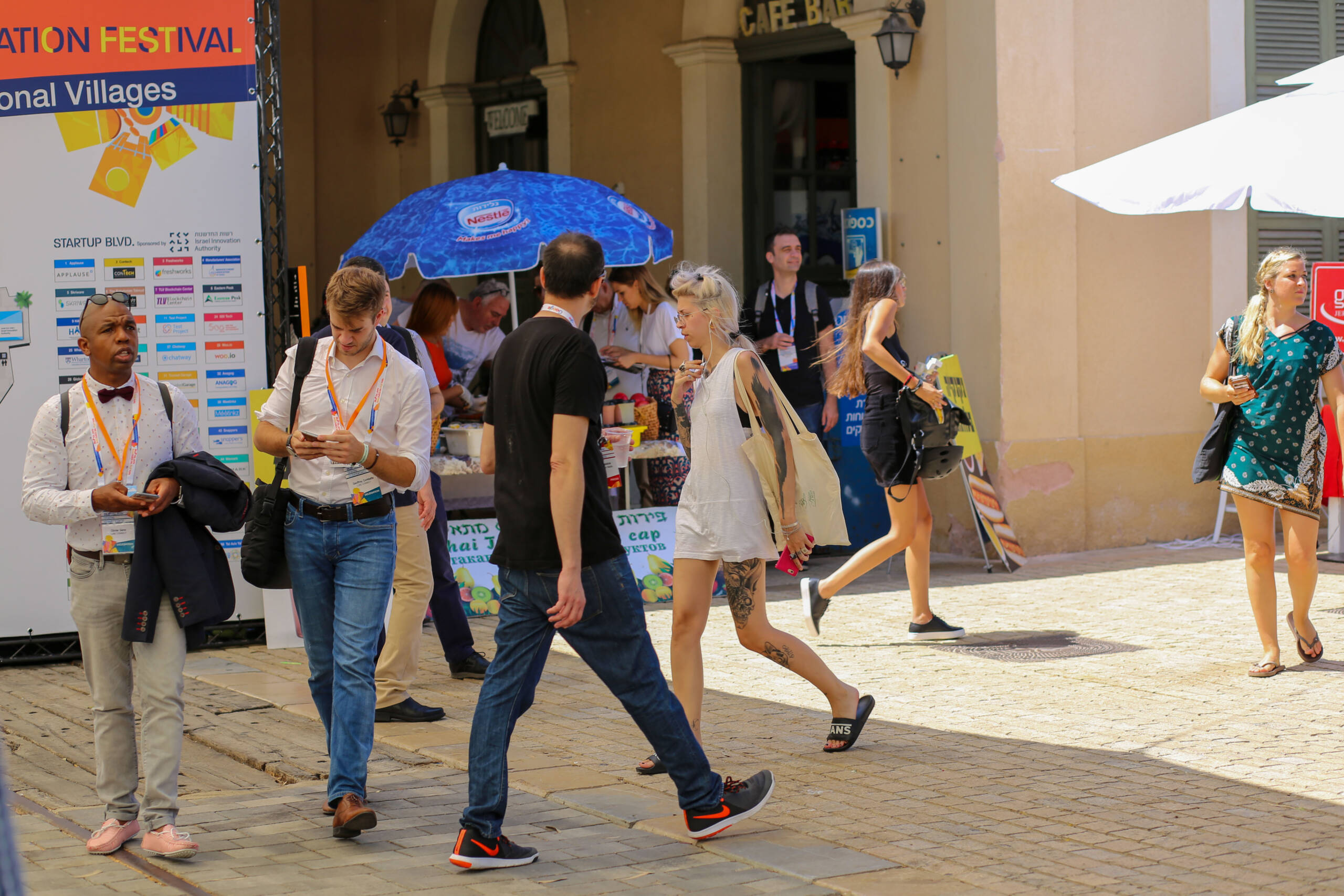
On the left, a man in a crisp white shirt with polka dots, bow tie, and tailored trousers represents a nod to formality, but softened by casual shoes and a relaxed posture. His outfit speaks of someone who wants to project professionalism but without the stiffness of traditional attire. Beside him, another participant opts for a plain white shirt tucked into jeans, rolled up sleeves, and casual brown shoes. He embodies a middle ground: neat enough for networking, yet relaxed enough to feel comfortable navigating long days of panels and side events. Both show how minimal changes—like swapping dress shoes for sneakers or leaving the tie at home—signal a shift toward an informal but still professional look.
The center of the frame reveals an entirely different approach. A man in a black T-shirt, jeans, and running shoes is the embodiment of tech-conference casual, where comfort and confidence in expertise replace the need for sartorial display. Standing near him, a woman in a loose white dress and tote bag, with tattoos and a nonchalant hairstyle, reflects the growing acceptance of individual expression at such events. Her outfit says she is present for ideas, not for corporate dress codes, and she does not need to compromise her identity to participate.
Toward the right, a woman in a short green patterned dress balances smartness and ease, phone in hand, walking with a casual air that fits perfectly with the sunlit outdoor setting. The diversity of outfits around her highlights the central point: conferences are now less about enforcing conformity and more about allowing each participant to dress in ways that fit their roles, their comfort, and their personalities.
What emerges from this image is not a lack of dress code but rather a new informal standard: be comfortable, be yourself, and look approachable. Sneakers are now more common than oxfords, tote bags more frequent than briefcases, and tattoos or personal accessories no longer draw curious stares. The expectation is not uniformity, but authenticity. Attendees no longer need to dress to fit into an old corporate mold—they dress to fit into conversations, collaborations, and connections.
The modern informal conference dress code signals a cultural shift in professional spaces. It recognizes that ideas matter more than appearances, and that individuality fosters openness and creativity. Conferences are where innovation is discussed, and it makes sense that the people driving those ideas show up not bound by strict attire but freed by a sense of casual professionalism. In that spirit, the eclectic mix of bow ties, jeans, sundresses, tattoos, and sneakers isn’t just fashion—it is the new language of networking.
Leave a Reply