Ice Cream, Selfies, and the Emily-in-Parisification of Travel
There’s a very particular strain of travel culture that has metastasized across Europe’s most beautiful cities, and it has little to do with the actual cities themselves. It’s the Emily-in-Paris school of tourism, where the world is nothing more than a set waiting for your starring role, and the script is already written by Instagram before you’ve even landed. You know the drill: buy an ice cream, hold it up like it’s a sacred relic, and snap a selfie that proves not that you’ve savored the flavor, but that you’ve participated in a ritual as banal as it is universal. The cone isn’t dessert—it’s a prop, one more accessory in the costume of the “spontaneous” traveler.
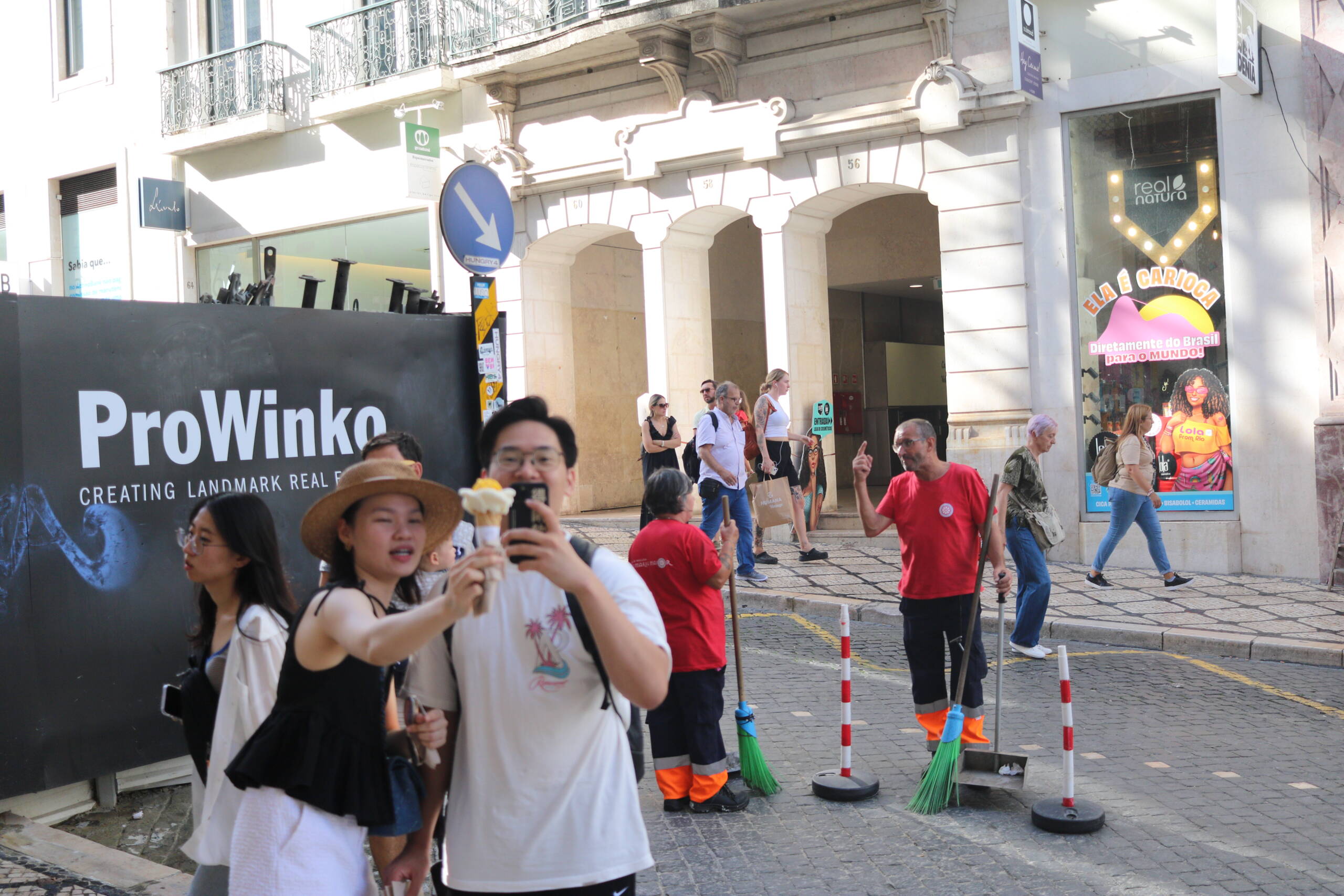
This scene in Lisbon captures it perfectly. Two tourists beam at the camera, cones aloft, capturing what they no doubt imagine is the quintessential moment of European joy. The city itself? Reduced to a blurred backdrop. The rhythm of the street? Ignored. The fact that a weary street cleaner is standing inches away, broom in hand, offering the kind of side-eye that could cut glass? Invisible. And that’s the crux of it—when travel becomes a performance, the actual details of the place fade into the background. The cobblestones, the light, the cadence of locals chatting—none of it makes the cut if it doesn’t fit the Instagram aesthetic.
And ice cream selfies are just the gateway drug. The catalog of selfie banalities is endless. The “throwing a coin in the fountain” shot, recycled from Rome to any vaguely fountain-like structure worldwide. The “holding up the Leaning Tower of Pisa” pose, where originality goes to die. The “back to the camera, arms spread wide” stance, usually on a cliff, temple, or viewpoint, screaming “I’m free” while actually imprisoned by the need to document freedom. The “duck face by a mural” shot, as if your pout is somehow elevating the street art. And of course, the ubiquitous “clinking Aperol spritz glasses at golden hour” tableau, carefully staged to look candid but choreographed down to the last condensation droplet.
Each one is an act in the same tired play. The tourist, chasing not the place itself but the reproduction of a fantasy. The destination doesn’t matter—Lisbon, Paris, Barcelona, Santorini—it all collapses into one interchangeable set where the story is less about travel than it is about lifestyle branding. Emily-in-Paris culture thrives on this sameness: every experience distilled into a digestible snapshot, ready for the algorithm’s approval. And the saddest part is that these banalities flatten places with deep histories, strange corners, and unpredictable charms into nothing more than backdrops for soft-serve cones and pastel dresses.
Meanwhile, life continues around them. Locals walk past with shopping bags, workers sweep the streets, elderly men shuffle by with decades of stories written into their steps. The real Lisbon hums in the background, unseen, because no one is pausing to actually notice it. You leave with a gallery full of photos that could have been taken anywhere, but no memory of what the air smelled like, what song drifted out of a doorway, or how the cobblestones felt underfoot.
Don’t be these tourists. Don’t reduce your trip to a moodboard of clichés. Ice cream will melt, likes will fade, but the texture of the place—the overheard conversations, the unposed glances, the stubborn little details you didn’t expect—those are what linger. Trade in the cone for a moment of actual curiosity. Stop starring in your own Emily-in-Paris remake, and start being present in a city that deserves better than being just another square on your feed.
Leave a Reply