Few journeys are as rewarding as those made in search of food. For the true foodie, the streets of a city become a living menu, every turn and corner revealing a new flavor, a new aroma, a new invitation to taste life as locals do. Culinary tourism is not just about sampling dishes; it is about entering into a dialogue with culture, history, and people through something as universal yet profoundly unique as street food. To wander a market alley at dawn, hear the sizzling of skewers over open flame, and breathe in the perfume of spices rising from a pan is to know a city far more deeply than any museum visit could provide.
Street food tells stories of migration and memory. A banh mi sandwich in Saigon whispers of colonial encounters between French baguettes and Vietnamese herbs. Tacos al pastor in Mexico City carry the trace of Lebanese immigrants, where shawarma’s vertical spit was reborn in a new form, kissed by chilies and pineapple. The humble samosa sold from a roadside stall in Delhi reveals centuries of spice trade routes, its fillings of potato and peas wrapped in a crisp shell that has crossed cultures. When you taste these dishes at their source, you taste not only food but the layers of history that carried it to your plate.
There is also an intimacy to eating on the streets. It is food stripped of ceremony, where the transaction is brief but the exchange is rich. A vendor hands you a steaming bowl of noodles, and in that moment you share the same flavors their family has cooked for generations. The act of eating with your hands, leaning against a stall, or sitting on a tiny plastic stool reminds you that food is not always meant to be consumed in polished dining rooms. Instead, it is alive in the chaos of streets, in laughter of children pulling their parents toward a favorite cart, in the quiet pride of cooks perfecting the same recipe day after day.
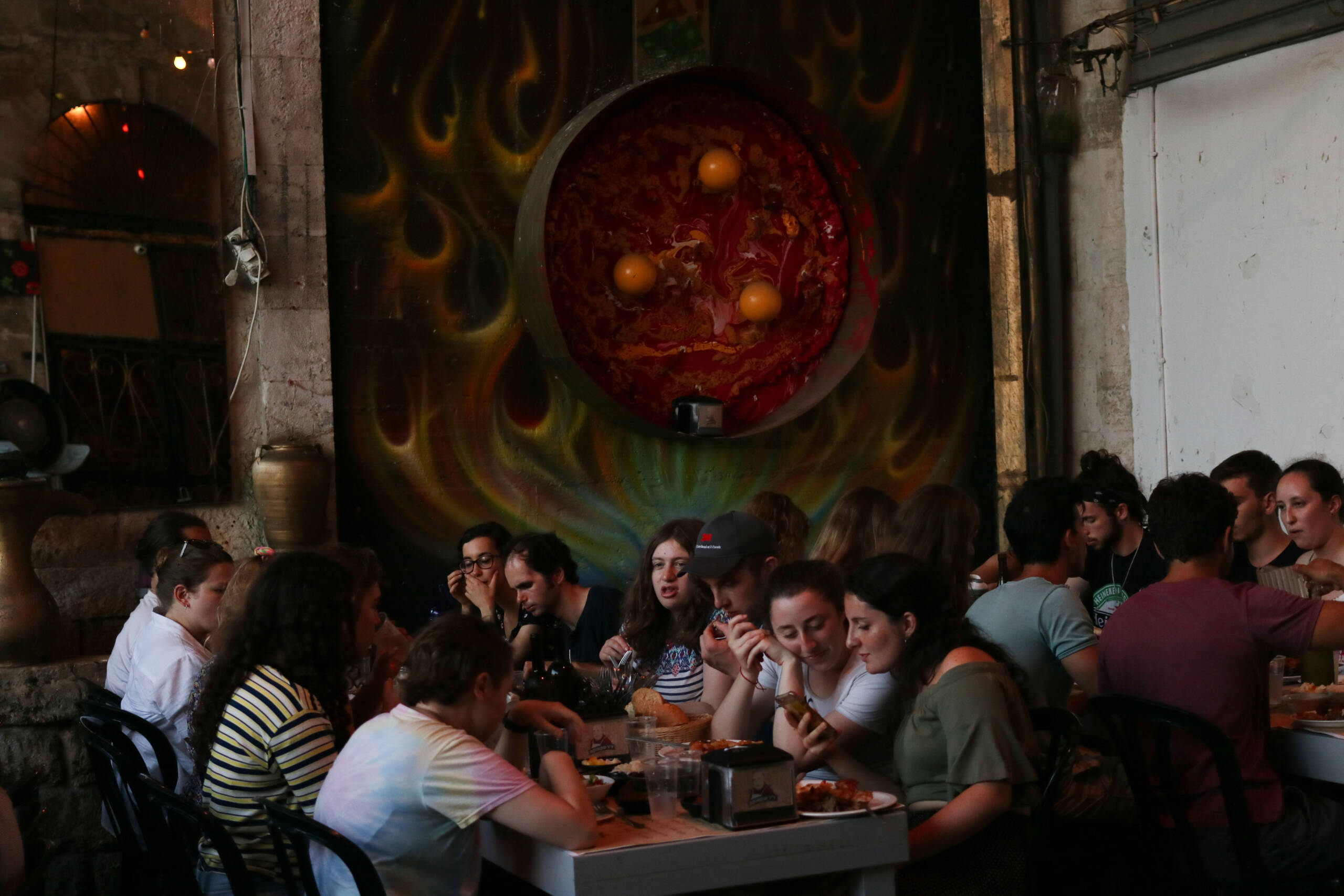
Sometimes this culinary pilgrimage brings you indoors to places that feel like an extension of the street itself, where food, art, and community collide. Take, for example, Dr. Shoukshuka in Jaffa, Tel Aviv, where a giant mural of a fiery shakshuka pan dominates the wall, its glowing yolks painted against swirls of molten red, encircled by flames that echo the dish’s sizzling essence. Beneath it, long tables are crammed with diners—locals and travelers alike—leaning in over bubbling pans of shakshuka, tearing bread, passing plates, and laughing as conversations overlap. The room hums with life, and the mural becomes more than decoration; it is a reminder of the dish’s central place in the gathering. This scene captures the true spirit of culinary tourism: immersion, community, and the joyful chaos of shared meals that blur the line between restaurant and street corner.
For travelers, chasing street food is a way of collapsing distances. You learn to find comfort in the unspoken language of pointing at what looks good, of mimicking the locals, of trusting your nose. There is no translation needed for the crunch of tempura skewers in Osaka’s neon-lit alleys, or the soothing sweetness of mango sticky rice wrapped in banana leaf on a humid Bangkok night. These experiences are not curated—they are raw, spontaneous, sometimes messy—but they become etched into memory because of their authenticity.
Culinary tourism through street food is also a lesson in humility. Not every dish will match your expectations, and sometimes the boldness of flavors may overwhelm you. Yet, each attempt is part of the adventure. You may not know the name of the vendor who served you broth so rich it seemed to stop time, but you will remember the taste long after you have left. The unpredictability of street food—whether it is stumbling upon the perfect empanada in Buenos Aires or a bowl of pho at a Hanoi dawn—reminds you that travel is less about control and more about surrendering to experience.
Ultimately, the quest for street food is a quest for connection. Through it, you step beyond the role of a tourist and begin to live the rhythm of the city as it is lived by those who call it home. To savor a dish at its birthplace is to honor the hands that prepared it, the community that sustained it, and the culture that shaped it. In that sense, culinary tourism is never just about eating. It is about belonging, if only for a fleeting moment, to the world you are exploring.
Leave a Reply