There are landmarks you tick off a list, and then there are places that insist on lingering, slipping into your thoughts long after you’ve gone. Belém Tower belongs to the second kind. It doesn’t just stand on the Tagus River—it breathes with it. You notice it immediately as you step toward the promenade: the light bouncing off Lisbon’s water has that silvery shimmer unique to this city, a glow that makes even the hardest limestone seem alive. The tower rises not as a relic but as a companion to the river, a watchful sentinel that has learned to soften with age.
Walking up, the soundscape shifts around you. The clanging bells of Tram 15 echo faintly from the Avenida da Índia, mixing with the laughter of families strolling along the waterfront. A street musician plucks a Portuguese guitar nearby, his notes floating oddly well with the cries of gulls circling above. Then, the scent arrives—the unmistakable caramelized sugar and warm custard wafting from Pastéis de Belém, carried by the breeze all the way to the tower. You catch yourself smiling: history may be serious, but Lisbon insists on serving it with dessert.
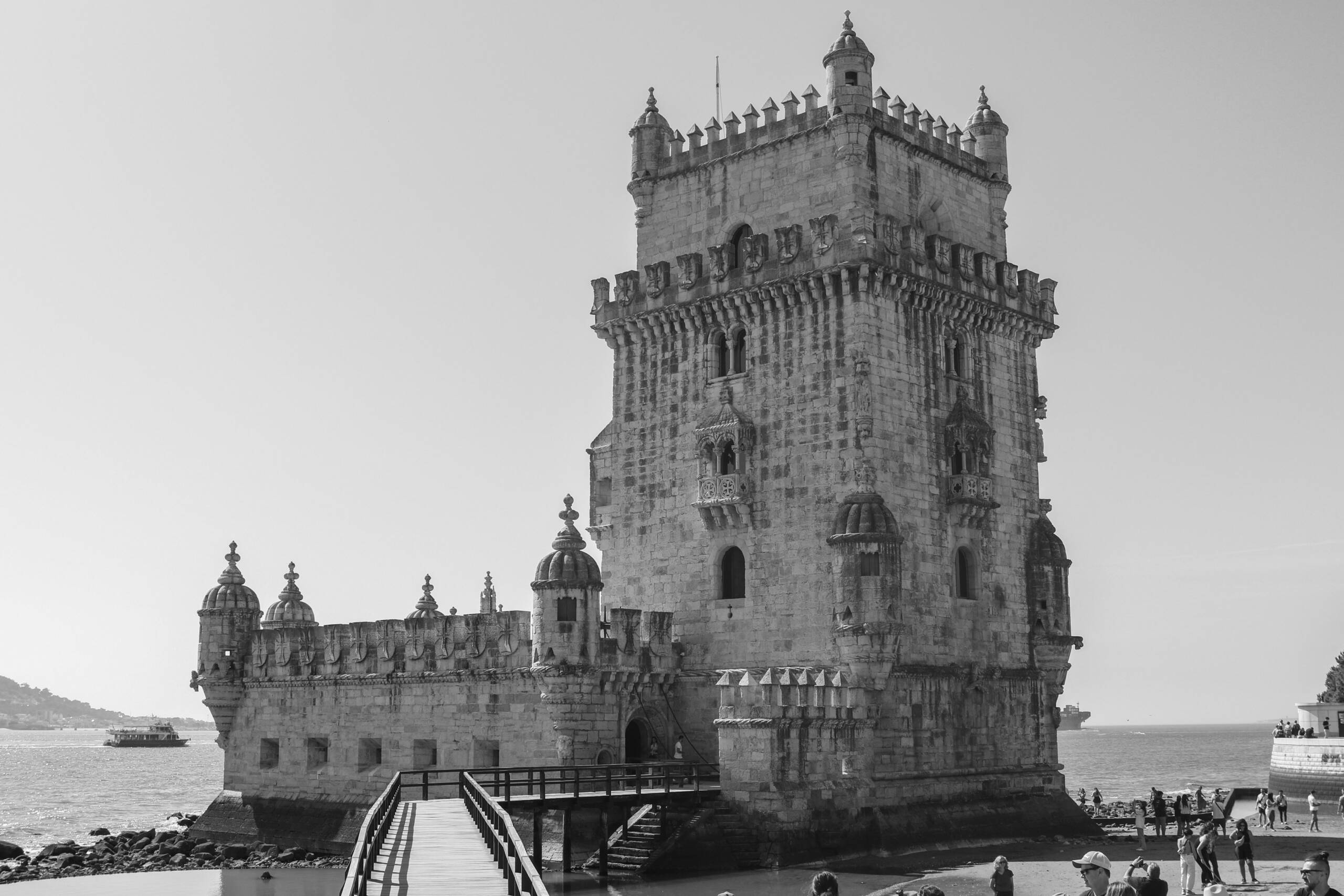
The cobblestones leading up to the wooden footbridge are uneven, patched by time and countless footsteps. They tell their own story—sailors, traders, soldiers, priests—all funneling through this same threshold. Crossing the bridge, there’s a hush that falls, not because it’s quiet (tourists still chatter and pose for photos) but because the stone itself demands a little reverence. The Manueline flourishes—ropes carved into walls, corals and twisted knots turned into frozen lace—remind you that this was not just a fortress. It was decoration for the edge of the world, Lisbon showing off its confidence to the seas.
Inside, the atmosphere thickens. The cool damp of stone clings to your skin, and narrow staircases spiral upwards, designed more for defense than comfort. When you emerge onto the battlements, the view expands in every direction. To the west, the Atlantic waits like a vast unfinished sentence. To the east, the city unfolds—red rooftops, tram lines, and the hulking silhouette of the 25 de Abril Bridge. Boats glide past below, small and leisurely, a far cry from the caravels that once left this river mouth carrying Lisbon’s ambitions and, often, its contradictions.
It’s those contradictions that make Belém Tower so magnetic. It was built for war, yet it is beautiful. It was once the symbol of empire, and now it is a backdrop for wedding photos. Children splash in the shallow water at its base where cannons once pointed outward. Elderly couples sit on benches nearby, squinting against the sun as they share roasted chestnuts wrapped in paper cones. The tower has learned to trade vigilance for hospitality, but it hasn’t lost its gravitas. Instead, it holds history loosely, letting it mingle with the hum of the present.
As evening approaches, the tower changes again. The Lisbon light softens into gold, washing its walls with warmth. Shadows stretch long across the promenade, and the river takes on a metallic sheen. The gulls quiet, replaced by the rhythmic splash of oars as rowers cut across the Tagus. A ferry whistles from upriver, its sound carrying like a reminder that this river has always been about movement, departures, arrivals. Standing there, it’s easy to feel the pull of the horizon, to imagine yourself in that liminal moment sailors once knew—the breath between leaving and arriving, between fear and courage.
Belém Tower is not just architecture, nor just a tourist stop. It is a threshold in stone, where the weight of the past meets the urgency of the present. To stand before it is to feel the strange intimacy of history brushing against your own small story. It whispers, in the way only old places can: the world is still out there, wide and uncharted, and your own departure—whatever form it takes—may begin right here, in the Lisbon light, with the scent of custard in the air and the Tagus glittering at your feet.