• Skip to main content
  • Skip to secondary menu
  • Skip to footer

Travel Marketing

Travel and Tourism Trends

  • Sponsored Post
  • Travel Event Calendar
  • Travel Market
  • Travel Magazine
  • About
  • Contact

Beer Pilgrimage: Eastern Europe, Breweries, and the Quiet Art of Fermentation

November 22, 2025 By admin Leave a Comment

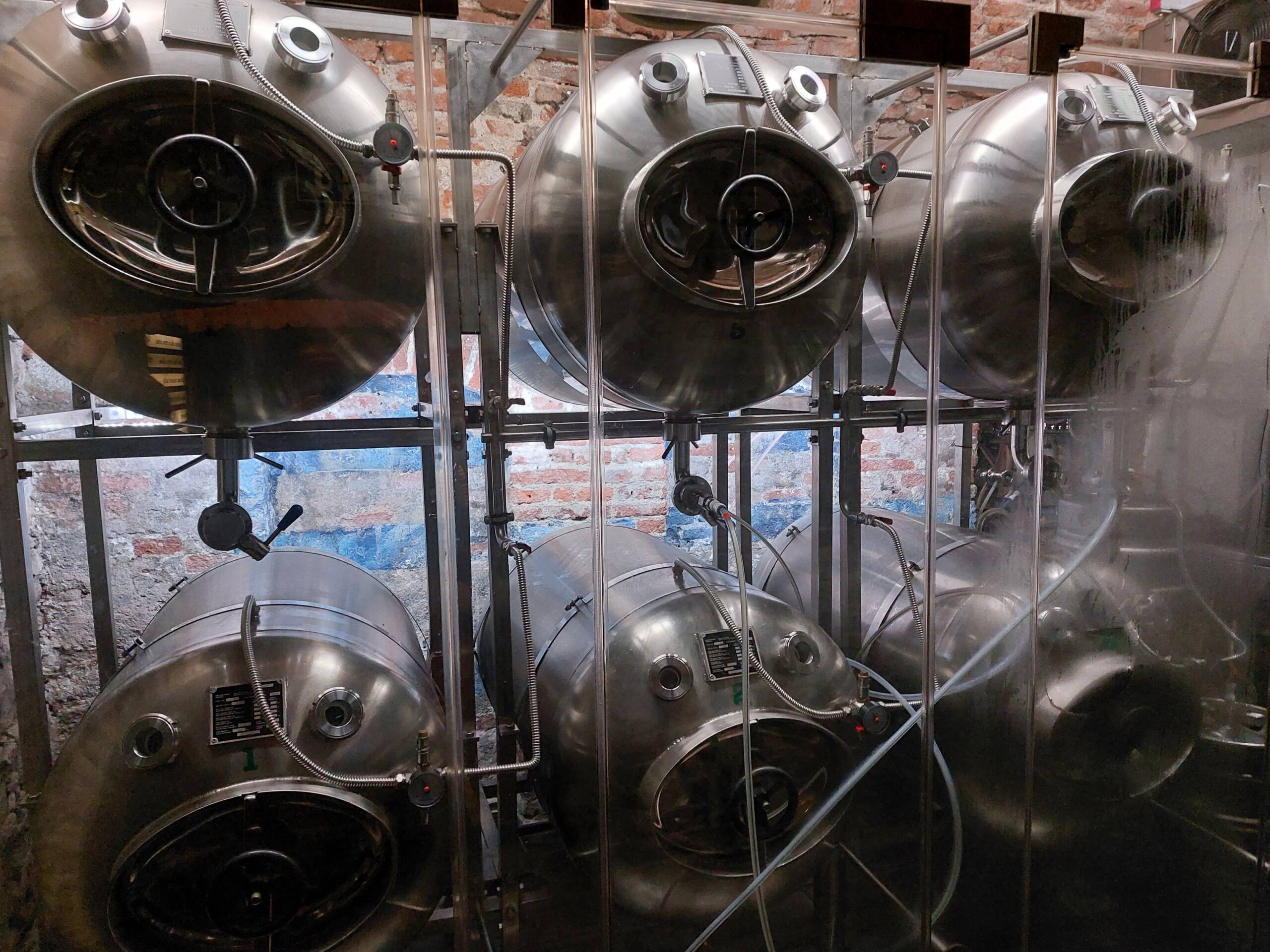
There’s a kind of poetic honesty in this scene — rows of cold stainless-steel fermentation tanks pressed against an exposed brick wall, the light bouncing off them in dull silver reflections. The pipes curve like veins, gauges stare like watchful eyes, and the glass barrier separating viewer from machinery feels almost ceremonial, like approaching an altar. It smells industrial and ancient at the same time — even just through imagination — metal, yeast, damp stone. This is what the beating heart of beer looks like before it becomes clinking glasses and laughter.
Beer Pilgrimage: Eastern Europe, Breweries, and the Quiet Art of Fermentation

Eastern Europe treats beer differently. Not flashy, not overly branded, just quietly serious. Brewing here is heritage, ritual, and sometimes even an understated rebellion against mass-produced sameness. If someone ever wanted to follow beer across borders — not as a pub crawl but as cultural anthropology — this region is pretty much the perfect starting point.

A trip like that could begin in Prague because Pilsner isn’t merely a style here, it’s practically a birthright. You sit in a dark wooden pub and the beer arrives with a three-finger head, creamy and slow, poured by someone who genuinely cares. Breweries worth seeking: Pilsner Urquell (Plzeň) for the original unfiltered tank beer, and Vinohradský Pivovar, which feels modern but grounded in tradition. Prague also has a thriving craft scene: Matuška, Bad Flash, Sibeeria — each adding a contemporary layer to centuries of brewing instinct.

From there, trains naturally pull you toward Bavaria and Austria, but skipping east is more interesting. Poland has quietly become a craft powerhouse, with Wrocław, Kraków, and Warsaw leading the transformation. Breweries like Browar Stu Mostów, PINTA, and Brokreacja experiment boldly but without losing the earthy sensibility Polish beer carries. There’s rye, smoke, forest honey — flavors shaped by landscape, not marketing.

Farther south, Hungary and Slovakia are still finding their craft beer voice, which weirdly makes them fascinating. Budapest offers First Craft Beer, Mad Scientist, and Horizont, each with a playful identity but a firm technical foundation. In Slovakia, Zlatý Bažant‘s heritage contrasts beautifully with newer names like Hellstork, which specializes in intense, personality-driven brews.

Then comes the grand finale: the Balkans. Serbia’s Kabinet Brewery, Romania’s Hop Hooligans, Croatia’s The Garden Brewery — these aren’t just breweries, they’re movement catalysts. The quality jumps exponentially each year. In these places, beer culture is happening in real-time, evolving quickly, driven by ambitious young brewers often trained elsewhere but determined to build regional identity.

A possible itinerary — loose, flexible, and beer-forward — could follow a rhythm rather than a route: spend two nights in each city. One evening in a historic brewery, one in a modern craft taproom. Days between spent walking old town squares, castle hills, industrial neighborhoods turned cultural districts. Travel slow enough that the beer becomes memory rather than tally.

By the time the journey ends, you’d notice a pattern: even the most shiny, modern brewery — like the one staring through that glass in the photo — still feels deeply tied to soil, climate, and history. Steel tanks or wooden barrels, it’s the same ancient story evolving with new tools.

And honestly, there’s something comforting in that — how yeast and time can turn grain into culture.

Filed Under: News, Travel Magazine

Reader Interactions

Leave a Reply Cancel reply

Your email address will not be published. Required fields are marked *

Footer

Recent Posts

  • In Defence of the Hop-On Hop-Off Bus
  • EasyJet Agrees £5.7bn Apollo Takeover: What Changes for Passengers and What Doesn’t
  • Taormina Beach Guide: Mazzarò, Isola Bella, and What Nobody Tells You About the Pebbles
  • Juliet’s Balcony in Verona Was Added in the 1930s and the Crowds Do Not Care
  • St Mark’s Basilica in Venice: The Gold Mosaics Are Dimmer Than the Photographs Suggest
  • China Fines Trip.com $770 Million for Locking Hotels Into Exclusive Deals
  • Château de Monbazillac, Dordogne: A difficult childhood. One château too many.
  • Fora Hits $1 Billion Valuation as AI Transforms the Future of Travel Planning
  • The Open Kitchen Experience: Dining Where You Can Watch the Cooking
  • Holland America Line Adds Flåm and Hellesylt to Five 2027 Norway Fjord Cruises

Media Partners

  • Virtual Travel Guide
  • Ancient Rome
Venice at Night Is the Version No Access Fee Covers
The 18th-Century Fountain Hidden Inside Bordeaux’s Customs Museum Courtyard
The Bilbao Effect, 500 Years Early: Jerónimos Monastery And The Guggenheim
Bilbao’s Quiet Renaissance: From Industrial Port to Design Destination
Lisbon’s Seven Hills: A Walking Guide That Tells You the Truth
New Orleans: An American City That Plays by Different Rules
Ha Long Bay Without the Cruise Brochure
Istanbul at the Threshold: A City That Has Always Been Two Things at Once
Iceland’s Ring Road: What the Drive Teaches You That No Photograph Can
Marrakech’s Medina: How to Read a City That Was Not Designed for You
Sponsored Post
About
Contact
Roman Concrete in Museum Fragments: What the Cross-Section Actually Shows
Roman Sarcophagi Spent More Time as Fountains and Church Tombs Than as Graves
Aquincum Museum Reconstructs 16 Roman Faces From Skulls Found on Budapest's Danube Frontier
Roman Public Latrines Reveal an Empire That Built Sanitation Without Achieving Hygiene
The Pont du Gard: Rome's Most Perfect Structure
Water Across the Empire: Roman Aqueducts and the Hydraulic Logic of Conquest
Who Cleaned Roman Rome: The Social Economy of Waste

Media Partners

The Immersive Experience in the Museum World
Japan, China, and Taiwan: A New Triangle of Risk — and a Window of Opportunity for Japan
Ghost Kitchens as Infrastructure: The Shift from Restaurants to Intelligent Food Networks
The Zoom Divide Nobody Saw Coming
The Perfect Budget Content-Creator Kit
Reimagining Prague’s Tourism Future Through Immersive Media and VR Museums
Israel’s Urban Paradox: Tel Aviv Moves, the Rest Stand Still
American Express Global Business Travel (GBTG): Understanding the Business and the Investment Case
Why the Canon R8 Paired With the New RF 45mm f/1.2 Lens Quietly Becomes the Content Creator’s Sweet-Spot
The Future of Travel: A $15.5 Trillion Industry

Copyright © 2026 Travel Marketing

Media Partners: Timey · Publishing House · Ancient Rome · Photography · Calendarial · Transportational