The scene unfolds inside the controlled chaos of a travel trade show hall, yet this corner feels oddly grounded, almost anchored to the desert rather than the polished concrete floor beneath it. At the Bedouin hospitality stand, color does most of the talking first: deep reds, greens, and blacks woven into thick striped textiles that drape over counters and spill onto the floor as rugs. These fabrics don’t try to look decorative in a curated way, they look used, practical, familiar, like they belong somewhere outdoors under an open sky. The booth itself is busy but unhurried, a small island of ritual inside the transactional rhythm of IMTM 2026.
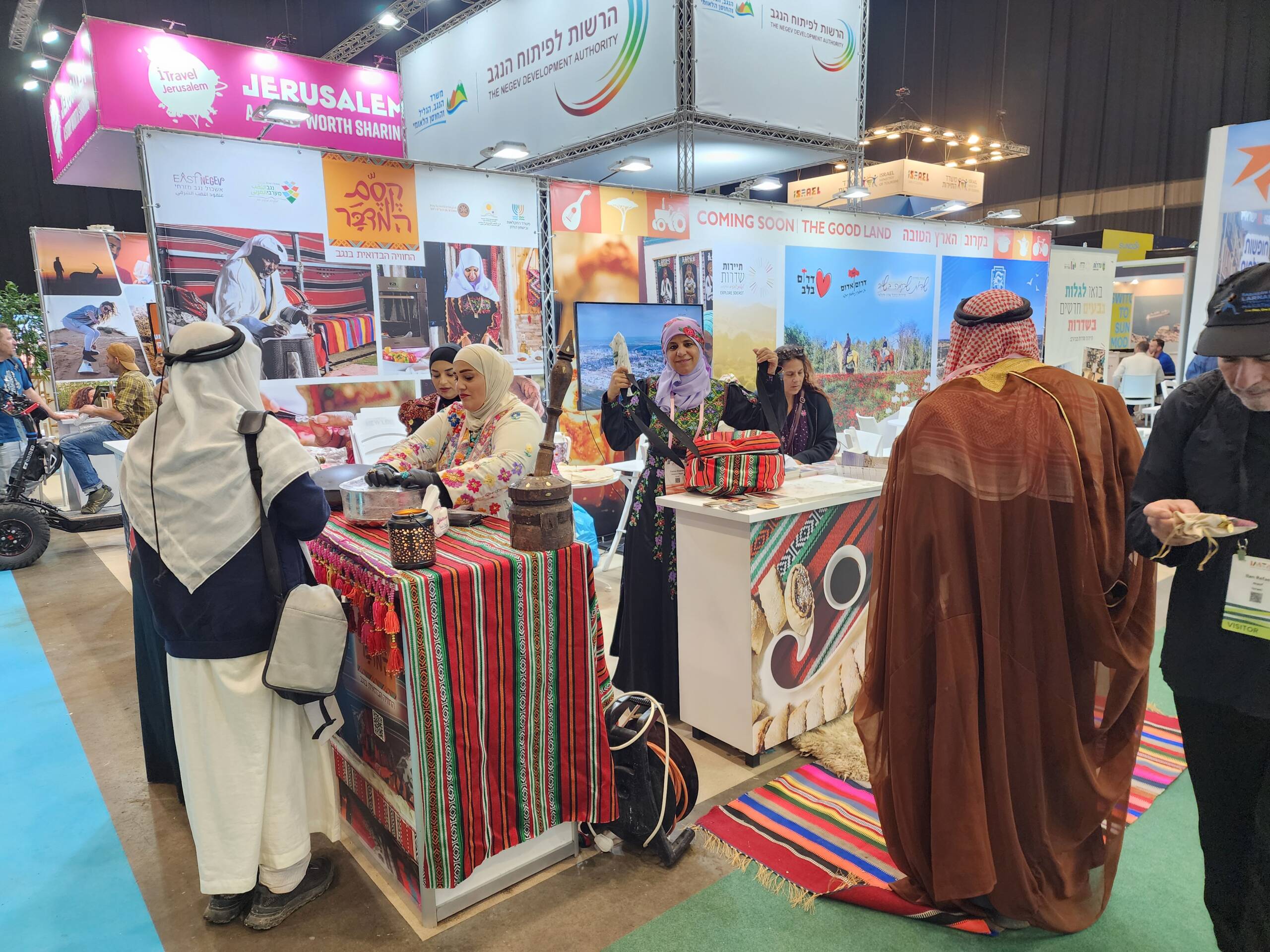
Women in traditional dress stand behind the counters, their movements confident and practiced. One stirs a pot with quiet focus, another lifts a long wooden tool as if mid-explanation, smiling slightly as visitors lean in. Their embroidered garments carry floral patterns and layered colors that echo the images on the backdrop behind them: desert landscapes, fields in bloom, hands at work, faces marked by sun and time. The backdrop reads like an invitation rather than an advertisement, less about destinations and more about people. Nearby, a man in a brown robe and keffiyeh waits patiently, while another visitor accepts a small offering, the exchange intimate despite the crowd pressing past just a few steps away.
What makes the moment work, and why it matters in a marketing context, is how little it tries to sell in the conventional sense. No screens flashing itineraries, no glossy slogans fighting for attention. Instead, the offer is sensory and slow. The smell of brewed coffee or herbs, the weight of a cup in the hand, the texture of fabric under the fingers. Conversations happen face to face, not over QR codes. For travel brands, especially those representing regions that are often reduced to headlines or abstractions, this kind of presence does something brochures rarely manage. It reframes the narrative from place-as-product to culture-as-experience, quietly but firmly.
At IMTM 2026, where much of the floor is about recovery, routes, capacity, and numbers, the Bedouin hospitality stand feels like a reminder of why people travel at all. Not for the checklist, not for the hotel points, but for moments of contact that feel genuine and uncompressed. It’s marketing, yes, but marketing through memory-in-the-making. You don’t leave this stand with a flyer you’ll forget in your bag; you leave with the taste of something warm, a brief human exchange, and a story you’re already halfway to retelling. That, in the end, is a far stronger call to travel than any slogan could hope to be.
Leave a Reply