• Skip to main content
  • Skip to secondary menu
  • Skip to footer

Travel Marketing

Travel and Tourism Trends

  • Sponsored Post
  • Travel Event Calendar
  • Travel Market
  • Travel Magazine
  • About
  • Contact

Rynek, Wrocław — A Square That Breathes in Stone and Sky

March 17, 2026 By admin Leave a Comment

The frame opens wide, almost exaggeratedly so, like the lens itself wanted to capture more than just a square and ended up bending the edges of reality a little. The cobblestones stretch outward in a gentle curve, darkened by recent rain, each stone reflecting fragments of the pale sky above. At the heart of it all stands the ornate façade of Wrocław Town Hall, a structure that feels less like a single building and more like a composition—Gothic ambition layered with decorative excess, spires rising unevenly, details accumulating rather than aligning.
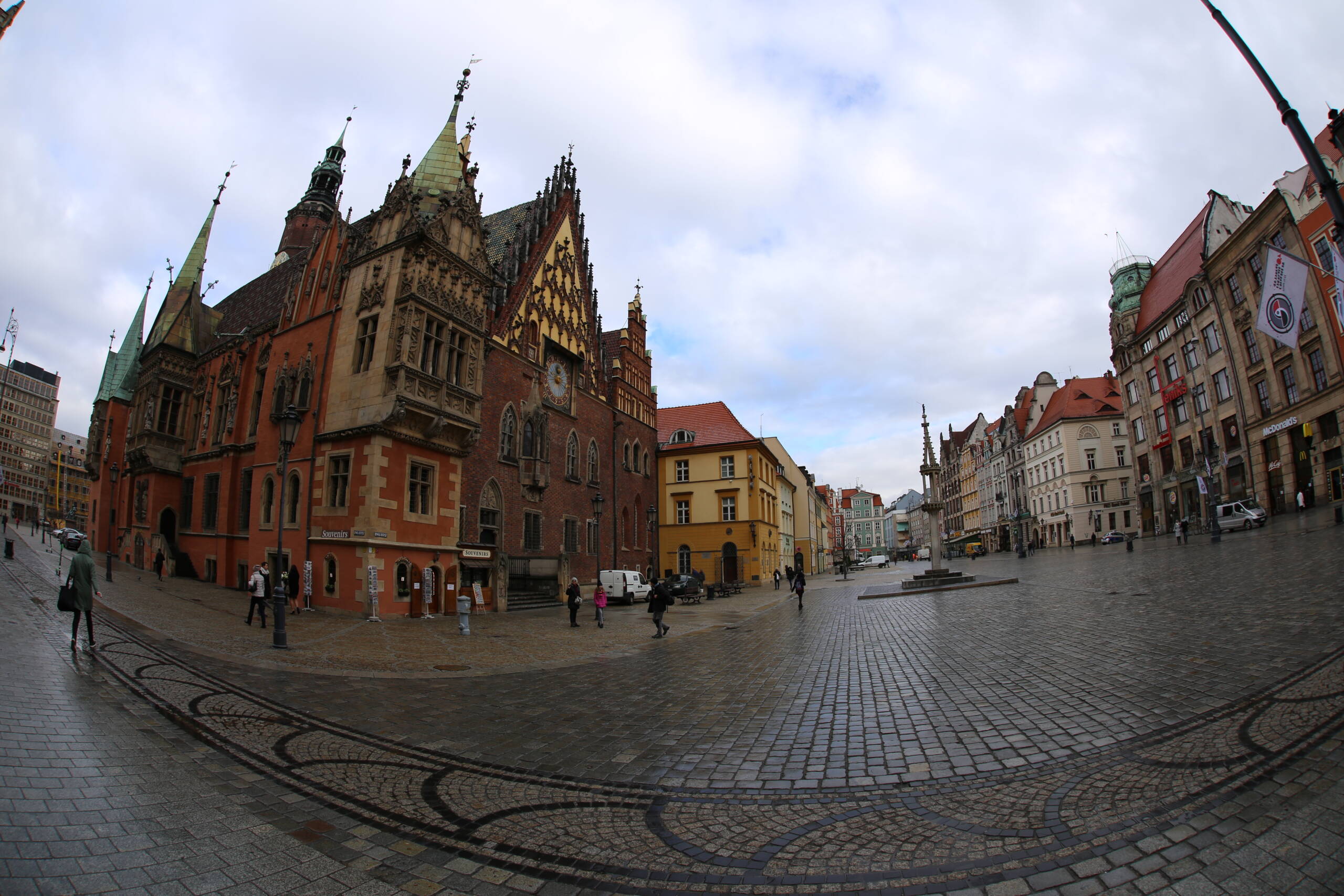
Rynek, Wrocław

The Town Hall’s clock face sits embedded in a richly textured wall, surrounded by patterns that seem almost too intricate to process at once. Its steep roofline, dotted with greenish spires and copper elements aged into that familiar patina, leans into the sky with a kind of medieval confidence. There’s something slightly asymmetrical about it, and that imperfection gives it life. You can almost imagine craftsmen adding elements over decades, maybe arguing about proportions, maybe not caring too much as long as it looked impressive enough.

Around it, the square of Rynek opens generously, unusually spacious, almost theatrical in scale. The buildings lining the edges—painted in soft yellows, muted greens, pale reds—form a pastel perimeter that contrasts with the darker, heavier presence of the Town Hall. Their façades are more restrained, but still detailed, each one carrying a slightly different rhythm of windows and rooflines, like a row of personalities standing side by side.

People move through the scene in small, unhurried paths. A few figures cross the square, their reflections briefly visible in the wet stone before dissolving. Someone pauses near the base of the building, maybe checking a phone, maybe just taking in the view. The openness of the space creates this odd calm—despite being a central square, it doesn’t feel crowded, just… expansive. The kind of place where footsteps echo a bit more than expected.

The wide-angle perspective exaggerates the distance between elements, pulling the viewer slightly into the scene. The curve of the cobblestones in the foreground feels almost like a visual guide, leading inward toward the Town Hall, then outward again toward the surrounding streets. It’s not just a photograph of Wrocław, it’s a sense of spatial memory—the way the square feels when you stand in it, not just how it looks.

And maybe that’s what stays with you. Not a single architectural detail, not even the Town Hall itself, but the way the space holds everything together—the damp air, the softened light, the quiet movement of people across centuries-old stone.

Filed Under: News

Reader Interactions

Leave a Reply Cancel reply

Your email address will not be published. Required fields are marked *

Footer

Recent Posts

  • Taormina Beach Guide: Mazzarò, Isola Bella, and What Nobody Tells You About the Pebbles
  • Juliet’s Balcony in Verona Was Added in the 1930s and the Crowds Do Not Care
  • St Mark’s Basilica in Venice: The Gold Mosaics Are Dimmer Than the Photographs Suggest
  • China Fines Trip.com $770 Million for Locking Hotels Into Exclusive Deals
  • Château de Monbazillac, Dordogne: A difficult childhood. One château too many.
  • Fora Hits $1 Billion Valuation as AI Transforms the Future of Travel Planning
  • The Open Kitchen Experience: Dining Where You Can Watch the Cooking
  • Holland America Line Adds Flåm and Hellesylt to Five 2027 Norway Fjord Cruises
  • La Cité du Vin, Bordeaux: The Building That Looks Like Wine in a Glass
  • EU Border Delays: ETIAS Pre-Travel Authorization Pushed to Late 2026 as EES Chaos Continues

Media Partners

  • Virtual Travel Guide
  • Ancient Rome
The 18th-Century Fountain Hidden Inside Bordeaux’s Customs Museum Courtyard
The Bilbao Effect, 500 Years Early: Jerónimos Monastery And The Guggenheim
Bilbao’s Quiet Renaissance: From Industrial Port to Design Destination
Lisbon’s Seven Hills: A Walking Guide That Tells You the Truth
New Orleans: An American City That Plays by Different Rules
Ha Long Bay Without the Cruise Brochure
Istanbul at the Threshold: A City That Has Always Been Two Things at Once
Iceland’s Ring Road: What the Drive Teaches You That No Photograph Can
Marrakech’s Medina: How to Read a City That Was Not Designed for You
Torres del Paine: What You Are Actually Getting Into
Sponsored Post
About
Contact
Aquincum Museum Reconstructs 16 Roman Faces From Skulls Found on Budapest's Danube Frontier
Roman Public Latrines Reveal an Empire That Built Sanitation Without Achieving Hygiene
The Pont du Gard: Rome's Most Perfect Structure
Water Across the Empire: Roman Aqueducts and the Hydraulic Logic of Conquest
Who Cleaned Roman Rome: The Social Economy of Waste
The Oath of the Horatii: David's Roman Republic in Paint
Spartacus (2010–2013): The Show That Earned Its Excess

Media Partners

The Immersive Experience in the Museum World
Japan, China, and Taiwan: A New Triangle of Risk — and a Window of Opportunity for Japan
Ghost Kitchens as Infrastructure: The Shift from Restaurants to Intelligent Food Networks
The Zoom Divide Nobody Saw Coming
The Perfect Budget Content-Creator Kit
Reimagining Prague’s Tourism Future Through Immersive Media and VR Museums
Israel’s Urban Paradox: Tel Aviv Moves, the Rest Stand Still
American Express Global Business Travel (GBTG): Understanding the Business and the Investment Case
Why the Canon R8 Paired With the New RF 45mm f/1.2 Lens Quietly Becomes the Content Creator’s Sweet-Spot
The Future of Travel: A $15.5 Trillion Industry

Copyright © 2026 Travel Marketing

Media Partners: Timey · Publishing House · Ancient Rome · Photography · Calendarial · Transportational