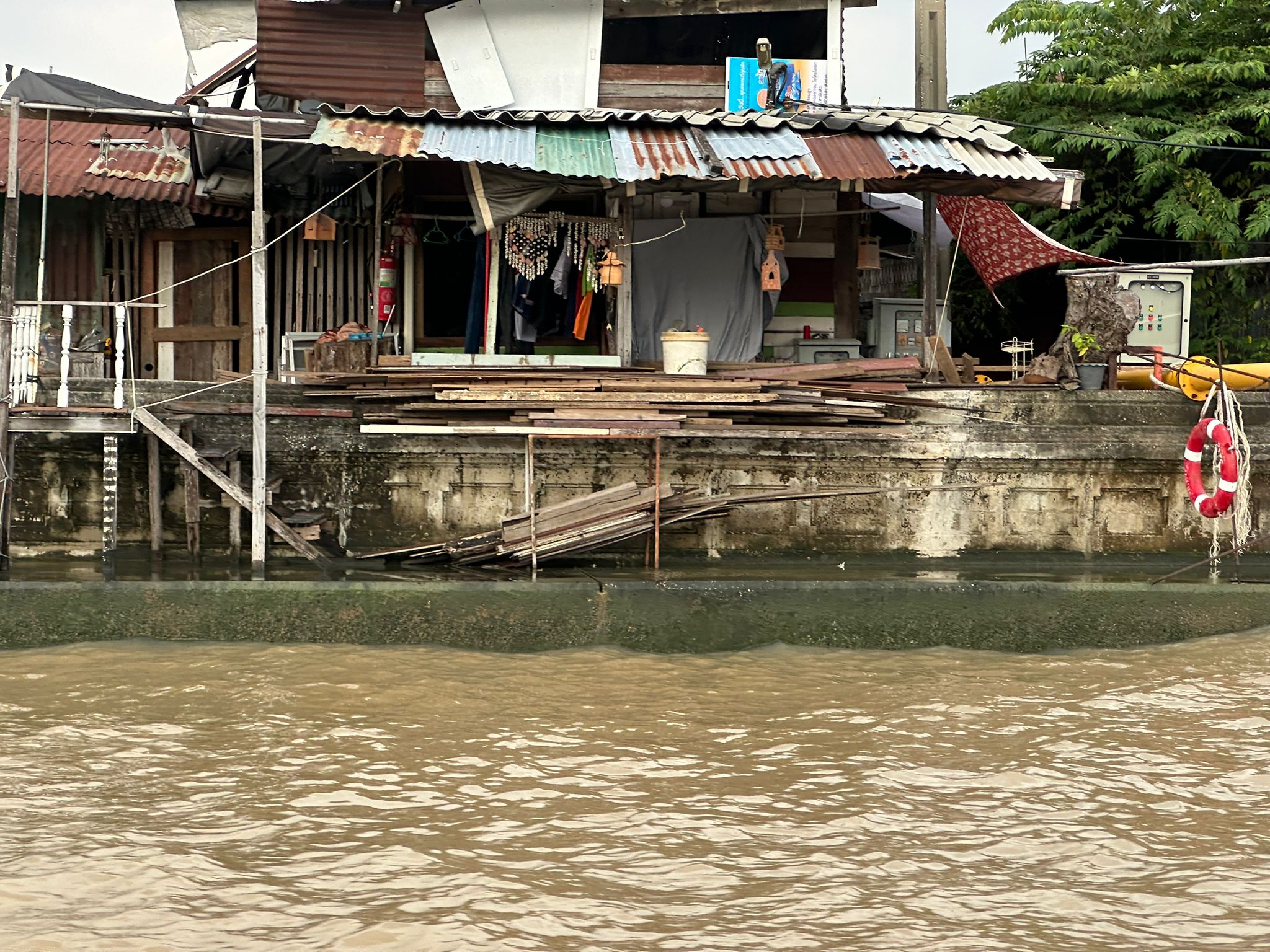
There’s a moment when you realize a city is not the postcard it sells. It usually happens suddenly, when the angle shifts, when your eyes stop looking up at the skyline and start noticing what’s right in front of you. For me, it happened somewhere along the Chao Phraya River, on one of those slow-moving boats where the engine noise is too loud to think but the world passing by is too full to ignore. The water was its usual murky brown, heavy with the churn of long-tail boats and ferries, and then the houses began to appear: crooked, patched together from tin, wood, and old dreams, clinging to the river’s edge like they were trying not to slip in. Laundry swayed in the sticky air. A child sat barefoot at the doorway. A bright red life ring hung nearby, the only splash of color that wasn’t faded by sun or time. It felt like the city had stopped trying to impress me and finally just showed itself.
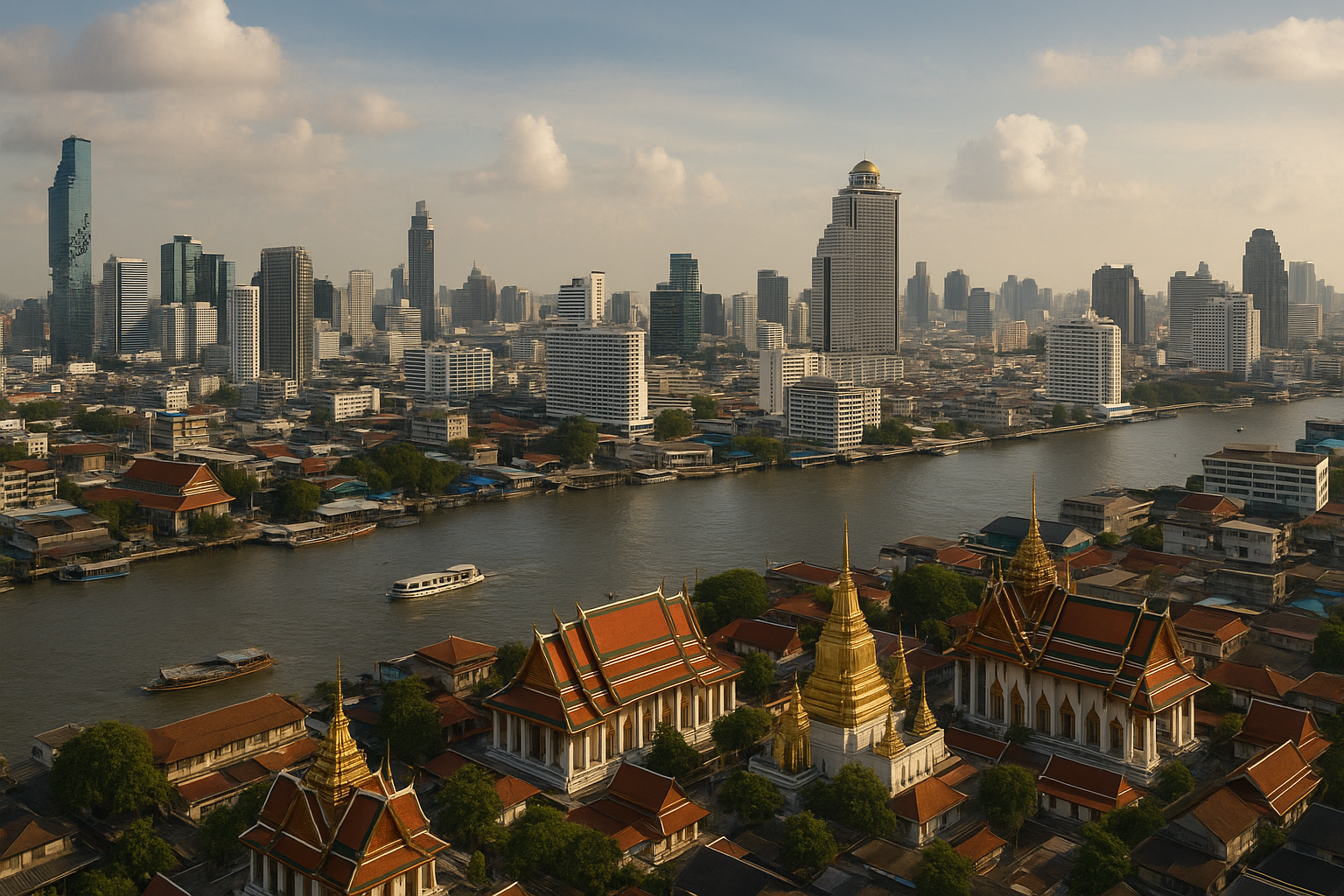
Bangkok can look breathtaking in photos. Skyscrapers glowing at sunset, golden temple spires catching the light, riverboats gliding like they are part of some timeless choreography. But if you stay long enough, or simply look closely enough, the other layers of the city unfold. The heat doesn’t just warm you; it wraps itself around you like a damp coat you can’t take off. The air feels thick, a mixture of humidity, fried food, incense, exhaust fumes, and the earthy scent of river water that has seen better days. People move through all of it with a kind of practiced ease, but if you’re not built for tropical climates or crowds, the city can feel like it’s pressing on you from all sides. I found myself catching my breath more than once, trying to stand still in a place that never stops moving.
And yes, there is poverty here. Not hidden, not tucked away behind glass towers. It is right there along the riverbanks, in the narrow alleys, in the tin-roof neighborhoods that you glide past on a tourist boat. Homes balanced on stilts, patched with whatever could be found — plywood, old corrugated metal, plastic sheets tied with rope. This isn’t the curated Bangkok of travel influencer reels. This is the real city, the lived-in one, the one where people build lives out of whatever is available, the one where resilience is just another word for survival.
Some will argue that this is part of Bangkok’s soul, its rawness, its honesty. And maybe they’re right. There is beauty in people’s ability to adapt, to create community in places that seem forgotten by the city glittering just a few kilometers away. But there’s also something heavy about witnessing it in the heat and noise and humidity, knowing that for you this is just a passing observation, while for others it is daily life.
So yes, Bangkok is picturesque in that shimmering, postcard sense. But for me, visiting the city felt less like discovering a destination and more like entering a climate and a rhythm that my body and spirit couldn’t settle into. I sweated constantly. I was always overheated, always a little overwhelmed, always trying to escape into the nearest air-conditioned store just to feel like myself again. The city has energy — wild, messy, alive — but it is relentless. It demands you match its pace or surrender.
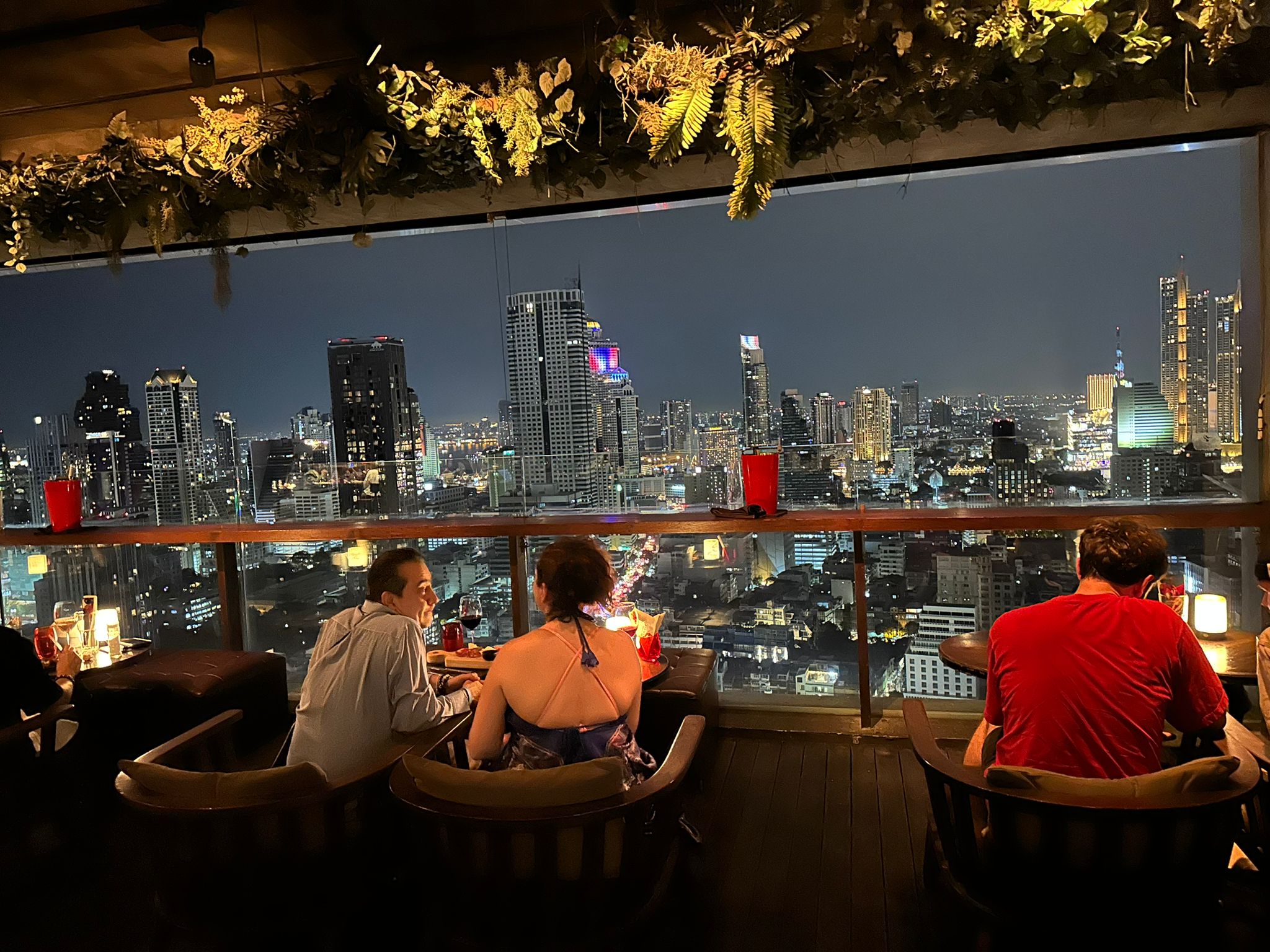
I’m glad I went. I’m glad I saw the temples, the river, the markets, the sunsets that really do look like honey poured over the skyline. But I also saw the slums, smelled the river, felt the weight of the heat, and knew — almost as soon as I left — that this is not a place I will return to. Not because it is bad, but because not every place is made for every person.
Bangkok will continue thriving, pulsing, sweating, shining, cooking, chanting, building, surviving. I’ll admire it from a distance — where it looks beautiful again.
Leave a Reply