• Skip to main content
  • Skip to secondary menu
  • Skip to footer

Travel Marketing

Travel and Tourism Trends

  • Sponsored Post
  • Travel Event Calendar
  • Travel Market
  • Travel Magazine
  • About
  • Contact

Avenida dos Aliados, Porto — Where Power, Identity, and Reinvention Meet

November 22, 2025 By admin Leave a Comment

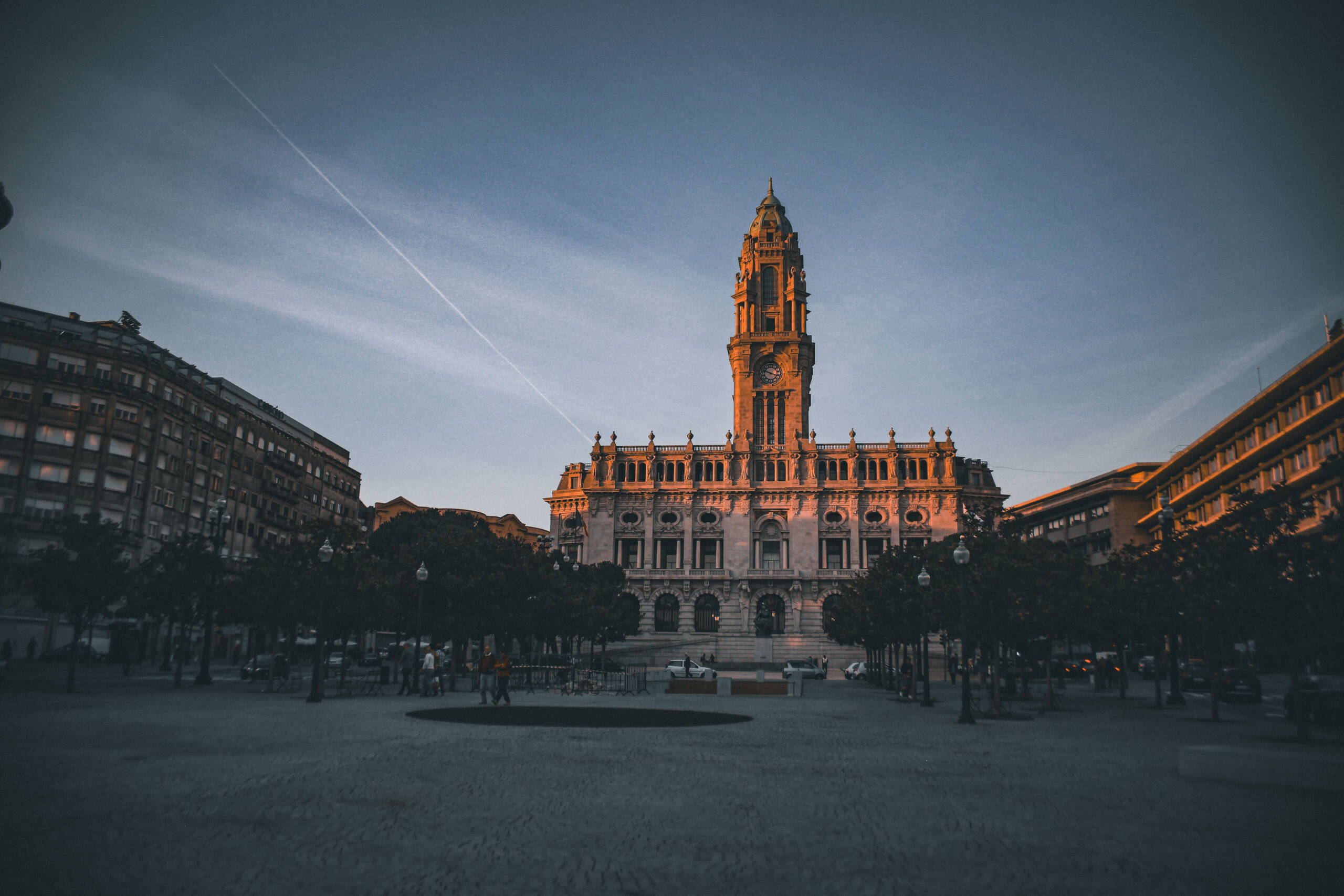
There’s a reason this square feels different the moment you stand in it, even if you don’t immediately know why. The building in the center of the photo — that tall clocktower washed in late-day firelight — is the Porto City Hall. And the place surrounding it isn’t just any square: it’s Avenida dos Aliados, literally “Avenue of the Allies,” named after the alliance between Portugal and the United Kingdom during World War I. It isn’t a square that merely exists — it performs. It has staged revolutions, protests, parades, concerts, heartbreak, euphoria, and half the collective memory of northern Portugal.
Avenida dos Aliados, Porto — Where Power, Identity, and Reinvention Meet

What makes this place compelling is that it wasn’t always elegant or postcard-worthy. Before the polished stone, statues, and grand Beaux-Arts axial symmetry, this area was a messy maze of medieval streets. The transformation began in the early 20th century, when Porto — industrial, stubborn, proud — wanted to look like a European modern capital rather than a sleepy merchant port. City planners bulldozed entire neighborhoods to carve out this boulevard, a gesture equal parts ambition and arrogance. Some called it modernization; others called it vandalism. Porto, as usual, held both truths at once.

By the time the City Hall was completed — which took decades — the world had changed several times. Portugal had fallen into dictatorship, survived it, and risen again. That same granite façade has seen the fall of the Estado Novo regime, the gatherings after the Carnation Revolution of 1974, national football victories where the square became a roaring, improvised stadium, and economic crises when citizens filled it not to celebrate, but to demand better.

And then there’s the visual rhythm in the photo: the symmetrical boulevard tapering down toward the building like a red carpet, the tall tower acting as a civic spine, the aging residential blocks flanking the space like weathered chronicles of the city’s working class. A single vapor trail slices the sky — a reminder that while Porto still carries centuries of stone, time keeps moving faster above it.

People strolling at the bottom of the frame look small compared to the architecture — but that’s the point. Avenida dos Aliados was built not just for walking or sitting, but for meaning. It’s where Porto asserts itself: independent, slightly dramatic, unpolished yet monumental.

So yes — at first glance, maybe it looks like just another European square.

But if you stand there long enough, as the sun drops and the granite glows copper, you realize you’re in the beating civic heart of a city that has reinvented itself more times than it cares to admit — and is still, even now, figuring out what its future should look like.

Filed Under: News

Reader Interactions

Leave a Reply Cancel reply

Your email address will not be published. Required fields are marked *

Footer

Recent Posts

  • St Mark’s Basilica in Venice: The Gold Mosaics Are Dimmer Than the Photographs Suggest
  • China Fines Trip.com $770 Million for Locking Hotels Into Exclusive Deals
  • Château de Monbazillac, Dordogne: A difficult childhood. One château too many.
  • Fora Hits $1 Billion Valuation as AI Transforms the Future of Travel Planning
  • The Open Kitchen Experience: Dining Where You Can Watch the Cooking
  • Holland America Line Adds Flåm and Hellesylt to Five 2027 Norway Fjord Cruises
  • La Cité du Vin, Bordeaux: The Building That Looks Like Wine in a Glass
  • EU Border Delays: ETIAS Pre-Travel Authorization Pushed to Late 2026 as EES Chaos Continues
  • Toledo’s Old Town: A Mudéjar Watchtower Hiding an Antiques Shop
  • Piazza del Duomo, Catania: Where a Black Lava Elephant Guards Sicily’s Baroque Heart

Media Partners

  • Virtual Travel Guide
  • Ancient Rome
The 18th-Century Fountain Hidden Inside Bordeaux’s Customs Museum Courtyard
The Bilbao Effect, 500 Years Early: Jerónimos Monastery And The Guggenheim
Bilbao’s Quiet Renaissance: From Industrial Port to Design Destination
Lisbon’s Seven Hills: A Walking Guide That Tells You the Truth
New Orleans: An American City That Plays by Different Rules
Ha Long Bay Without the Cruise Brochure
Istanbul at the Threshold: A City That Has Always Been Two Things at Once
Iceland’s Ring Road: What the Drive Teaches You That No Photograph Can
Marrakech’s Medina: How to Read a City That Was Not Designed for You
Torres del Paine: What You Are Actually Getting Into
Water Across the Empire: Roman Aqueducts and the Hydraulic Logic of Conquest
The Oath of the Horatii: David's Roman Republic in Paint
Jean-Léon Gérôme: The Victorian Gaze on Rome
Ostia: The Port That Fed Rome
Roman Naval Warfare: The Sea They Called Their Own
The Roman Grain Ship: How Rome Fed Itself Across the Sea
Trajan's Column: Rome's Greatest Comic Strip
Caesarea Maritima: A Roman City Built from Nothing
Damnatio Memoriae: Rome's War on Memory
Faustina the Younger: The Woman Behind the Philosopher Emperor

Media Partners

The Immersive Experience in the Museum World
Japan, China, and Taiwan: A New Triangle of Risk — and a Window of Opportunity for Japan
Ghost Kitchens as Infrastructure: The Shift from Restaurants to Intelligent Food Networks
The Zoom Divide Nobody Saw Coming
The Perfect Budget Content-Creator Kit
Reimagining Prague’s Tourism Future Through Immersive Media and VR Museums
Israel’s Urban Paradox: Tel Aviv Moves, the Rest Stand Still
American Express Global Business Travel (GBTG): Understanding the Business and the Investment Case
Why the Canon R8 Paired With the New RF 45mm f/1.2 Lens Quietly Becomes the Content Creator’s Sweet-Spot
The Future of Travel: A $15.5 Trillion Industry

Copyright © 2026 Travel Marketing

Media Partners: Timey · Publishing House · Ancient Rome · Photography · Calendarial · Transportational