Arriving at Antwerp’s Grote Markt feels like stepping onto the stage of a centuries-old play where history, myth, and architecture come together in a single sweeping panorama. The square opens up with grandeur, a cobblestone expanse framed by the imposing Renaissance façade of the Stadhuis on one side and the ornate guildhalls on the other, their stepped gables crowned with gilded statues that glitter against the sky. At the very center stands the Brabo Fountain, a dramatic sculpture that captures in bronze the moment a Roman soldier hurls a severed hand into the river—a gesture frozen forever in time and memory.
The fountain is more than decoration; it is the symbolic heart of Antwerp. According to legend, Druon Antigoon, a giant who once terrorized ships on the River Scheldt, exacted tolls from passing sailors, cutting off the hands of those who refused. The Roman soldier Silvius Brabo ended this reign of cruelty by defeating the giant, slicing off his hand, and throwing it into the water. From this act, the city is said to have derived its name—Antwerpen, from “hand werpen,” meaning “to throw a hand.” The fountain makes this mythology tangible: Brabo stands triumphantly atop a pile of writhing figures, hand raised high, while arcs of water spill from the sculpture into the basin below, like veins of history flowing endlessly through the square.
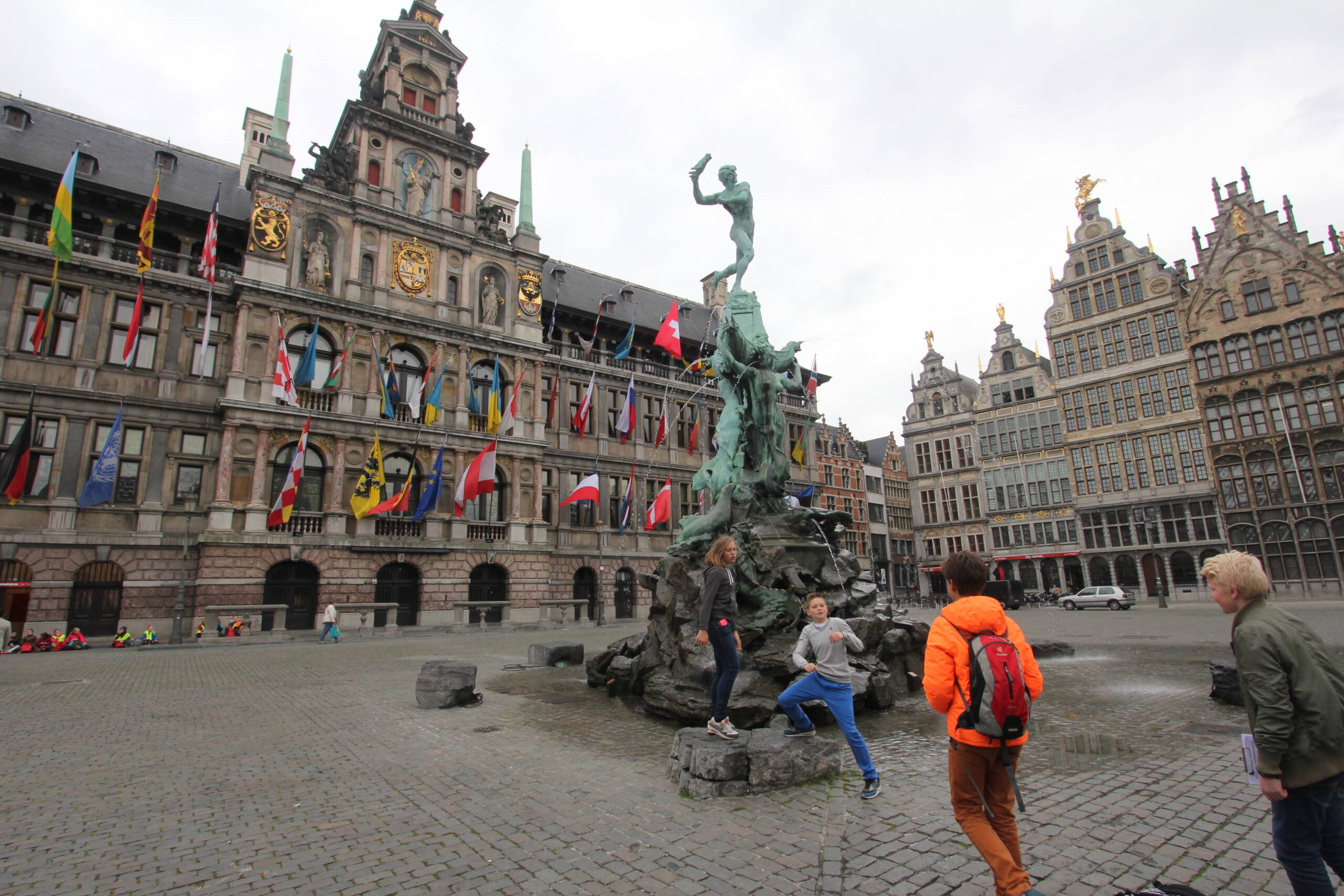
Around the fountain, life unfolds in ways both ordinary and magical. Children clamber across the rocks at the base, their laughter ringing out in contrast to the stoic bronze hero above them. Tourists in bright jackets and backpacks pose for photos, drawn into the legend without needing to know every detail of the tale. Couples stroll across the cobblestones, their footsteps echoing softly in the open expanse, while groups gather beneath the flags lining the Stadhuis to listen to guides explaining Antwerp’s story in half a dozen languages. The juxtaposition is striking—centuries of weighty history set against the everyday playfulness of people living and visiting today.
The Stadhuis itself is a marvel to linger on. Completed in the 16th century, it reflects the prosperity of Antwerp during its Golden Age, when the city was a booming center of trade rivaling Venice and Genoa. Its façade combines Renaissance harmony with Flemish exuberance, adorned with coats of arms, statues, and a parade of international flags that speak to Antwerp’s enduring role as a crossroads of cultures. This cosmopolitan spirit has been part of the city’s identity for centuries: merchants from Italy, Spain, and England once converged here, making deals that shaped the flow of goods across Europe and the seas beyond. Standing in front of the Stadhuis, you can almost imagine the bustle of traders hurrying into the guildhalls, discussing ship cargoes of spices, silks, and precious stones.
The guildhalls that line the square are equally fascinating. Each belonged to a guild—a powerful association of merchants, craftsmen, and tradesmen who formed the backbone of Antwerp’s economic and civic life. Their elaborate façades, adorned with sculptures and gilded details, were statements of wealth and influence. The golden statues that crown the gables—warriors, saints, and mythical creatures—glow even under cloudy skies, symbols of pride and ambition. It is easy to picture the city in its heyday, when these guilds wielded immense influence and Antwerp was considered the beating heart of European commerce.
But the Grote Markt is not a museum frozen in time. It breathes with the rhythm of the present. Cafés spill their tables onto the cobblestones in warmer months, offering the perfect spot to sip a Belgian beer while watching the square come alive. Street musicians set up in corners, their tunes mingling with the chatter of tourists and locals. Even on gray days, the square has an energy of its own, a reminder that history here is not simply remembered but lived, folded seamlessly into the daily fabric of the city.
What makes visiting this place unforgettable is the layering of experiences. You come for the architecture, the legends, and the history, but you leave with the memory of moments—children playing by the fountain, flags fluttering against the Stadhuis, the gleam of gold atop ancient gables, the sound of your own footsteps on cobblestones that have carried countless generations before you. Antwerp’s Grote Markt embodies the spirit of the city: proud, storied, vibrant, and yet always welcoming. It is a place where myths meet markets, where the past enriches the present, and where every visitor becomes part of a narrative still unfolding.