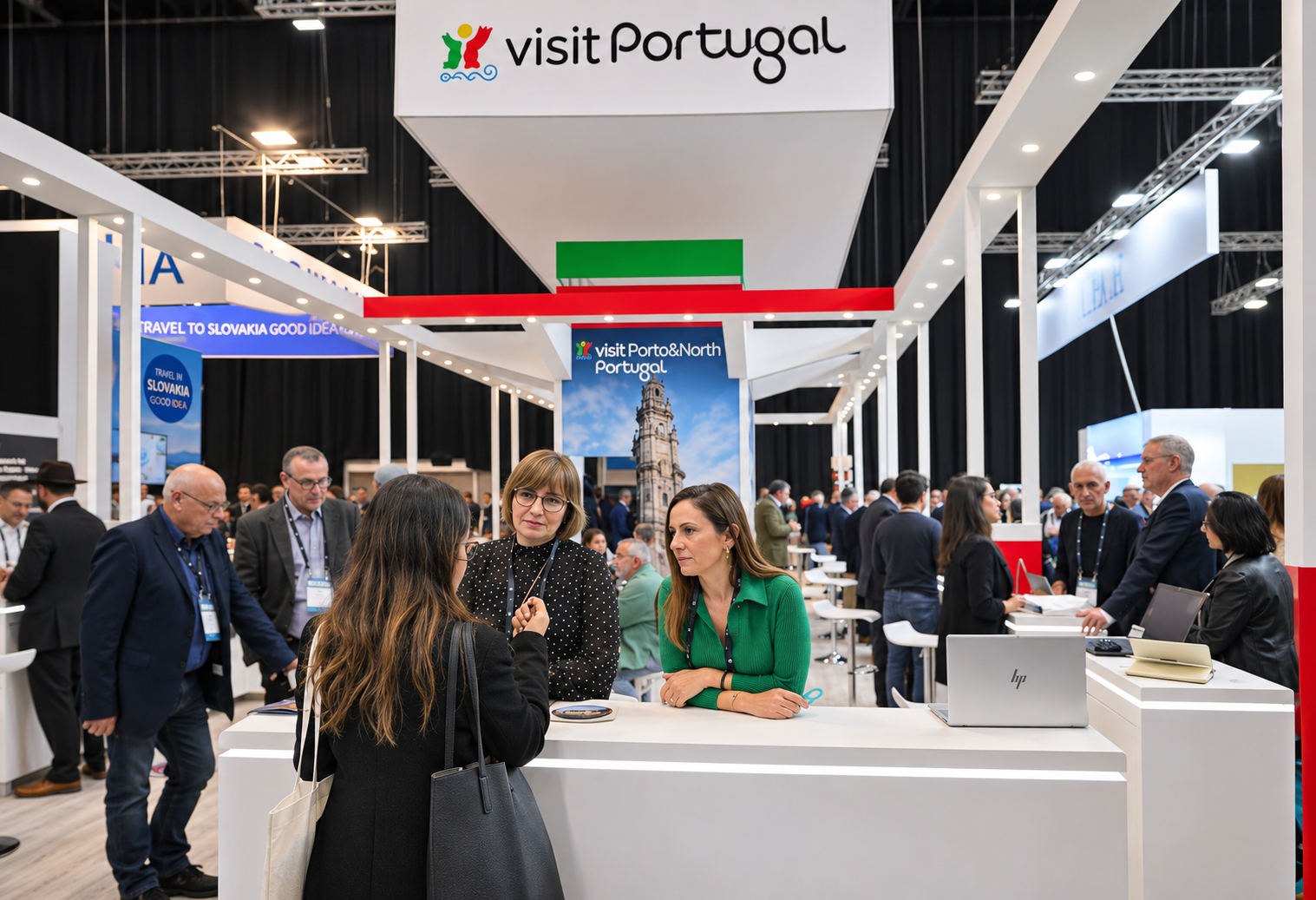
There is a lot of competition for attention at a travel exhibition. Every country arrives with its best scenery, its brightest photographs and a promise that the next holiday should happen there. Yet at the Visit Portugal stand, the most interesting part of the scene is a conversation. A visitor has stopped at the counter, two representatives are listening, and behind them the exhibition floor is crowded with people doing much the same thing. This is the ordinary, human side of destination marketing that glossy campaigns tend to overlook.
The booth makes the broad invitation clear with the words Visit Portugal suspended above the stand. Then it gets more specific. A large poster promotes Porto and Northern Portugal, with the city’s distinctive tower rising against the sky. That regional message matters. Portugal is easy to market as a sunny Atlantic country, but a useful travel campaign has to explain what makes one part of the country different from another. A visitor interested in Porto’s streets, the Douro Valley and the towns of the north may be looking for a very different holiday from someone heading to the Algarve.
Portugal has plenty of stories to tell once a conversation begins. Lisbon offers steep streets, old trams, river views and neighborhoods that reward walking rather than rushing. Porto brings a different urban rhythm, its granite buildings climbing above the Douro and its wine trade woven into the city’s identity. The north opens onto the landscapes of Minho and the vineyards of the Douro Valley. Elsewhere there are the whitewashed towns of the Alentejo, the Atlantic beaches, the mountains and forests of Madeira, and the volcanic islands of the Azores. All belong to the same country, but they shouldn’t all be sold with the same photograph.
That is why physical travel exhibitions still matter. A website can show hundreds of hotel rooms in seconds, and an algorithm can serve up a convincing itinerary. What it cannot easily reproduce is the moment when a travel adviser asks a visitor what sort of trip they actually want. Are they comfortable hiring a car? Do they want a city break or a slow week in a small town? Would they rather spend money on a good restaurant, a walking tour or a quiet place to stay? The answers change the recommendation. They also give tourism representatives direct feedback about what prospective visitors understand, misunderstand and still want to know.
For national tourism organizations, there is a practical lesson here. The umbrella brand gets people to the stand, but regional knowledge and personal attention turn that initial interest into a plan. A recognizable sign and a beautiful destination photograph are useful; an informed person who can connect an itinerary to a traveler’s interests is much more useful. The representatives behind the desk are as much a part of the marketing as the campaign printed above their heads.
Visit Portugal works as a simple invitation. The more important question comes immediately afterward: which Portugal? At a busy trade show, a few minutes across a counter can help someone find the answer. That is still a good reason for tourism boards to show up in person.