• Skip to main content
  • Skip to secondary menu
  • Skip to footer

Travel Marketing

Travel and Tourism Trends

  • Sponsored Post
  • Travel Event Calendar
  • Travel Market
  • Travel Magazine
  • About
  • Contact

Beyond the Beach, Why the Quiet Hours Are the Most Memorable Part of a Seaside Holiday

November 16, 2026 By admin

There is a moment at many seaside resorts when the destination seems to change hands. The beach clubs grow quieter, the brightest light drains from the sky, and the shoreline becomes less a place to consume activities than a place to simply be. Tourism advertising rarely lingers on that transition. It probably should.

Consider this view across the Gulf of Aqaba, in the Red Sea resort setting of Eilat. The foreground is almost empty: pale sand, a row of broad thatched shelters, and long shadows. Beyond the dark fringe of their roofs, a few paddleboarders move across exceptionally calm water. Small motorboats and colorful recreational craft are moored farther out. Across the gulf, pale buildings gather beneath layered desert mountains. Nothing spectacular is happening, and that is precisely the attraction.
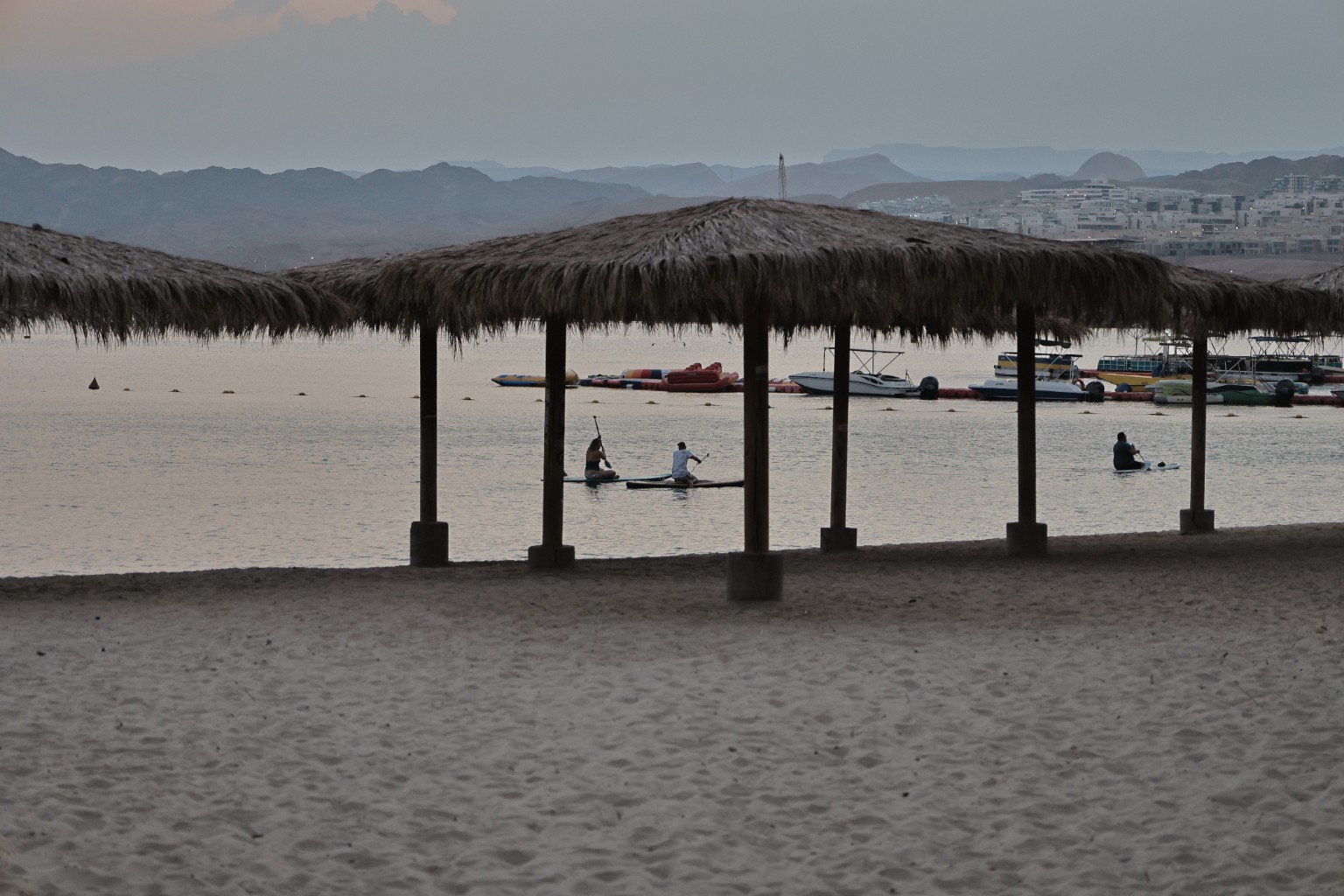
Thatched beach shelters frame paddleboarders on calm water with mountains across the Gulf of Aqaba
Quiet water, paddleboarders and the mountains across the Gulf of Aqaba: a different kind of resort image.

Most beach destinations market themselves through a remarkably consistent visual vocabulary. There is saturated turquoise water, dazzling sunlight, pristine sand and, when people appear, a carefully arranged sense of excitement. These images are useful: they communicate warmth, accessibility and recreation in an instant. But they also make very different coastlines look strangely interchangeable. The actual character of a place often emerges in less obvious conditions, when the light softens and the surrounding landscape becomes visible.

Here, the mountains matter as much as the sea. Their successive ridgelines provide scale and geography, while the modest human figures on the water suggest a slower relationship with the destination. The thatched shelters are not glamorous architectural objects. They are everyday resort infrastructure, and their repetition creates a strong visual rhythm. A photographer could have excluded them to produce a cleaner postcard. Keeping them makes the image more convincing.

For destination marketers, this raises an important distinction between selling attractions and communicating atmosphere. Attractions answer the question, “What can I do there?” Atmosphere answers something more personal: “What might it feel like to spend an afternoon there?” The first question is easier to quantify and promote. The second can be more powerful when a traveler is choosing between places offering broadly similar amenities.

Quiet experiences are not necessarily niche experiences. A family may value an uncrowded hour after a busy day. A couple may remember the shifting colors of a coastline more vividly than an excursion. A solo traveler may appreciate the freedom to sit without an itinerary. Even visitors who enjoy water sports, nightlife and busy promenades need moments of contrast. Resort marketing that shows only maximum activity leaves out a large part of the holiday itself.

This does not mean destinations should abandon bright, aspirational photography. It means their visual storytelling needs a wider emotional range. A campaign might pair an energetic daytime beach scene with an observational late-afternoon photograph. Short videos could show the sounds of water and the gradual change in light rather than another rapid montage of attractions. Hotel and tourism websites could describe when a beach is peaceful, where visitors can walk at dusk, and which stretches of shoreline offer unobstructed views. Such details help travelers imagine a real stay rather than a sequence of promotional highlights.

Authenticity also requires restraint. Not every beach is tranquil every evening, and a single quiet photograph should not be used to promise an uncrowded destination throughout the season. Conditions vary with weather, holidays and local activity. Good destination marketing sets expectations as carefully as it builds desire. Showing the lived texture of a resort, including its boats, shelters and neighboring buildings, can make the eventual experience feel more recognizable and trustworthy.

The Red Sea offers a particularly strong example because its coastal tourism is inseparable from its desert geography. The water can look serene while steep, dry mountains rise in the distance, giving the shore a distinctive visual identity. Rather than treating the beach as an isolated strip of sand, marketers can tell a richer story about the relationship between coast, landscape and the daily rhythms of visitors.

There is a commercial argument here too, although it should not be exaggerated. Travelers who can picture themselves enjoying a destination in different moods may find more reasons to visit, stay longer or return. A richer collection of photographs also gives tourism businesses material for different audiences and seasons. The opportunity is not to manufacture serenity, but to notice and communicate it when it genuinely exists.

The most memorable travel photograph is not always the one that announces a destination at full volume. Sometimes it is the one that lets the viewer imagine sitting under a rough thatched roof, watching a paddleboard move slowly across the water as the mountains fade into the evening haze. For beach tourism, that quiet promise deserves a place alongside the sunshine.

Filed Under: Travel Insights

Footer

Recent Posts

  • Beyond the Beach, Why the Quiet Hours Are the Most Memorable Part of a Seaside Holiday
  • Monreale, Where Sicily’s Mountain Town Meets the Streets of Palermo
  • Where Palermo Comes to Talk, Ballarò, Capo and Vucciria
  • Accor and Hard Rock Link Their Loyalty Programs and Distribution as SONIFI Puts Guest Tech for 5,000 Hotels on One Screen
  • AutoCamp Waives Pet Fees and Gives Guests a Fi GPS Tracker as Dog-Friendly Travel Bookings Jump 260 Percent
  • Monreale Cathedral, Sicily’s Extraordinary Norman Masterpiece of Mosaics and Architecture
  • Monreale, The Balcony Above Palermo and the Gulf of Sicily
  • Cucina Povera in Sicily, Why Potatoes Appear in Salad and Pasta
  • Las Vegas Led 2026 American Bookings on eDreams and Tokyo Tops the 2027 Wish List as Navan Finds 58 Percent of Business Travelers Expect More Trips
  • Porta Nuova in Palermo, A Monumental Gateway to Sicily’s Spanish Past

Media Partners

  • Virtual Travel Guide
  • Ancient Rome
  • Travel Magazine
Mont Saint-Michel, Normandy’s Medieval Island Rising Above the Tidal Sands
Quattro Canti, Palermo’s Magnificent Baroque Crossroads and Theatre of the Sun
The Garden Court of the Frick Collection, A Hidden Architectural Treasure in New York City
Palermo, Monreale and Cefalù in 41 Photographs
Islamic Art Elements in Palermo Cathedral, Sicily’s Arab-Norman Masterpiece
Bagheria From the Train, A Glimpse of Sicily Between Palermo and Cefalù
Cefalù’s Monument to the Fallen, Remembering the Great War in Sicily
Monumento ai Caduti della Guardia di Finanza in Sicilia, Palermo’s Hidden Memorial on Via Cavour
Piazza Rivoluzione, Palermo’s Fountain of Liberty and the Genius of the City
Church of Sant’Anna la Misericordia, Palermo’s Dramatic Baroque Facade
Sponsored Post
About
Contact
Sheffield Researchers Recreate the Lycurgus Cup Effect and Show How Hard the Roman Trick Was
Roman Road Milestones Were the First Navigation System
Caligula: What the Sources Say About the Mad Emperor, and What They Invented
George Loring Brown's Temple of Peace Painting and the Roman Forum's Most Misnamed Ruin
Half of This Roman Mosaic Glass Bowl Is Plaster, and the Smithsonian Kept It
Julius Caesar's 44 BCE Denarius: The Coin That Helped Get Him Killed
Juno Moneta: How a Roman Goddess Gave Us the Words Money and Mint
Palermo, Sicily's Most Cinematic and Photogenic City
Wrocław Cathedral, Gothic Towers and the Resilience of a Polish City
Palermo Courtyards Reveal a More Intimate Side of the City
A Grand Palermo Courtyard Makes the Case for Slower City Travel
Palermo Cathedral Garden Offers a Quieter View of the Landmark
Mortadella, the Unsung Modest Hero of Italian Cuisine
Palermo Guide to the Essential Sights Markets and a Two Day Visit
A Smartphone Is All You Need to Start Travel Vlogging Today
Dining in Rennes
Plaza de España in Seville, the 1929 Expo Square With a Tiled Alcove for Every Province

Media Partners

  • Travel Market
  • Timey.org
Paris Croissant Prices in 2026, Most Bakeries Still Charge 1.10 to 1.40 Euros While Palace Versions Pass 4
Top 10 Travel Destinations Ranked by Nightlife, From Berlin to Bangkok
Palermo Cathedral Is a Landmark You Can Appreciate Before Buying a Ticket
Palatine Chapel Mosaics Make a Strong Case for Prioritizing One Palermo Interior
Palermo Rooflines Reward Travelers Who Look Beyond the Main Attractions
Palermo in the First Week of November 2026, Le Vie dei Tesori Sites From 3 Euros and a Free Baroque Concert
Salamanca Travel Guide: Cathedrals, University and the Golden City
Sagrada Familia Rewards a Closer Look at Its Carved Stone Doorways
Expedia Fall 2026 Release Adds an AI Activity Planner, Hotel Answers From Reviews and Pay-Later Vrbo Stays
Paris Wallace Fountains Offer Free Drinking Water With a Winter Catch
Glenfinnan Viaduct Carries the Jacobite Steam Train Past the Spot Where the 1745 Rising Began
Alte Nationalgalerie in Berlin and the Art of Looking Across Centuries
How Historic Interiors Teach Us to Behave
Why Cities Keep Rebuilding Their Past
Historical Reenactment Shows and the Desire to Watch the Past Come Alive
Villa Pacini and Catania's Headless Bourbon Kings
Spain’s National Day 2026: A Ceremony of Continuity, a Government Nearing Its End?
Vienna Secession: The Golden Dome That Declared Art's Freedom
Martian Moon eXplorer 2026, October 19, Yoshinobu Launch Complex LP-2, Tanegashima
Orbital Launch Schedule, Late September and October 2026, With Crew-13 and Starship Flight 14

Copyright © 2026 Travel Marketing

Media Partners: Timey · Publishing House · Ancient Rome · Photography · Calendarial · Transportational