It’s past midnight on Kraków’s Rynek Główny. A woman in a black coat and top hat sits motionless on the driver’s bench of a white carriage, reins loose in her hands. Two dark horses wait in front of her, their ornate silver-studded harnesses catching the ambient glow of the square. Red flowers are pinned to their bridles. The lit facades of centuries-old tenements rise behind them. Nobody is rushing. Nobody is posing for a photo. The scene simply exists — and you’re the only one watching it.
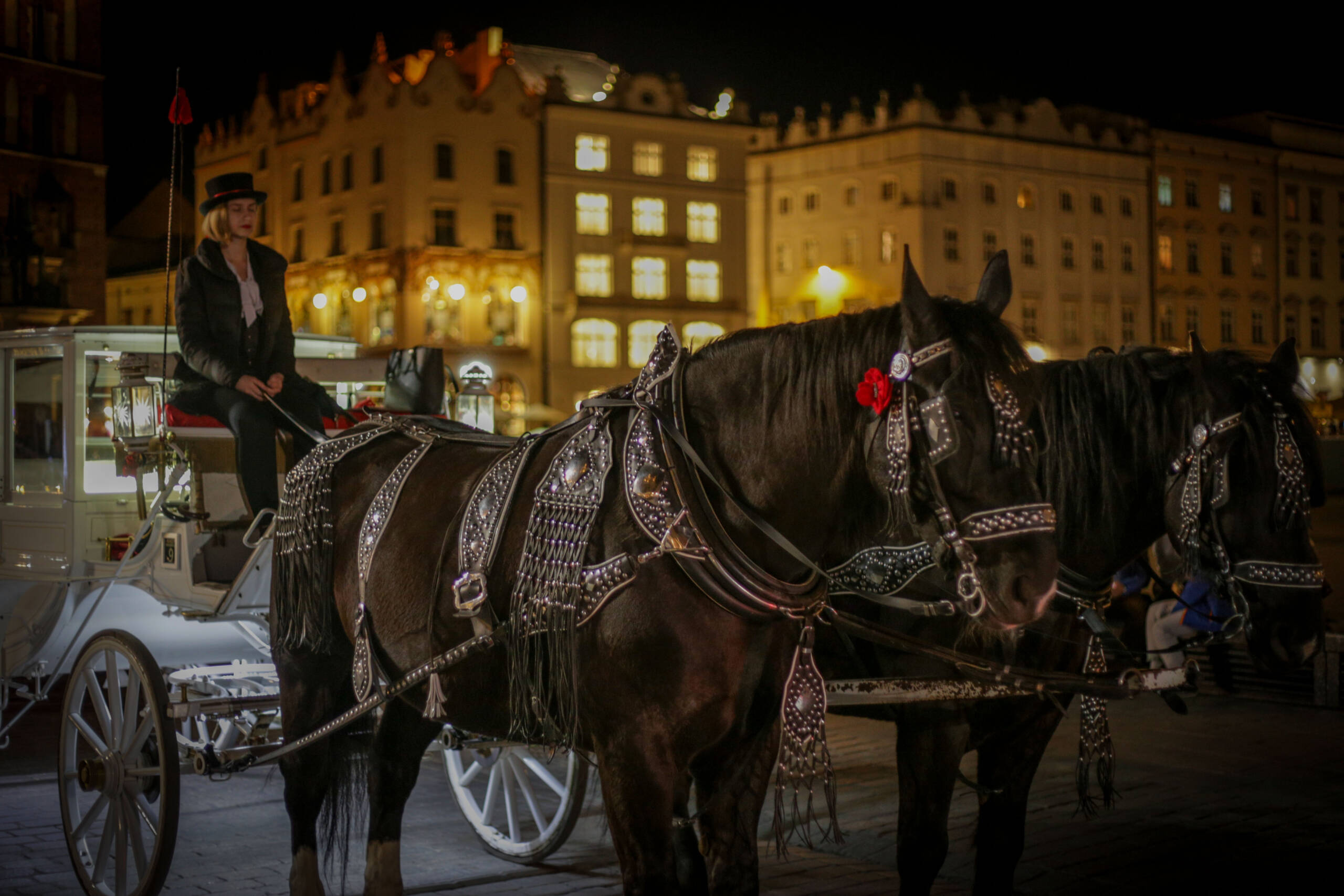
This is noctourism. And it’s quietly reshaping how serious travelers think about place.
Noctourism is the practice of building a trip around the experience of destinations at night. Not just a late dinner or a rooftop drink, but a genuine reorientation of itinerary logic: sleep in the afternoon, move at midnight, let darkness become the medium.
The appeal is partly practical. Crowds evaporate. The Colosseum without buses and selfie sticks is a different monument. The Medina in Fez at 2am belongs to you and the cats. Popular spots that feel like airport terminals by day recover something ancient after dark.
But noctourism isn’t just about avoiding crowds. It’s about accessing a layer of a place that most visitors never reach. Cities have different sonic textures at night. Neighborhoods shift. The social geography reorganizes — workers heading home, markets closing down, the infrastructure of daily life briefly exposed. It’s closer to how residents actually experience a place than any curated daytime tour could be.
The movement has also been accelerated by light pollution awareness. Travelers are seeking out dark-sky destinations — rural Morocco, the Atacama, Northumberland National Park — specifically to experience the sky as most of human history did. Night becomes not an absence of the view but the view itself.
Hotels and tour operators are catching on. Midnight architecture tours, after-hours museum access, bioluminescent kayak excursions, nocturnal wildlife safaris. The infrastructure for serious night travel is quietly being built.
The question noctourism keeps asking is simple: what are you missing by going to bed?
Leave a Reply