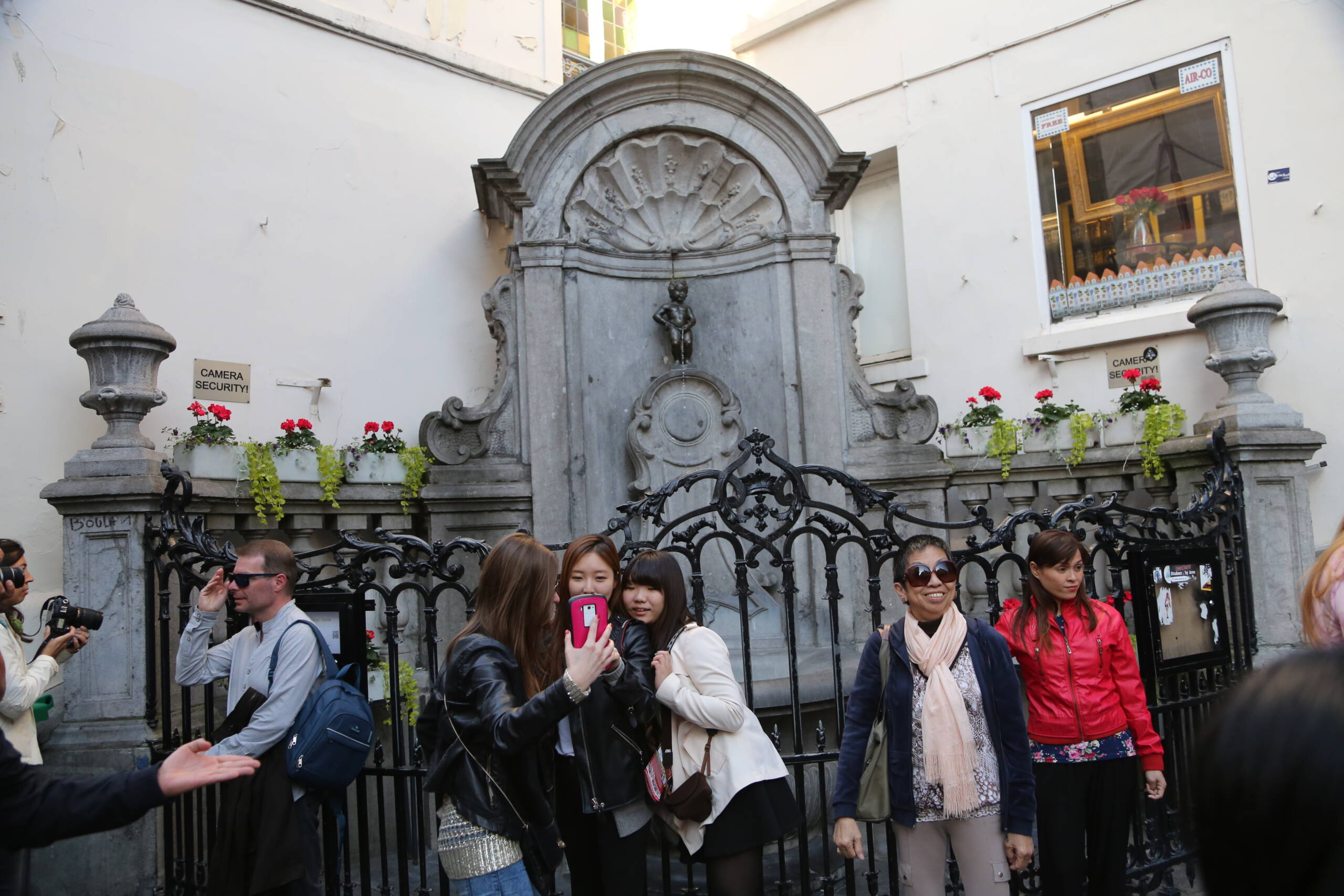
First-time visitors to Brussels often expect grandeur. Gothic towers, royal galleries, baroque guild houses, the kind of architectural drama that fills postcards and travel posters. Then they turn a corner down a narrow little street and encounter… this. A tiny bronze boy, eternally peeing into a modest stone basin, surrounded by a wrought-iron fence and a surprisingly dense crowd of tourists with cameras raised. For many people the first reaction is confusion. This is it? The famous statue?
Street and Travel Photography with the Canon R8
Yet that reaction is exactly part of the charm.
The fountain known as Manneken Pis is arguably the most mischievous cultural symbol in Belgium. Standing barely 61 centimeters tall, the statue depicts a small naked boy casually urinating into the fountain basin beneath him. The current bronze figure dates to 1619, sculpted by Flemish artist Jérôme Duquesnoy the Elder, although earlier versions of the figure existed in the late Middle Ages. What surprises visitors is not just the subject matter but the scale: the statue is almost comically small for something so globally famous.
And yet fame, as travel has taught us many times, rarely obeys logic.
Part of the reason the statue became iconic lies in Brussels’ personality itself. This is a city with a slightly rebellious sense of humor, the sort that enjoys poking fun at authority and ceremony. Instead of monumental hero statues or solemn kings on horseback, the city celebrates a cheeky child relieving himself in public. It’s irreverent, a little absurd, and distinctly Belgian.
Legends, of course, help too. Several stories try to explain the boy’s origin. In one popular tale, a young child supposedly saved the city during a siege by urinating on a burning fuse meant to explode the city walls. Another version claims the boy was the lost son of a wealthy merchant who was eventually found doing exactly what the statue immortalizes. Historical accuracy is… questionable, but the stories stick, and they add to the folklore that tourists love repeating.
Then there is the theatrical tradition surrounding the statue. Over the centuries Manneken Pis has accumulated a wardrobe of more than a thousand costumes. On certain days the little figure appears dressed as everything from a musketeer to Elvis Presley to a national football player. Sometimes beer or wine even flows from the fountain during festivals. A tiny statue suddenly becomes a stage for civic humor.
Standing in front of the fountain today feels almost like watching a small performance in an urban theater. Visitors lean toward the iron fence with phones raised for selfies, friends laugh at the absurdity of it all, guides explain the legend while trying not to smile too much. The surrounding stonework, with its scalloped shell motif and weathered gray patina, gives the statue an oddly dignified architectural frame—as if the city decided long ago that if you’re going to celebrate something ridiculous, you might as well do it properly.
And that might be the real secret of its appeal. Travel often promises epic monuments, colossal cathedrals, sweeping vistas. But sometimes the most memorable landmark is a joke cast in bronze four centuries ago. A small, slightly vulgar fountain tucked into a corner of Brussels somehow became one of the most photographed statues in Europe.
Not because it is grand.
Because it refuses to be.
Leave a Reply