• Skip to main content
  • Skip to secondary menu
  • Skip to footer

Travel Marketing

Travel and Tourism Trends

  • Sponsored Post
  • Travel Event Calendar
  • Travel Market
  • Travel Magazine
  • About
  • Contact

Manneken Pis, The Curious Fame of Brussels’ Most Mischievous Fountain

March 10, 2026 By admin Leave a Comment

First-time visitors to Brussels often expect grandeur. Gothic towers, royal galleries, baroque guild houses, the kind of architectural drama that fills postcards and travel posters. Then they turn a corner down a narrow little street and encounter… this. A tiny bronze boy, eternally peeing into a modest stone basin, surrounded by a wrought-iron fence and a surprisingly dense crowd of tourists with cameras raised. For many people the first reaction is confusion. This is it? The famous statue?
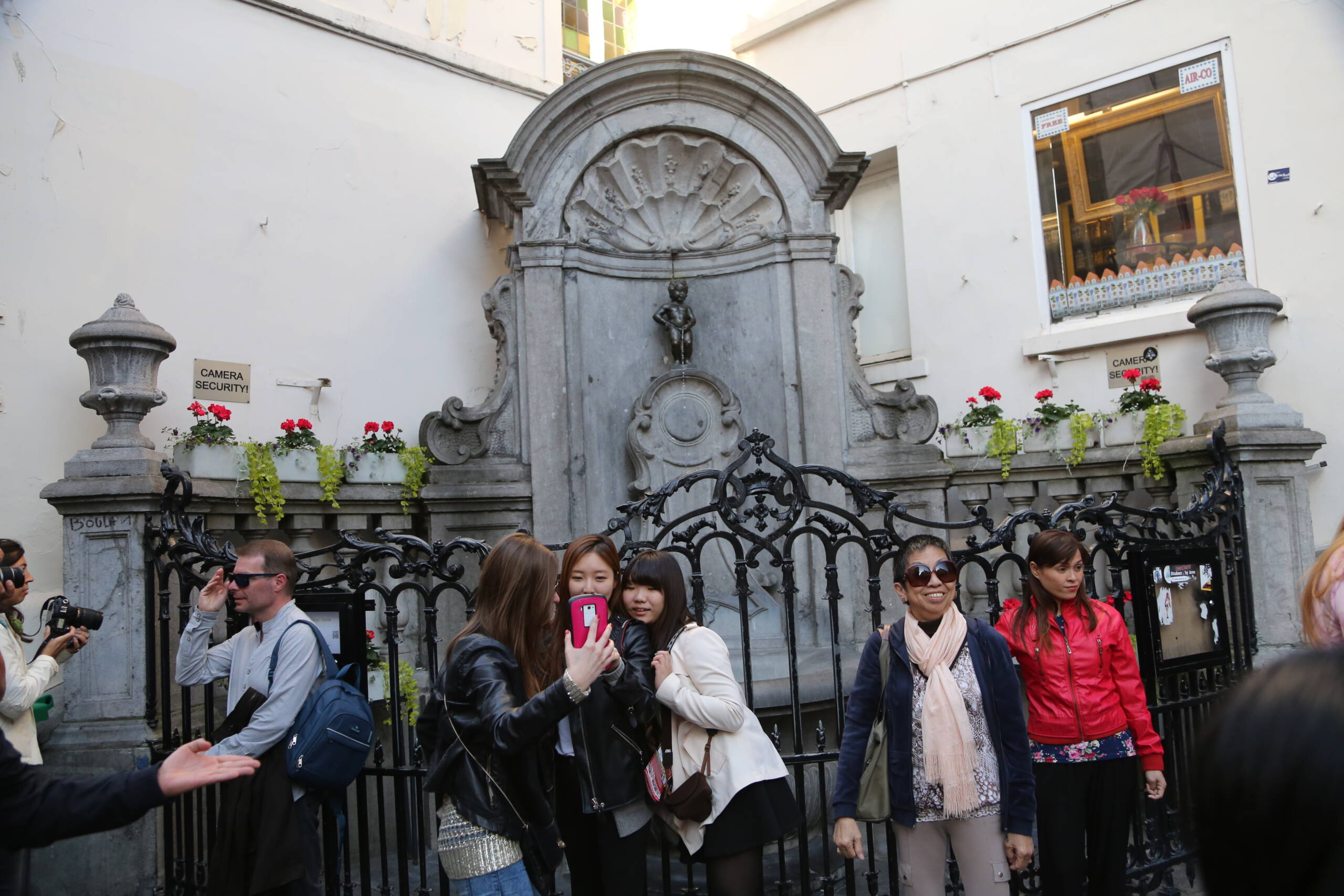
Manneken Pis, The Curious Fame of Brussels’ Most Mischievous Fountain
Street and Travel Photography with the Canon R8

Yet that reaction is exactly part of the charm.

The fountain known as Manneken Pis is arguably the most mischievous cultural symbol in Belgium. Standing barely 61 centimeters tall, the statue depicts a small naked boy casually urinating into the fountain basin beneath him. The current bronze figure dates to 1619, sculpted by Flemish artist Jérôme Duquesnoy the Elder, although earlier versions of the figure existed in the late Middle Ages. What surprises visitors is not just the subject matter but the scale: the statue is almost comically small for something so globally famous.

And yet fame, as travel has taught us many times, rarely obeys logic.

Part of the reason the statue became iconic lies in Brussels’ personality itself. This is a city with a slightly rebellious sense of humor, the sort that enjoys poking fun at authority and ceremony. Instead of monumental hero statues or solemn kings on horseback, the city celebrates a cheeky child relieving himself in public. It’s irreverent, a little absurd, and distinctly Belgian.

Legends, of course, help too. Several stories try to explain the boy’s origin. In one popular tale, a young child supposedly saved the city during a siege by urinating on a burning fuse meant to explode the city walls. Another version claims the boy was the lost son of a wealthy merchant who was eventually found doing exactly what the statue immortalizes. Historical accuracy is… questionable, but the stories stick, and they add to the folklore that tourists love repeating.

Then there is the theatrical tradition surrounding the statue. Over the centuries Manneken Pis has accumulated a wardrobe of more than a thousand costumes. On certain days the little figure appears dressed as everything from a musketeer to Elvis Presley to a national football player. Sometimes beer or wine even flows from the fountain during festivals. A tiny statue suddenly becomes a stage for civic humor.

Standing in front of the fountain today feels almost like watching a small performance in an urban theater. Visitors lean toward the iron fence with phones raised for selfies, friends laugh at the absurdity of it all, guides explain the legend while trying not to smile too much. The surrounding stonework, with its scalloped shell motif and weathered gray patina, gives the statue an oddly dignified architectural frame—as if the city decided long ago that if you’re going to celebrate something ridiculous, you might as well do it properly.

And that might be the real secret of its appeal. Travel often promises epic monuments, colossal cathedrals, sweeping vistas. But sometimes the most memorable landmark is a joke cast in bronze four centuries ago. A small, slightly vulgar fountain tucked into a corner of Brussels somehow became one of the most photographed statues in Europe.

Not because it is grand.

Because it refuses to be.

Filed Under: News

Reader Interactions

Leave a Reply Cancel reply

Your email address will not be published. Required fields are marked *

Footer

Recent Posts

  • St Mark’s Basilica in Venice: The Gold Mosaics Are Dimmer Than the Photographs Suggest
  • China Fines Trip.com $770 Million for Locking Hotels Into Exclusive Deals
  • Château de Monbazillac, Dordogne: A difficult childhood. One château too many.
  • Fora Hits $1 Billion Valuation as AI Transforms the Future of Travel Planning
  • The Open Kitchen Experience: Dining Where You Can Watch the Cooking
  • Holland America Line Adds Flåm and Hellesylt to Five 2027 Norway Fjord Cruises
  • La Cité du Vin, Bordeaux: The Building That Looks Like Wine in a Glass
  • EU Border Delays: ETIAS Pre-Travel Authorization Pushed to Late 2026 as EES Chaos Continues
  • Toledo’s Old Town: A Mudéjar Watchtower Hiding an Antiques Shop
  • Piazza del Duomo, Catania: Where a Black Lava Elephant Guards Sicily’s Baroque Heart

Media Partners

  • Virtual Travel Guide
  • Ancient Rome
The 18th-Century Fountain Hidden Inside Bordeaux’s Customs Museum Courtyard
The Bilbao Effect, 500 Years Early: Jerónimos Monastery And The Guggenheim
Bilbao’s Quiet Renaissance: From Industrial Port to Design Destination
Lisbon’s Seven Hills: A Walking Guide That Tells You the Truth
New Orleans: An American City That Plays by Different Rules
Ha Long Bay Without the Cruise Brochure
Istanbul at the Threshold: A City That Has Always Been Two Things at Once
Iceland’s Ring Road: What the Drive Teaches You That No Photograph Can
Marrakech’s Medina: How to Read a City That Was Not Designed for You
Torres del Paine: What You Are Actually Getting Into
Water Across the Empire: Roman Aqueducts and the Hydraulic Logic of Conquest
The Oath of the Horatii: David's Roman Republic in Paint
Jean-Léon Gérôme: The Victorian Gaze on Rome
Ostia: The Port That Fed Rome
Roman Naval Warfare: The Sea They Called Their Own
The Roman Grain Ship: How Rome Fed Itself Across the Sea
Trajan's Column: Rome's Greatest Comic Strip
Caesarea Maritima: A Roman City Built from Nothing
Damnatio Memoriae: Rome's War on Memory
Faustina the Younger: The Woman Behind the Philosopher Emperor

Media Partners

The Immersive Experience in the Museum World
Japan, China, and Taiwan: A New Triangle of Risk — and a Window of Opportunity for Japan
Ghost Kitchens as Infrastructure: The Shift from Restaurants to Intelligent Food Networks
The Zoom Divide Nobody Saw Coming
The Perfect Budget Content-Creator Kit
Reimagining Prague’s Tourism Future Through Immersive Media and VR Museums
Israel’s Urban Paradox: Tel Aviv Moves, the Rest Stand Still
American Express Global Business Travel (GBTG): Understanding the Business and the Investment Case
Why the Canon R8 Paired With the New RF 45mm f/1.2 Lens Quietly Becomes the Content Creator’s Sweet-Spot
The Future of Travel: A $15.5 Trillion Industry

Copyright © 2026 Travel Marketing

Media Partners: Timey · Publishing House · Ancient Rome · Photography · Calendarial · Transportational