The first image captures a moment that already feels like a preview of what’s to come: a large, airy exhibition hall, people moving between stands, conversations happening in small circles, bodies slightly angled toward one another in that familiar trade-show posture that means business, networking, curiosity. It looks calm, almost routine, but the timing gives it weight. IMTM 2026 (IMTM stands for International Mediterranean Tourism Market), is scheduled for February 3–4 at Expo Tel Aviv, and it arrives at a moment when the global tourism industry is planning its next steps under visible geopolitical strain. Foreign airlines are still adjusting routes, some suspending flights to Israel, others operating with reduced capacity or flexible schedules, and the background noise of regional uncertainty is impossible to ignore. And yet, the event is going ahead, planned, structured, booked into the calendar like a statement in itself.
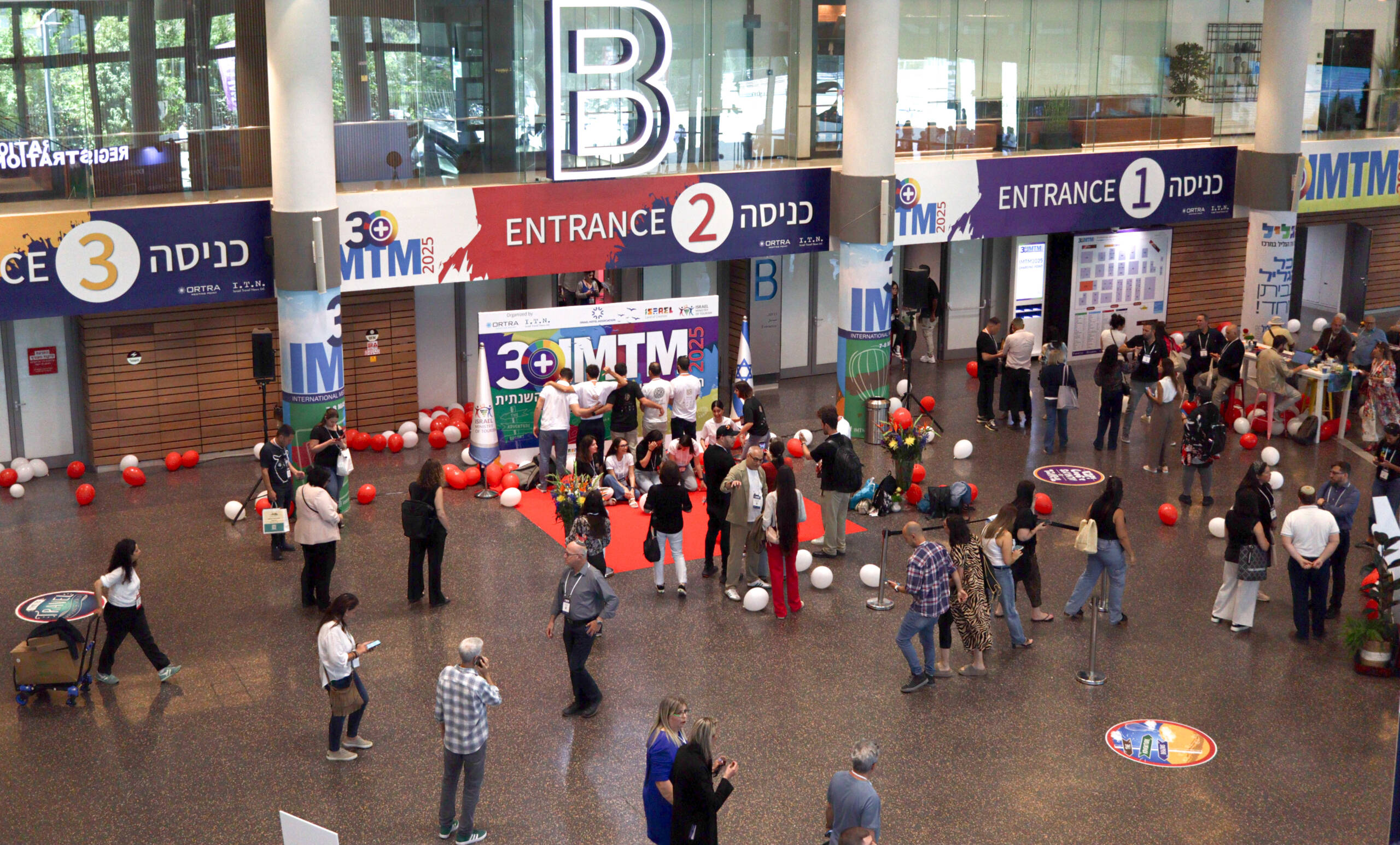
What makes this edition of IMTM especially interesting is that it may function less as a celebration of travel and more as a strategic checkpoint. For many exhibitors and buyers, Tel Aviv in early 2026 will be a place to reassess assumptions: how fragile routes reshape demand, how tourism adapts when spontaneity disappears, how destinations sell confidence when confidence is the rarest currency. The Mediterranean basin, Europe, and long-haul markets are all watching the same question from different angles — not whether people want to travel, but under what conditions they are willing to commit. The fair floor, as the photo hints, becomes a kind of negotiation space between optimism and caution, where brochures are still glossy but conversations run deeper than slogans.
IMTM has always been a practical show, heavily business-oriented, and that may be its advantage this year. Israeli outbound travel has historically proven resilient, sometimes surprisingly so, and international sellers know this. For them, IMTM 2026 is a chance to maintain visibility even when direct flights are unstable, to plant seeds for the moment airspace clears and demand rebounds fast, as it often does. In that sense, this upcoming edition is less about the present and more about readiness. The hall may look like any other tourism fair, but the subtext is different: everyone here is planning for a future that isn’t fully visible yet, and still choosing to show up.
The second photo feels quiet at first glance, but the longer you look, the more it reveals. A small group of women stand in the middle of the exhibition floor, slightly apart from the rush, dressed in traditional Japanese kimonos that immediately pull the eye away from the surrounding noise of a trade show. The fabrics are soft but deliberate, pale blues, muted greys, a warm orange patterned with white, each garment tied carefully, each fold intentional. One woman holds a red phone in both hands, framing a photo with complete concentration, her posture calm, almost ceremonial, as if the act of documenting the moment matters as much as the moment itself. Behind and beside her, others wait patiently, hands resting on handbags, badges hanging from their necks, expressions gentle and observant. They are not rushing. They are absorbing.
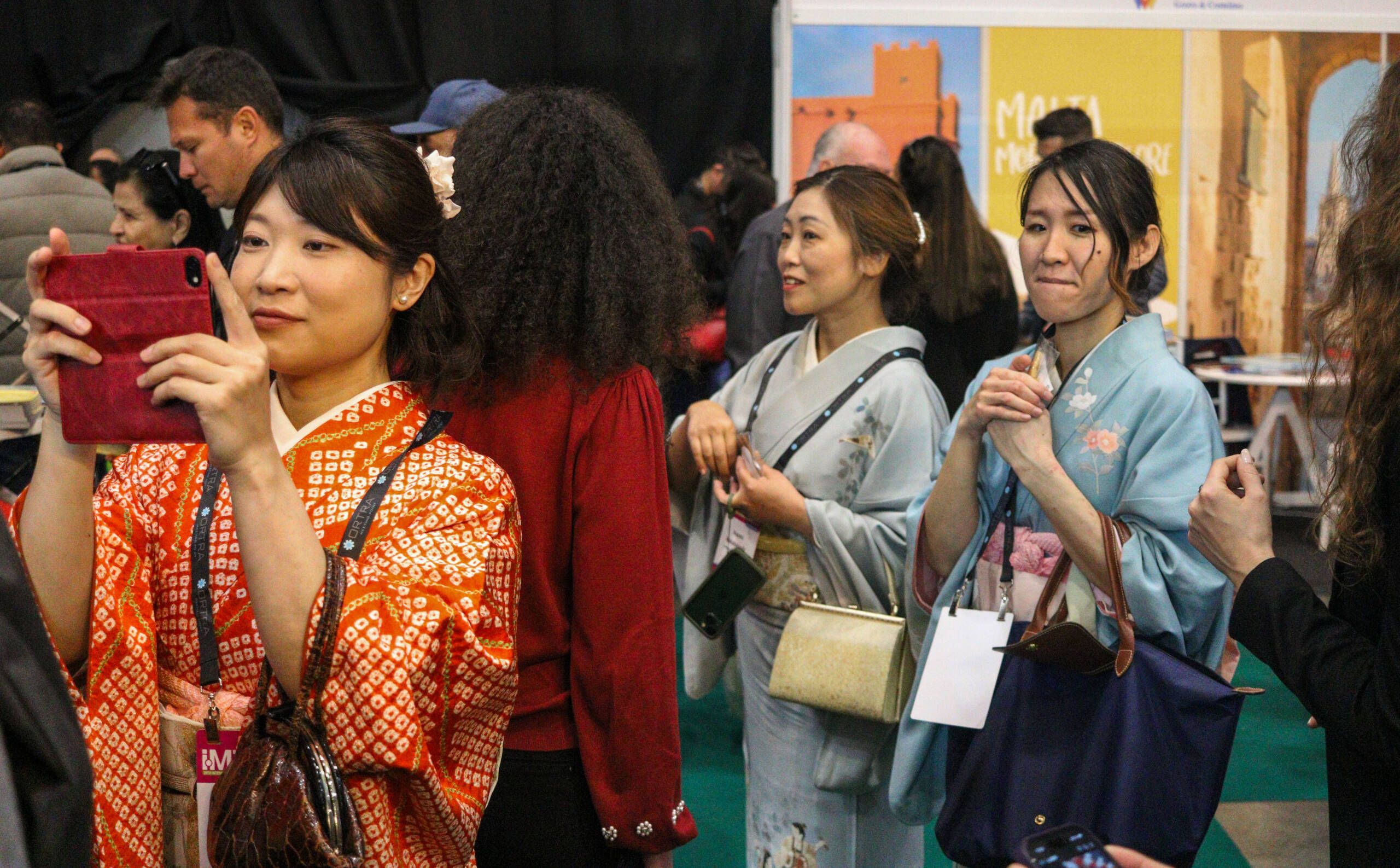
Placed in the context of IMTM 2026, scheduled for February 3–4 at Expo Tel Aviv, this image becomes more than a cultural snapshot. It’s a reminder of what tourism trade shows are actually about, not just routes, hotels, and numbers, but people carrying their identity across borders, even when borders feel fragile. At a time when foreign airlines are canceling flights, adjusting schedules, and hedging against regional instability, the presence of international delegations takes on extra meaning. Every visitor who arrives has navigated uncertainty to be here. Every conversation on the floor is, in some quiet way, an act of confidence in the future. The kimonos aren’t just beautiful; they are visible proof that cultural exchange still happens even when logistics become complicated.
What stands out most is the contrast between the stillness of these women and the unseen turbulence outside the hall. Tourism is often framed as movement, but this photo captures the pause: the moment of looking, recording, waiting, observing. IMTM 2026 may well be remembered as a checkpoint year, a fair where the industry measured not growth but endurance. And in that sense, this image fits perfectly. It shows that international tourism doesn’t disappear during uncertain times, it simply becomes more intentional. People come with purpose, dressed in who they are, documenting where they’ve arrived, quietly insisting that connection is still worth the effort.
Covering events:
Events Are About People Too
How I Covered Cybertech 2026
How to Shoot Informal Tech Events