The warning that a U.S. government shutdown could cost the travel economy $1 billion per week feels more real when we imagine its impact not in abstract numbers but in lived moments. I think of the simple scene in this photo: a nearly empty beach, where a colorful umbrella leans at a sharp angle, providing shade to a single plastic chair draped with a towel. Pigeons gather on the sand in scattered clusters, pecking at invisible crumbs, while a lone man, tanned and weathered, walks barefoot along the water’s edge, his phone pressed against his ear. The sea behind him rolls in with steady rhythm, waves capped with white foam, and yet the overall mood is not bustling leisure but quiet, fragile solitude.
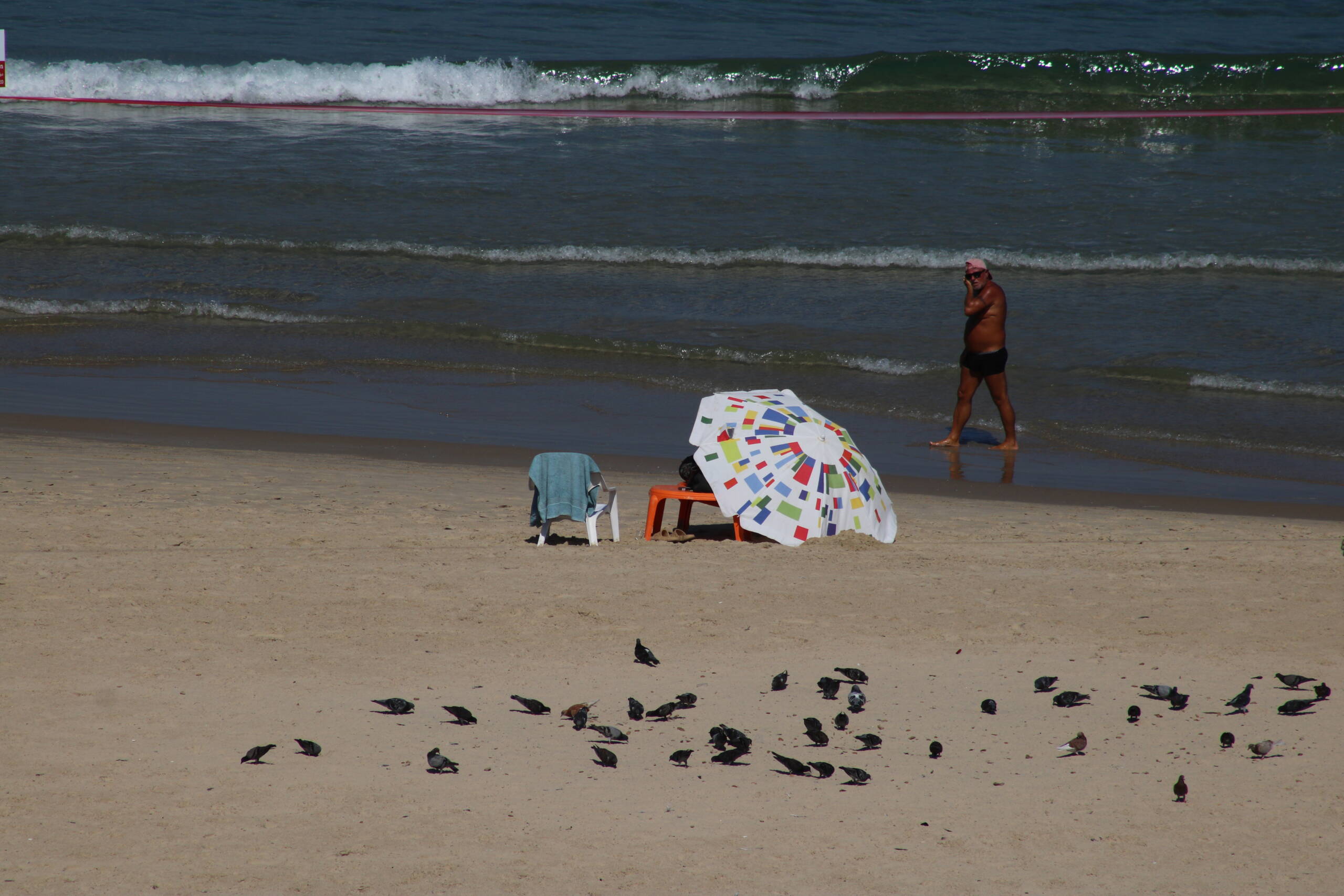
This quiet picture is a reminder that tourism, at its core, is made up of individual acts—one person laying out their towel, one traveler ordering a drink at a seaside café, one family visiting a museum or national park. When government funding halts, these ordinary moments unravel. Closed parks mean no visitors lining up to see geysers or canyons, shuttered museums mean families turned away from cultural treasures, and understaffed airports mean long lines, missed flights, and canceled vacations. Suddenly, the economy of relaxation—the billion-dollar heartbeat of travel—is interrupted by bureaucratic paralysis.
The pigeons on the sand in the image seem like an unintended metaphor: travelers, too, disperse quickly when conditions are not right, moving elsewhere or simply staying home. Surveys already suggest that most Americans would cancel air travel during a shutdown, amplifying the economic blow. Just as this beach scene feels sparse, starved of the lively crowds we usually associate with coastal holidays, so too would the wider travel economy thin out when disruption takes hold.
The man by the water’s edge, caught between the sea and his phone call, embodies another tension. Travel is not just about leisure but about work, meetings, mobility, and the connectivity of life. A shutdown would ripple into business trips and conferences, delaying deals, preventing connections, and costing far more than ticket sales alone. In the same way he looks distracted from the calm of the beach by the urgency of his phone, travelers and businesses are distracted from plans by the uncertainty of political dysfunction.
A shutdown strips away more than revenue—it diminishes the everyday poetry of travel. That single chair under the umbrella, the towel waiting for its owner, the birds darting across the sand, the solitary walker—these are the moments that build economies not in billions, but in the countless micro-transactions of human presence. If the government fails to keep its machinery running, those moments thin out, and the travel economy—so dependent on rhythm, trust, and continuity—loses both its substance and its soul.
Leave a Reply