When a Museum Visit Turns Into a Warning Sign, Madrid, February 2026
Travel is often framed as a bridge between cultures, a way to step into shared spaces where history, art, and human experience intersect without filters. That expectation is precisely why the recent incident involving three elderly Israeli visitors at Madrid’s Museo Reina Sofía resonates far beyond the news cycle. According to reports, the women, one of them a Holocaust survivor, were verbally abused by other visitors and labeled “child killers” for displaying Jewish symbols, only to be asked to leave after staff claimed their presence was disturbing others. For travelers, this isn’t just a troubling story about a museum; it’s a reminder that the promise of openness and safety in cultural spaces cannot be taken for granted, even in cities celebrated for their art and cosmopolitan spirit.
Museums are often positioned at the heart of destination branding. They symbolize tolerance, learning, and the ability of a city to host diverse visitors with dignity. When an institution appears to respond to harassment by removing those who were targeted, it sends an unsettling signal to international travelers, especially older visitors and those whose identities are visibly expressed. Travel decisions are shaped not only by attractions and hotels but by the feeling of being welcome, of knowing that one’s identity will not become a liability at the ticket desk or in a gallery hall. Incidents like this quietly erode trust, and trust is one of the most fragile yet essential assets in tourism marketing.
For destinations competing in a global travel market, confronting such moments openly matters. Silence or vague explanations don’t just affect local reputations; they ripple outward through traveler communities, social networks, and word-of-mouth narratives that no campaign can easily undo. Travel is about encounter, not exclusion, and cultural institutions play a powerful role in setting that tone. Ensuring that visitors are protected from hate rather than displaced by it is not only a moral responsibility but a practical one for any city that wants to be seen as genuinely open to the world.
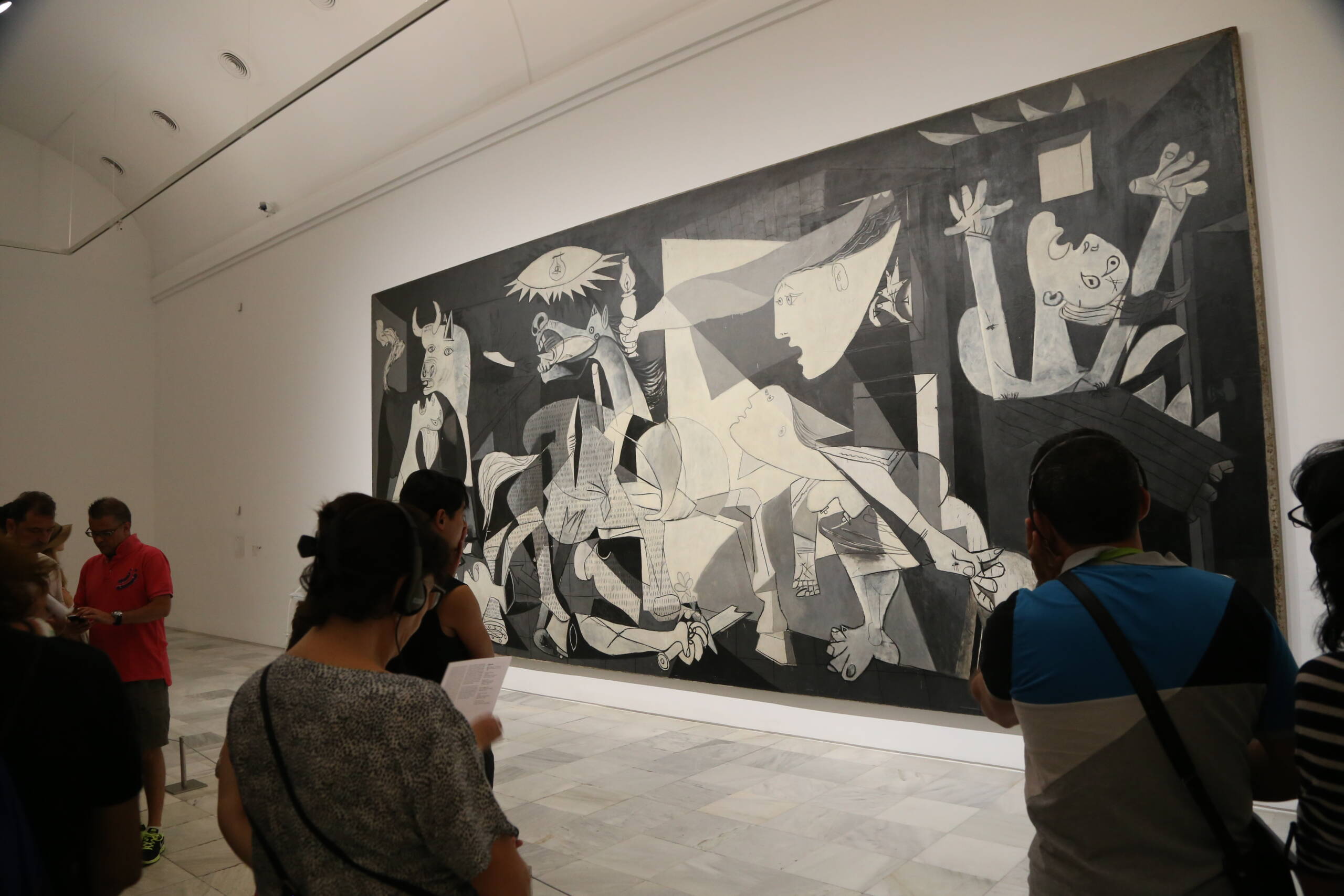
The photograph says more than a press release ever could. In a stark white gallery, visitors stand shoulder to shoulder in front of Picasso’s Guernica, the monumental black-and-grey canvas that has come to symbolize the horror of violence inflicted on civilians. The painting looms across the wall, fractured bodies and anguished faces stretching from edge to edge, a screaming horse at the center, a fallen figure clutching a broken sword, a raised arm frozen in a gesture that could be pain or defiance. The light is even, almost clinical, bouncing off the pale marble floor, while people in the foreground quietly read guide sheets or listen through headphones, their backs turned slightly, absorbed, respectful. It’s a scene that normally reassures you: this is a place of memory, of reflection, of lessons learned the hard way.
That is precisely why the reported expulsion of elderly Israeli visitors, including a Holocaust survivor, from Madrid’s Museo Reina Sofía feels so jarring when set against this image. Guernica was painted as a scream against persecution and the targeting of civilians, a visual indictment of hatred normalized by institutions and crowds alike. To imagine that, in the same halls, visitors displaying Jewish symbols were insulted as “child killers” and then removed because others were “disturbed” is not just ironic, it’s morally upside down. The photograph captures a collective pause before a work that demands empathy; the incident described suggests a failure to extend that empathy to real people standing a few rooms away. For travelers, and for anyone who believes museums are guardians of shared values, this contrast is disgraceful. A cultural space that presents one of history’s strongest artistic condemnations of persecution cannot, in the same breath, treat identity as a provocation to be managed rather than protected.