In the photograph, the scene unfurls beneath a vast dome of stained glass that bathes the interior in a warm, golden light. The dome itself is a masterpiece of design—panels of glass in muted yellows and blues arranged like petals of a radiant flower, bordered by intricate ironwork that gleams with ornamental detail. Beneath it, tiers of balconies curve around the atrium, each lined with gilded railings and delicate flourishes. The space feels both monumental and intimate: monumental in scale, as the dome rises like a cathedral ceiling, yet intimate because every level draws the eye inward, focusing attention toward the ritual happening below—shopping. The perspective of the photo makes you feel small, neck craned back, as though you are not just a visitor but a participant in a grand performance of consumption.
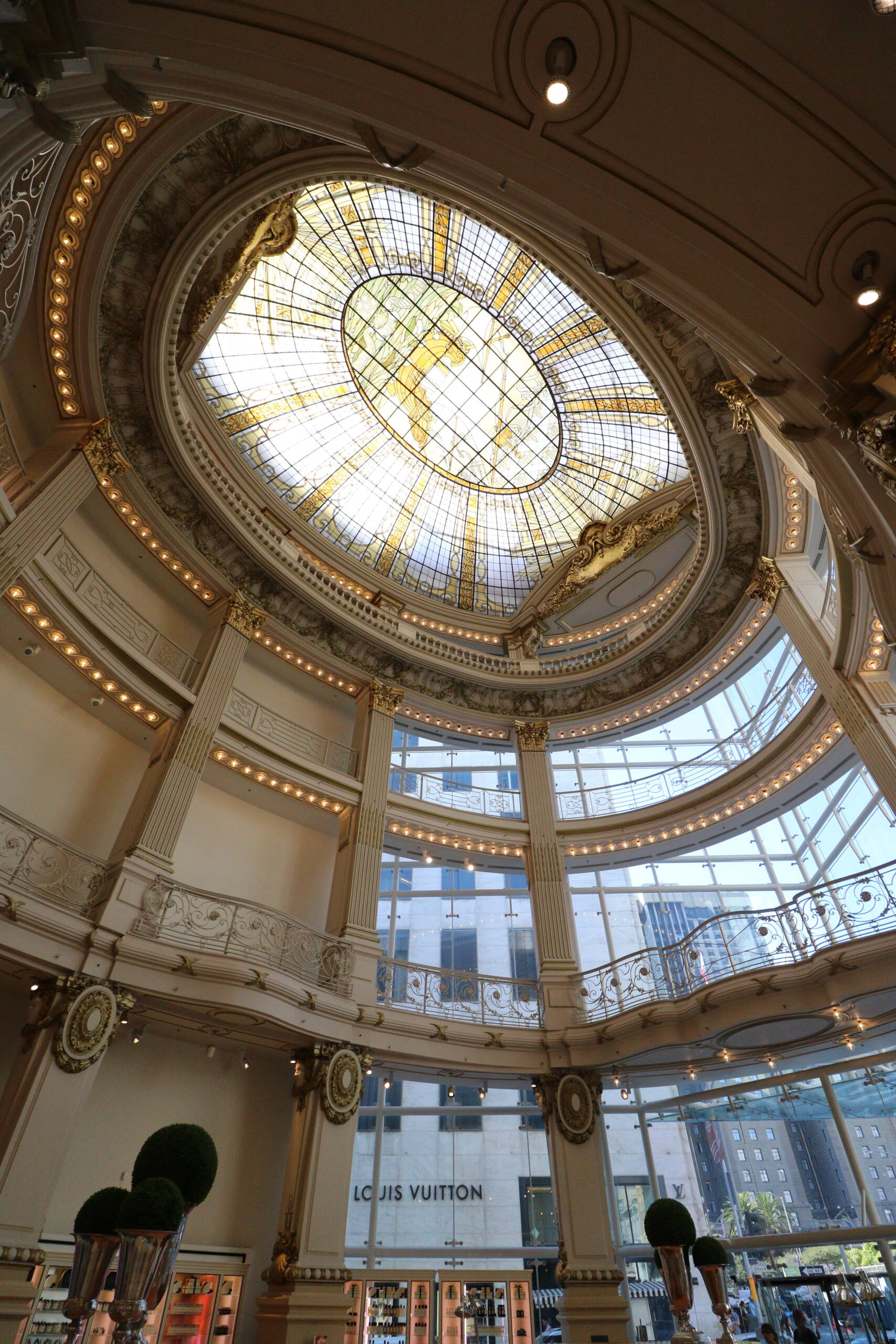
This image could be Paris’s Galeries Lafayette, where the dome has become as iconic as the Eiffel Tower for those who know the city. It is an architecture that seduces before a single purchase is made, an environment where glass, iron, and gold conspire to make buying a perfume feel like a sacred act. And Lafayette was not alone in this ambition. Its sister rival, Printemps, just a few blocks away, dazzles with its Art Nouveau cupolas and sweeping staircases, spaces designed to make bourgeois shoppers feel like royalty wandering their private palace of goods.
Across the Channel, Harrods in London embraced the same philosophy but dressed it in British extravagance. Egyptian motifs flank escalators, tiled halls stretch endlessly, and its food court domes elevate the act of buying tea, cheese, or chocolate into a performance. Harrods understood the trick: shopping was never just a transaction; it was theater, and every customer, regardless of budget, became part of the show.
Meanwhile, in Berlin, Kaufhaus des Westens (KaDeWe) stands as the German response to this tradition, a place where layers of balconies rise like the tiers of an opera house. Its atrium glitters with glass and light, its legendary food halls seduce the senses with delicacies from every corner of the world. And at the very top, a glass dome crowns the experience, offering views across the city as if to remind you that consumption, too, can be panoramic, worldly, even aspirational.
What unites these spaces is not just their scale or ornamentation, but their intent. They borrow the grammar of cathedrals and palaces—domes, columns, staircases, grand galleries—and translate it into the language of commerce. Where once stained glass lifted the gaze toward saints, now it directs it toward handbags. Where once a dome was meant to exalt the divine or the civic, now it exalts desire. That irony lingers in the air like perfume, both impossible to ignore and strangely intoxicating.
And yet, it works. Walk under the dome at Lafayette, glance up at Printemps, drift through Harrods, or ascend KaDeWe, and you feel it: the architecture whispering that what you do here matters. Not because it’s noble or necessary, but because the act of purchase, framed in this spectacle, has been transformed into ritual. Shopping becomes ceremony, desire becomes theater, and architecture becomes the silent hand guiding you deeper into both.
Leave a Reply